Thursday, July 16, 2026
Home Blog Page 162

Waqf Amendment Bill Will Benefit Munambam Residents: Union Minister Suresh Gopi

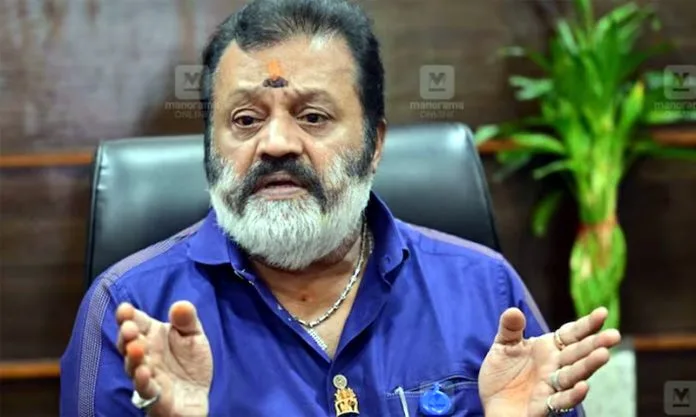
Union Minister of State for Petroleum and Natural Gas and Tourism, Suresh Gopi, has asserted that the recently passed Waqf (Amendment) Bill, 2025, will directly benefit the protesting residents of Munambam in Kerala, who have been engaged in a 174-day-long relay hunger strike over land rights.

Speaking to reporters on Friday, Gopi stated, “The Waqf is an institution meant for the greater good. However, certain barbaric practices within it needed to be eliminated.” He added that the Bill was a legal step in that direction, though he refrained from elaborating on what he meant by such practices.

The Union Minister said the amendment would not only help resolve the grievances of the Munambam residents but also benefit the Muslim community, dismissing opposition claims to the contrary. “It is the opposition that tried to divide the people. They stood against the Bill in Parliament and falsely claimed it would harm the Muslim community,” Gopi alleged.

When asked whether the Bill would have retrospective effect to address existing disputes like Munambam, Gopi deflected, saying, “Wait, sir. Wasn’t it you who said this Bill would never come at all?”

The Parliamentary debates around the Bill saw heated exchanges, especially between Gopi and CPI(M) MP John Brittas. Brittas accused Gopi of failing to answer questions around the recent attack on Christian priests in Jabalpur. Gopi dismissed such concerns, alleging media distortion and pointing out that “issues like these arise everywhere.”

CPI(M) and the Congress-led UDF came down heavily on Gopi for his remarks. Leader of Opposition V D Satheesan accused the Union Minister of attacking journalists instead of addressing the core issue. “It’s not the journalists but the Bajrang Dal and BJP who need to keep quiet, as they unleashed the attack against Christian priests,” Satheesan said.

He also reminded Gopi of his responsibility as an elected representative. “The Union Minister had no answer when questioned about the attack on priests in his constituency, in the presence of police officers,” Satheesan added, criticizing Gopi’s habit of visiting churches during elections with golden crosses but not standing up for the community when needed.

John Brittas, known for his wit, took a dig at the actor-turned-politician, suggesting he needs a scriptwriter in politics too. “Even Suresh Gopi himself is unsure about which party he belongs to. Neither he nor the BJP takes his words seriously,” Brittas quipped.

During the Rajya Sabha debate, Brittas highlighted that nearly 700 attacks on Christians were reported in the past year and over 200 churches were burned down in Manipur alone. Gopi refused to comment on Brittas’ claims, instead inviting reporters to ask Brittas at his home.

Despite the controversies, the Waqf (Amendment) Bill, 2025, was passed after a marathon 13-hour debate in the Rajya Sabha, with 128 votes in favour and 95 against. It had earlier cleared the Lok Sabha with 288 votes in support and 232 against.

The residents of Munambam and Cherai villages in Ernakulam district, who have been protesting under the ‘Munambam Bhoo Samrakshana Samithi’, expressed hope that the Bill will finally end the Waqf Board’s claims over their properties. Residents allege that the Board is illegally asserting ownership over their lands despite valid property documents and tax receipts.

As political tensions rise, all eyes are now on the implementation of the amendment and its real impact on ground-level disputes such as those in Munambam.
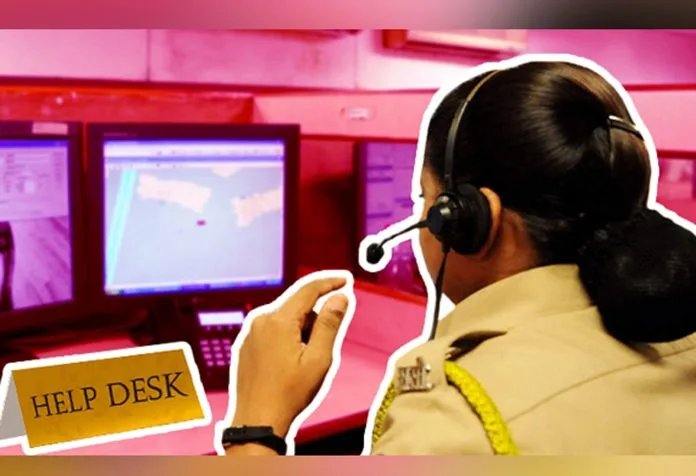
Only 29 Out of 150 Women Helpdesks Headed by Women in J&K: Parliamentary Panel Flags Violation of Nirbhaya Fund Norms

In a glaring violation of the Nirbhaya Fund guidelines, only 29 out of the 150 Women Helpdesks set up across Police Stations in the Union Territory of Jammu and Kashmir are currently headed by women police officers. This stark shortfall has drawn the attention of the Department-related Parliamentary Standing Committee on Education, Women, Children, Youth and Sports, which expressed concern over the non-compliance in its recent report presented in Parliament.

The Nirbhaya Fund, instituted by the Government of India following the 2012 Delhi gang rape incident, is a dedicated corpus aimed at enhancing the safety and security of women. Among several initiatives funded through this mechanism is the establishment of Women Helpdesks at Police Stations, designed to make law enforcement more accessible and responsive to women’s needs.

As per the guidelines, each Women Helpdesk must be headed by a woman police officer—preferably of the rank of Junior Sub-Inspector (JSI) or Assistant Sub-Inspector (ASI), but not below the rank of Head Constable. The presence of a female officer is meant to ensure a more approachable and empathetic environment for women seeking help, especially in sensitive and distressing situations.

However, official data from the Union Ministry of Women and Child Development reveals that only 29 of the 150 operational Women Helpdesks in Jammu and Kashmir are currently headed by women officers, undermining the very essence of the initiative.

The Parliamentary Panel emphasized that such non-compliance defeats the core objective of making Police Stations women-friendly, thereby reducing the effectiveness of efforts to encourage women to report crimes and seek help.

In addition, the committee raised concerns over the slow pace of Anganwadi Centre upgradation in the Union Territory. Out of the 338 centers sanctioned by the Union Ministry—86 in 2022-23, 50 in 2023-24, and 202 in 2024-25—only 135 have been upgraded to date. The upgradation is crucial to improving early childhood care and development, including better nutrition, health, and pre-school education.

The report also highlighted financial underutilization in key welfare schemes. A sum of ₹5,095.68 lakh remains unspent under the Poshan Abhiyan as of February 21, 2025. Poshan Abhiyan is the Prime Minister’s flagship initiative to tackle malnutrition among children, adolescent girls, and pregnant and lactating mothers.

Likewise, under Mission Vatsalya—formerly known as the Integrated Child Protection Scheme—an unspent amount of ₹3.76 crore remains in the UT’s account. This scheme focuses on the care, protection, and holistic development of children in vulnerable situations.

The Parliamentary Committee has urged the UT administration to take immediate corrective measures, ensure full compliance with existing guidelines, and expedite the implementation of critical schemes for the welfare of women and children in the region.

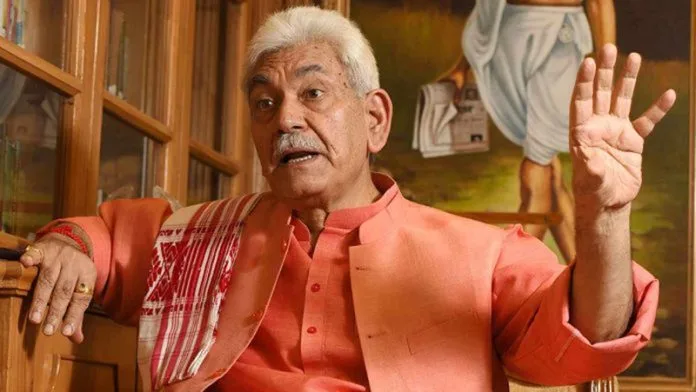
“I Know My Limits, Will Never Cross Them”: LG Manoj Sinha Amid JKAS Transfer Row

JAMMU – In a bold and assertive statement, Lieutenant Governor Manoj Sinha clarified today that the recent transfer of 48 JKAS officers was well within the provisions of the Jammu and Kashmir Reorganization Act, 2019, amid strong objections from the opposition, including the Omar Abdullah-led Government-in-waiting and alliance partners.

“I haven’t done anything outside the Act. I know my limits and will never cross them,”
— LG Manoj Sinha in an interview aired on national TV.

🗳️ Statehood & Elections: “Wait and Watch”

On the subject of restoration of Statehood, Sinha reaffirmed that the Centre is committed, referencing statements by Home Minister Amit Shah and PM Modi.

Delimitation, then elections, and then Statehood — in that sequence,” he reiterated.

🔒 Peace in Jammu & Kashmir is Real, Not Forced

Rejecting allegations of “forced peace,” Sinha asserted that the drop in infiltration, record tourist footfall, and decline in local militant recruitment are testimony to real, lasting peace in the region.

“People visiting the Valley are our brand ambassadors,” he said.
“Pakistan is frustrated; its efforts to create disturbances will not succeed.”

🚨 Jammu Region to Be Normal Soon, Says LG

Amid recent tensions in upper reaches of Jammu, Sinha confirmed the deployment of Army, CRPF, and JKP under a 360° security plan.

“Assam Rifles and CRPF have taken positions. There is full coordination among forces,” he added.
“The people of Jammu have never supported terrorism. Peace will return swiftly.”

🏞️ Development, Not Disturbance: J&K Rising

Calling Pakistan a failed state, Sinha said while the neighbor struggles for ration, Jammu and Kashmir is surging ahead in infrastructure and economy.

  • 46 new industrial estates underway

  • ₹1.5 lakh crore worth of investment proposals received

  • Over 1000 startups, 383 led by women entrepreneurs

🕉️ Shri Amarnath Ji Yatra 2025: Big Boost in Facilities

  • Baltal track widened from 6ft to 12ft

  • Grid power supplied to Yatra base camps

  • Security and logistics preparations in full swing

🚫 Black Sheep Won’t Be Spared

Sinha emphasized the importance of cleansing the administration, stating that some elements had been misused in the past for temporary peace.

“Action will continue against such individuals till they exist in the system.”

Venkatesh Iyer Silences Critics with Blistering Knock, Stresses Team Impact Over Price Tag

0

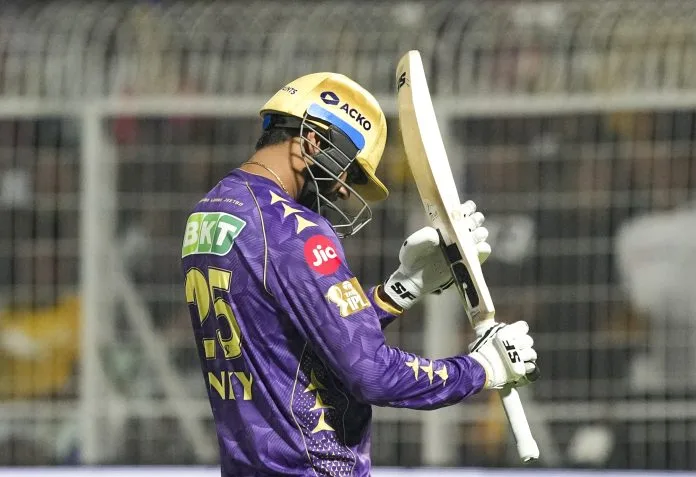
Kolkata Knight Riders (KKR) vice-captain Venkatesh Iyer has made it clear that his hefty ₹23.75 crore price tag isn’t a burden, nor does it dictate his every move on the field. After a couple of underwhelming performances to start the IPL season, Iyer bounced back in style, smashing a 29-ball 60 that led KKR to an emphatic 80-run victory over Sunrisers Hyderabad (SRH).

Speaking candidly at the post-match press conference, Iyer acknowledged the pressure but dismissed the notion that his price means he must score heavily in every outing.

“I won’t lie, there is a little pressure. You guys talk so much,” he quipped. “But being the highest-paid player doesn’t mean I have to score in every match. It’s about the impact I make and how I contribute to wins.”

Iyer, who was re-signed by KKR through the Right to Match (RTM) card during the mega auction, became their most expensive player and the third costliest in IPL history. His slow start to the season sparked debates, but his powerful innings against SRH was a resounding answer.

When asked whether the performance released the pressure of expectations, Iyer turned the question around:

“You tell me? Once the IPL starts, whether you’re paid ₹20 lakh or ₹20 crore, you’re a team player. Sometimes my job is just to hold one end—even if I don’t score, that’s still value to the team.”

Adapting to Conditions, Not Chasing Records

Addressing criticism around the Eden Gardens pitch, often viewed as unfriendly to KKR’s spin-heavy attack, Iyer said the team adapts to whatever is in front of them.

“We’re professionals. Of course, it helps to get conditions that suit us at home, but we never complain. We adjusted well today and used the surface to our advantage.”

KKR’s season had started shakily, with collapses against RCB and MI, drawing criticism for reckless batting. But Iyer clarified that KKR’s philosophy isn’t about all-out aggression.

“Aggression doesn’t mean swinging at everything. It’s about playing with positive, calculated intent. We’re not a team aiming for 250 one day and collapsing for 70 the next.”

In what seemed like a dig at SRH, who posted a record 286/6 earlier this season but have since slumped, Iyer emphasized consistency and smart cricket:

“We want to assess the pitch quickly and aim for a score that’s 20 runs above par—that’s our version of aggression.”

Partnership with Rinku Singh Seals the Deal

After losing Ajinkya Rahane and Angkrish Raghuvanshi in quick succession, Iyer and Rinku Singh steadied the ship and then launched a final-overs assault, adding 91 runs together with 78 coming in the last five overs.

“The message during the timeout was clear—this wasn’t a pitch to start hitting from ball one. We had to take time and assess. The ball was gripping and turning, so a thoughtful approach was needed,” Iyer explained.

With his return to form and leadership at the crease, Iyer has not only justified his price tag for now but also reaffirmed that cricket, at its core, is still about smart, team-first decisions—not just big money or big hits.

Rahi Sarnobat’s Remarkable Comeback: From Medical Crisis to National Games Gold

0

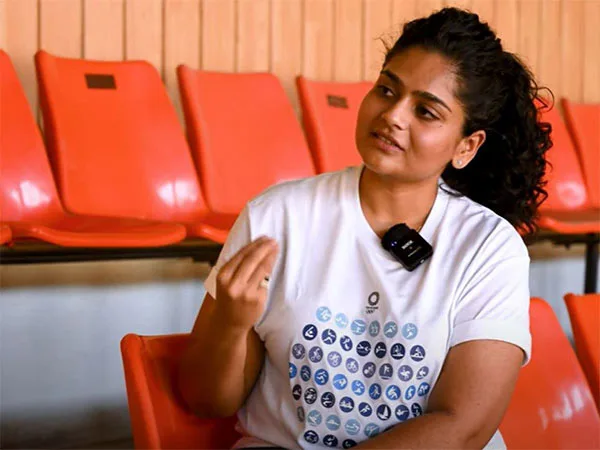
Ace pistol shooter Rahi Sarnobat scripted an inspiring comeback at the National Games in Dehradun, clinching gold in the Women’s 25m air pistol event. The 34-year-old, a two-time Olympian, made her return to competitive shooting after a serious health crisis, showcasing immense resilience and determination.

Speaking on the House of Glory podcast, an initiative by the Gagan Narang Sports Foundation, Rahi opened up about her battle with neuropathic pain syndrome, a condition that derailed her life and sporting career in 2022.

Her ordeal began while preparing for the national camp for the World Championships, when she started experiencing nerve pain and hot flashes. Despite undergoing multiple tests—including ECGs and routine diagnostics—no cause was identified initially. “I couldn’t lie down. I had to sit and sleep for months. Finally, my medical team advised me to see a neurologist,” Rahi shared.

After extensive testing, she was diagnosed with neuropathic pain, a condition without a fixed pattern or treatment. “I was sleeping for 17–20 hours a day, staring at the ceiling, just existing. I wasn’t even aiming for a comeback, I just wanted to live a normal life,” she recalled emotionally.

This wasn’t her first major hurdle. Back in 2014, a freak hairline fracture in her shooting arm sidelined her for seven months, but she bounced back to win Asian Games gold in 2018 and competed in the Tokyo Olympics in 2021.

However, Rahi noted that her latest comeback was far more complex. “Injury during the Rio cycle had a set routine and known treatment. But this time, I was in a dark, uncertain space. I didn’t even know if I’d return to life, let alone sport,” she said.

Recovery began with small steps. Her first task was simply to sit and watch a TV episode for 20 minutes—a challenge due to severe fatigue. Her physiotherapy sessions spanned hours daily, slowly rebuilding her strength.

Rahi’s journey, though painful, has transformed her outlook. “Now, I shoot for myself and the team that stood by me. I’m not trying to prove anything to the world. I’m stronger, more courageous, and I know this dream lives in me for a reason,” she reflected.

Defeating fellow shooter Simranpreet Kaur to claim gold at the National Games marked more than just a victory—it was a testament to Rahi’s unbreakable spirit. “I want to be remembered as someone who made things happen,” she concluded.

Lok Sabha Adjourned Sine Die, Budget Session Concludes

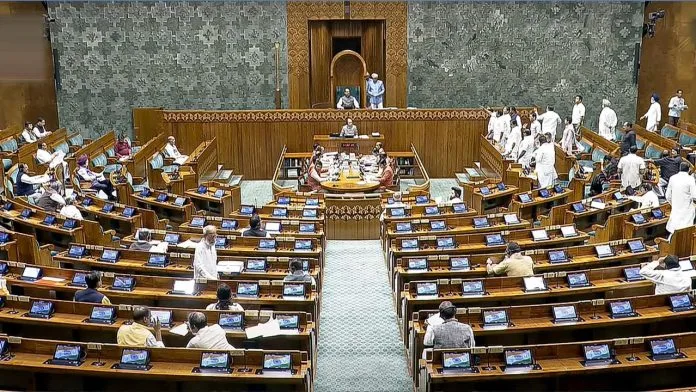
The Lok Sabha was adjourned sine die on Friday, marking the conclusion of the Budget Session that began on January 31.

When the House reconvened at 12 noon after an earlier adjournment over remarks by Congress leader Sonia Gandhi, Speaker Om Birla delivered his valedictory address before adjourning the House indefinitely.

He highlighted that 16 bills were passed during the session and that House productivity exceeded 118%. However, opposition members protested his remark that Gandhi’s claim—that the Waqf Amendment Bill was bulldozed without discussion—was unfortunate and against the dignity of the House.

During the session, the government completed its budgetary exercise, with the Lok Sabha approving the demands for grants for various ministries along with the Finance Bill. The budget for Manipur, which is currently under central rule, was also passed.

The session also saw heated debates, particularly over the Waqf Amendment Bill, which was eventually passed by Parliament despite strong opposition. Lawmakers sat for extended hours to ensure its approval.

Supreme Court Declines Plea to Ban Social Media for Children Under 13

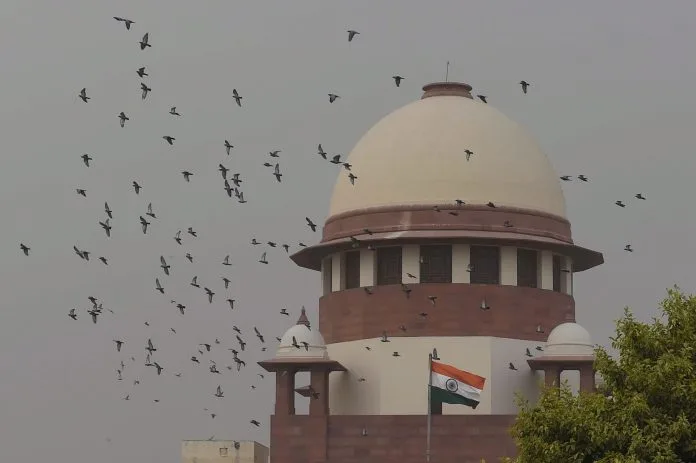
The Supreme Court on Friday refused to entertain a petition seeking a statutory ban on social media usage for children below 13 years, stating that it is a policy matter and should be addressed by Parliament.

A bench of Justices B.R. Gavai and Augustine George Masih told the petitioner’s counsel, “It is a policy matter. You ask Parliament to enact the law.”

While disposing of the plea, the court granted the petitioner liberty to make a representation to the authorities, directing that if such a request is made, it should be considered within eight weeks as per the law.

The petition, filed by Zep Foundation through advocate Mohini Priya, urged the Centre to implement a strict age verification system, such as biometric authentication, to regulate children’s access to social media. It also sought strict penalties for social media platforms failing to comply with child protection regulations.

The court’s decision reinforces the stance that issues related to digital regulations should be formulated through legislative policy rather than judicial intervention.

High Court Seeks Personal Appearance of Social Welfare Director Over Shelter Homes

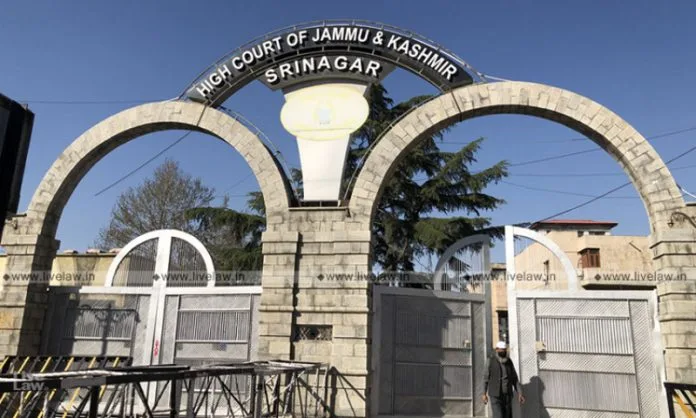
The High Court has directed the Director of the Social Welfare Department to appear in person if a detailed affidavit regarding the establishment of shelter homes for destitute women across Jammu and Kashmir is not submitted by the next hearing.

A Division Bench comprising Chief Justice Tashi Rabstan and Justice M.A. Chowdhary issued the order while hearing a Public Interest Litigation (PIL) filed by Mehram Women Cell Kashmir. The petition seeks the implementation of the Domestic Violence Act, 2005, which mandates the establishment of shelter homes for women in distress.

Previously, the court had granted the government four weeks to respond to concerns raised by the petitioner over an “inadequate” status report submitted by the authorities. However, the required detailed affidavit had not been filed by the given deadline.

During the latest hearing, the court reiterated its directive, warning that failure to comply would require the Director of Social Welfare to be present in person on the next date of hearing.

“Faheem Nissar Shah, GA, seeks and is granted further one week’s time as a final opportunity, failing which the Director of Social Welfare shall appear in person on the next date of hearing. List again on 16-04-2025,” the Division Bench ordered.

The case underscores the urgency of ensuring adequate infrastructure and resources for implementing the Domestic Violence Act, 2005, across Jammu and Kashmir.

Chief Secretary Reviews National Highway Projects and Hydro Power Policy

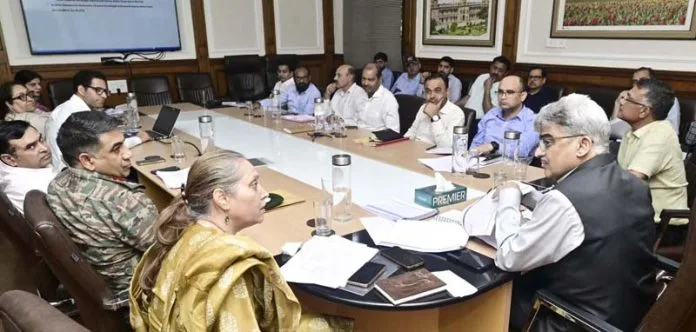
Chief Secretary Atal Dulloo chaired a high-level meeting to assess the progress of National Highway projects across the Union Territory, issuing firm directives to ensure their timely completion while minimising public inconvenience.

The meeting was attended by senior officers, including Principal Secretary Agriculture Production Department, Shailendra Kumar; Commissioner Secretary, Forest, Ecology & Environment, Sheetal Nanda; Secretary, Public Works (R&B), Bhupinder Kumar; and Divisional Commissioner Jammu, Ramesh Kumar. Other officers participated online. Representatives from key agencies such as the National Highways Authority of India (NHAI), National Highways and Infrastructure Development Corporation Limited (NHIDCL), and the Border Roads Organisation (BRO) were also present.

The Chief Secretary reviewed various National Highway projects, including the Delhi-Amritsar-Katra (DAK) Expressway, four-laning of Banihal Bypass, Srinagar Ring Road, Jammu-Akhnoor National Highway, Chenani-Sudhmahadev Road, Khellani Bypass Tunnel, and projects under Project SAMPARK. He scrutinised the progress of individual packages, scheduled completion dates, and financial status, directing the NHAI to expedite work while ensuring minimal disruption to the public.

“Delays are unacceptable. We must prioritise efficiency and public convenience in equal measure,” Dulloo asserted. He also highlighted the region’s challenging topography and urged proactive planning to mitigate weather-related and natural obstacles. Additionally, Director Geology and Mining, Suraj Parkash Rukwal, was tasked with ensuring that mining activities do not hinder progress, while forest clearance issues were discussed with Commissioner Secretary Sheetal Nanda.

In another key meeting, the Chief Secretary reviewed the draft Jammu and Kashmir Hydro Power Policy 2025, underscoring the Union Territory’s vast potential in hydropower generation and its role in economic development. The policy aims to attract private investment by restructuring the existing framework. It proposes classifying hydroelectric projects into two categories: Small Hydroelectric Projects (up to 25 MW) and Large Hydroelectric Projects (above 25 MW and up to 100 MW). The Jammu and Kashmir Energy Development Agency (JAKEDA) will oversee projects up to 10 MW, while the Jammu and Kashmir Power Development Corporation Limited (JKPDCL) will manage those above 10 MW.

During discussions, the Chief Secretary stressed the importance of reducing power losses, which he described as a major drain on resources. The meeting, attended by Principal Secretary Power Development Department, H. Rajesh Prasad; Principal Secretary Finance, Santosh Dattatraya Vaidya; Managing Director JKPDCL, Pankaj Magotra; and Managing Director Jammu Power Distribution Corporation Limited (JPDCL), Ch Mohd Yasin, focused on finalising the policy framework to harness Jammu and Kashmir’s hydropower potential and attract investment.

The UT administration will also consult stakeholders before finalising the policy, ensuring a collaborative approach to sustainable development.

Chief Justice Tashi Rabstan Calls for United Effort Against Drug Menace

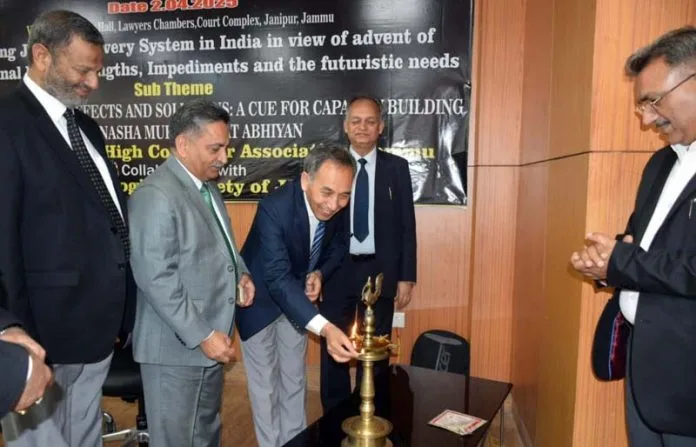
Chief Justice of Jammu & Kashmir and Ladakh High Court, Justice Tashi Rabstan, emphasized the need for a collaborated and integrated approach to combat the rising drug menace in J&K and Ladakh.

🎤 He was speaking as the chief guest at a seminar titled “Drug Use; Addiction, Effects and Solutions: A Cue for Capacity Building Under Nasha Mukt Bharat Abhiyan”, organized by the J&K High Court Bar Association Jammu in collaboration with the Criminologists Society of J&K at Lawyers Chambers, Jammu.

⚖️ Legal Fraternity: The Backbone of Society

Presided over by Justice Sanjeev Kumar, the seminar witnessed the presence of Principal District and Sessions Judge Jammu Yash Pal Bourney, Registrar Judicial Sandeep Kour, Principal Secretary to Chief Justice M.K. Sharma, and a large gathering of Judicial Officers, Prosecution Officers, and Advocates.

💬 “Lawyers are the backbone of society. Their contribution is crucial in fighting the drug menace. The new criminal laws will also play a key role in creating deterrence,” said Chief Justice Rabstan.

🎭 Innovative Approaches to Awareness

Sharing his past experience, Justice Rabstan highlighted his efforts as the Chairperson of SALSA, where he educated students through nukkad nataks, skits, dramas, and interactive sessions with legal experts.

👏 He also congratulated Advocate Rameshwar Jamwal, Balbir Singh Manhas, and their team for taking up such a noble cause.

🧠 Criminal Behavior & Rehabilitation

🚨 Rameshwar Singh Jamwal, President of the Criminologists Society, delivered a detailed keynote address through a PowerPoint presentation. He explained:
✅ How criminal behavior develops
✅ The genetic and epigenetic impact of drug addiction on children
✅ The success of yogic and meditational techniques piloted in District Jail Jammu, which showed 75% positive results

He sought the support of the Judiciary and Government to expand these techniques at the grassroots level.

⚖️ Stricter Laws & Civil Society’s Role

Justice Sanjeev Kumar stressed that the drug problem involves both victims and perpetrators:
🛑 Victims – Need counseling & rehabilitation
⚠️ Drug Peddlers & Growers – Should face deterrent punishment

💡 He praised NGOs and the Criminologists Society for their efforts and urged civil society to fight drug abuse tooth and nail.

📌 Key Takeaways from the Seminar:

Lawyers and Judiciary must actively combat drug abuse
Awareness through creative methods like street plays & counseling
Stronger legal framework to dismantle drug networks
Support for rehabilitation programs using meditation & therapy

This powerful discussion emphasized collective action in eradicating drug addiction and creating a safer society for future generations.