Wednesday, July 15, 2026
Home Blog Page 154

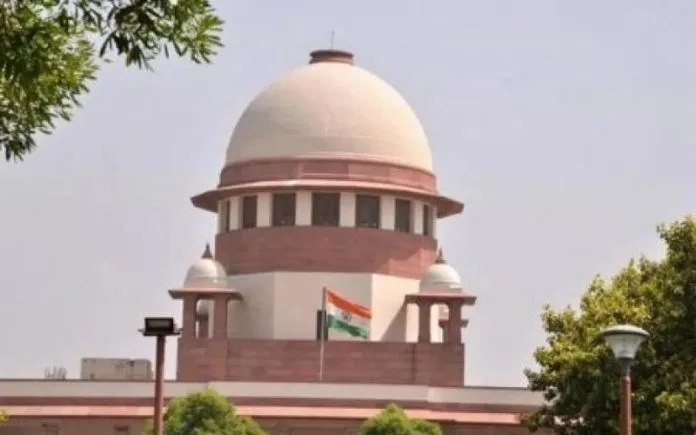
Supreme Court Upholds Bombay High Court Order Striking Off Allegations Against Nitin Gadkari in 2019 Election Petitions

The Supreme Court on Wednesday upheld the Bombay High Court’s decision to strike off certain allegations made against Union Minister Nitin Gadkari in petitions challenging his 2019 election from the Nagpur Lok Sabha constituency.

A bench of Justices Surya Kant and N Kotiswar Singh dismissed the appeals filed by Congress candidate Nana Falgunrao Patole and voter Nafis Khan, who had challenged the High Court’s order dated February 26, 2021.

“The reasoning adopted by the High Court is correct. We see no reason to interfere with the High Court’s order,” the bench observed.

The Bombay High Court had earlier refused to dismiss the election petitions but struck down specific averments concerning the income and property of Gadkari’s family members.

Both petitioners approached the Supreme Court contending that the High Court had erred, arguing that the power to strike off pleadings is an extraordinary one that must be exercised sparingly and with utmost caution.

Khan alleged Gadkari had submitted false information in his nomination papers and election affidavit. Patole, meanwhile, claimed that procedural lapses occurred during the election process.

Noting that Gadkari had again won the Nagpur seat in the 2024 general elections, the Supreme Court endorsed the High Court’s reasoning and dismissed the petitions.

LG Manoj Sinha Reviews J&K Security; Orders Strong Action to Eliminate Terror Ecosystem

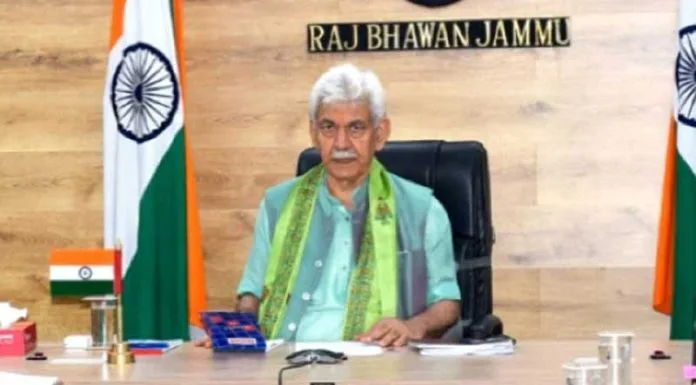
Lieutenant Governor Manoj Sinha today chaired a high-level security review meeting with senior officials to assess the prevailing situation in Jammu and Kashmir.

The meeting was attended by Nalin Prabhat, Director General of Police, J&K; Chandraker Bharti, Principal Secretary Home; Nitish Kumar, Additional Director General of Police, CID; Dr. Mandeep K. Bhandari, Principal Secretary to the Lieutenant Governor; Bhim Sen Tuti, Inspector General of Police, Jammu; and Shiv Kumar Sharma, Deputy Inspector General, Jammu-Samba-Kathua Range.

During the meeting, the Lieutenant Governor emphasized the need for robust and coordinated efforts to completely eradicate terrorism and its support network in the Union Territory.

“It is the collective resolve of the people of J&K and the nation to destroy the root of terror emanating from our neighbourhood. We must be resolute to fulfill this mission,” Sinha asserted.

He directed security agencies to take strong action against Over Ground Workers (OGWs) who provide logistical support, identify targets, and aid terrorists in evading security forces. “The infrastructure and support system of terrorism in every nook and corner of the Union Territory must be dismantled permanently,” he stressed.

The Lieutenant Governor underscored the priority of ensuring a sense of security for the common citizen and instructed officials to further strengthen the security grid. He also called for enhanced coordination and synergy among all security agencies to achieve the shared objective of lasting peace.

CCS Reviews J&K Security; India Bans Pak Airlines from Airspace Amid Retaliation Speculations

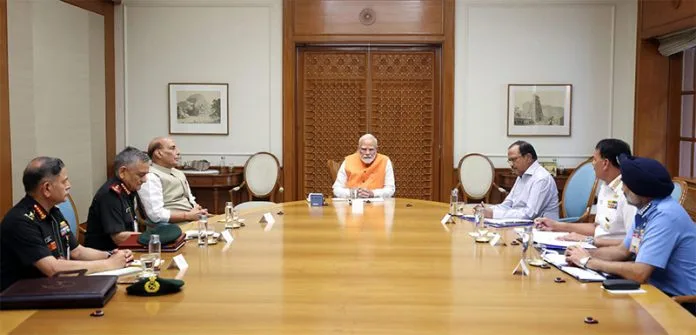
The Cabinet Committee on Security (CCS), chaired by Prime Minister Narendra Modi, convened today at his Lok Kalyan Marg residence to assess the overall security situation in Jammu and Kashmir, amidst rising anticipation of India’s response to the Pahalgam terror attack.

The meeting, attended by key Union Ministers including Defence Minister Rajnath Singh, Home Minister Amit Shah, and External Affairs Minister S. Jaishankar, came a day after the Prime Minister met top defence officials and granted the armed forces “complete operational freedom” to decide the “mode, targets, and timing” of the response to the April 22 terror strike that left 26 civilians, mostly tourists, dead.

This is the second CCS meeting following the Pahalgam attack. The first, held on April 23, resulted in significant punitive measures against Pakistan, including the suspension of the Indus Waters Treaty, closure of the Attari border, and downgrading of diplomatic ties—actions reflecting the cross-border linkages to the deadly attack.

Meanwhile, in a parallel development, the Indian government has officially banned Pakistani airlines from using Indian airspace. A NOTAM (Notice to Airmen) was issued Wednesday, effectively denying overflight access to Pakistan carriers. This move follows Pakistan’s earlier decision to restrict Indian airlines from its airspace in the aftermath of the terror incident.

On the political front, Union Minister Arjun Ram Meghwal stated that the Cabinet Committee on Parliamentary Affairs (CCPA) will decide whether to convene a special Parliament session, as demanded by several opposition parties, including the Congress. Party leaders such as Mallikarjun Kharge and Rahul Gandhi have written to the Prime Minister, urging a collective legislative stand following the tragedy in Pahalgam.

Meghwal also criticized Samajwadi Party leader Akhilesh Yadav for a controversial image that juxtaposed Yadav’s face with that of Dr. B.R. Ambedkar. The BJP leader called the image an insult to Ambedkar and accused the SP-Congress alliance of attempting to manipulate Dalit sentiments, citing the Congress’s past opposition to Ambedkar in elections.

As tensions escalate, India’s response to the Pahalgam attack appears to be unfolding across military, diplomatic, and political fronts, with the nation closely watching for the next move.

PM Modi Grants Armed Forces Full Operational Freedom Following Pahalgam Terror Attack

Prime Minister Narendra Modi, on Tuesday, asserted that the Indian armed forces have been given “complete operational freedom” to determine the mode, targets, and timing of India’s response to the recent Pahalgam terror attack, which claimed the lives of 26 civilians, mostly tourists.

Chairing a high-level meeting with top defence officials, including Defence Minister Rajnath Singh, National Security Advisor Ajit Doval, Chief of Defence Staff General Anil Chauhan, and the chiefs of the Army, Navy, and Air Force, PM Modi reiterated the national resolve to crush terrorism in all its forms.

Government sources quoted Modi as saying, “They (the armed forces) have complete operational freedom to decide on the mode, targets and timing of our response.” He also expressed full faith in the professionalism and capability of the Indian defence forces to handle the situation.

The meeting came as the country mourns the most brutal terror attack on civilians in recent years, which occurred in Pahalgam, Kashmir, on April 22. Modi had earlier vowed to track down the terrorists and their sponsors “to the ends of the earth,” hinting at Pakistan’s long-standing support for terror outfits operating against India.

India has already begun responding diplomatically and strategically, including putting the Indus Waters Treaty with Pakistan in abeyance.

Meanwhile, Union Home Secretary Govind Mohan chaired a separate high-level meeting with the chiefs of paramilitary forces, including DGs of the BSF, NSG, Assam Rifles, and senior officers from the SSB and other agencies. The meeting, held amid heightened national security concerns, focused on counter-terror preparedness and border management.

The Home Secretary also held a video conference with Chief Secretaries of all states, instructing them to ensure the timely departure of Pakistani nationals whose visas have been revoked.

In another significant development, RSS Chief Mohan Bhagwat met with PM Modi, reportedly in connection with the attack. The Rashtriya Swayamsevak Sangh, considered the ideological backbone of the BJP, has been vocal on national security issues.

PM Modi also held a separate meeting with Home Minister Amit Shah, who has been leading intensive security reviews and anti-terror initiatives since the attack.

With national sentiment running high and the government’s record of decisive military responses — such as the 2016 surgical strikes and the 2019 Balakot airstrikes — expectations are mounting for a strong and strategic retaliation.

Over Two Dozen Pakistanis, Including Women Married in J&K, Sent for Deportation via Attari Border

In a coordinated effort led by the Union Ministry of Home Affairs (MHA), over two dozen Pakistani nationals—many of them women married to Indian citizens—were sent to the Attari border in Amritsar, Punjab for deportation to Pakistan.

Jammu Region Deportations:

  • From Jammu: Four women, including Menal Khan, wife of CRPF constable Munir Ahmed, were deported. Others include Ayesha Kiran, Saba Kiran, and Rakshanda Rashi.
  • From Rajouri: Eight individuals, including six women and children, were picked up. Names include Sara Khan (wife of Aurangzeb), Azra Bibi, Atiya Aslam, Iqra Aslam, Anam Khalil, and Sarwat Begum.
  • From Poonch: Eleven civilians, including four women and eight members of a single family, were deported. Most belonged to Mendhar tehsil. Ten had been residing illegally; one had overstayed.

Kashmir Region Deportations:

  • Srinagar & Other Districts: 59 Pakistani nationals, many of whom were wives and children of former militants who returned under the 2010 rehabilitation policy, were transported to Punjab. These included:
    • 36 from Srinagar,
    • 9 from Kupwara,
    • 8 from Baramulla,
    • 4 from Budgam, and
    • 2 from Shopian.

Authorities confirmed the group was taken by bus to Punjab, awaiting formal handover to Pakistani officials. Final confirmation from the Pakistani side is still pending.

Mumbai Indians Triumph as 19,000 Children Witness Dreams Take Flight at Wankhede

0

In a heartwarming blend of sports and social impact, Mumbai Indians (MI) clinched a thrilling win over Lucknow Super Giants (LSG) at the Wankhede Stadium on Sunday. But beyond the scoreboard, the day belonged to the 19,000 children who filled the stands in a wave of blue — many experiencing a live cricket match for the very first time.

The occasion marked the annual Education and Sports for All (ESA) Match, a flagship initiative of the Reliance Foundation, championed by MI owner Nita Ambani. The stadium pulsed with excitement as children from underprivileged backgrounds, including specially abled youth, cheered passionately for their home team.

“This is not just a match. It’s a celebration of hope, dreams and joy,” said Ambani, addressing the children. “Many of these kids are stepping into a stadium for the first time. The happiness on their faces says it all.”


A Day of Dreams and Determination

The MI victory — their 6th in 10 matches, placing them third on the IPL points table — was further sweetened by the unforgettable experience offered to the children. Ambani interacted personally with many of the young fans.

“One little girl told me she wants to become like Jasprit Bumrah. A young boy only wanted to shake hands with Rohit Sharma. These small dreams matter — they can lead to big futures,” she said.

Highlighting the core philosophy of ESA, Ambani emphasized that sports and education go hand in hand in shaping a child’s future.

“Children learn as much on the sports field as they do in classrooms. ESA stands for giving every child a chance to dream, to learn, to grow.”


Massive Effort, Unmatched Impact

The scale of the initiative was awe-inspiring:

  • 19,000 children from across Mumbai
  • 500 buses mobilized for transportation
  • 100,000 meals served throughout the day

The ESA matchday — a logistical feat — showcased the deep commitment of the Reliance Foundation to inclusivity and empowerment through sport.

Launched in 2010, the ESA initiative has reached over 23 million children across India, offering access to sports, education, and life-changing experiences.


A Legacy Beyond Cricket

As the Mumbai Indians celebrated their on-field success, the greater victory was evident in the stands — in the eyes of children who discovered a new world, in dreams sparked by the roar of a stadium, and in the belief that they, too, can shine.

For the Mumbai Indians, the ESA match remains more than tradition — it’s a mission.

“This is MI’s favourite day of the season,” Ambani concluded. “Because this day belongs to the children — to their dreams and their future.”

Punjab to Deploy Anti-Drone System by October to Thwart Cross-Border Smuggling

0

The Punjab government will roll out a sophisticated anti-drone system by September or October this year to curb the increasing instances of narcotics and weapons being smuggled from Pakistan using unmanned aerial vehicles, announced Director General of Police (DGP) Gaurav Yadav on Monday.

Addressing a press conference, the DGP said testing of the system has already been completed along the Indo-Pak border, and coordination with the Border Security Force (BSF) is underway for deployment on the second line of defence.

“Punjab will install the anti-drone system by October. Our tests have been successful, and we are in close touch with the Ministry of Home Affairs,” Yadav said.


Massive Recruitment and Legal Reforms on the Horizon

In a significant augmentation of border security, Yadav revealed that the state will soon recruit 5,500 home guards to strengthen its border defence mechanism.

Meanwhile, the Punjab government is also reviewing a proposal to set up 30 exclusive NDPS courts to fast-track trials under the Narcotic Drugs and Psychotropic Substances (NDPS) Act, with an annual budget allocation of ₹22.8 crore under consideration.


Crackdown on Drug Smuggling: Thousands Arrested, Massive Seizures

Since March 1, Punjab Police has registered 4,659 FIRs under the NDPS Act and arrested 7,414 drug traffickers, including 1,877 high-profile offenders, the DGP informed.

Seizures include:

  • 297 kg heroin
  • 100 quintals poppy husk
  • 153 kg opium
  • 95 kg ganja
  • 21.77 lakh tablets, capsules, pills
  • ₹8.03 crore in cash

Police have conducted 908 targeted operations at 755 drug hotspots, arresting 1,774 traffickers during cordon-and-search operations.


Pakistan Waging Proxy War, Says Top Cop

Slamming Pakistan’s role, DGP Yadav said,

“Pakistan is pursuing a proxy war to bleed India by a thousand cuts. We’ve busted their networks and foiled their designs.”

He added that 235 Pakistani nationals have entered Punjab recently, and joint monitoring with Jammu and Kashmir Police has been intensified, particularly in Pathankot, which reported suspicious activity.


Safety of Kashmiri Students Ensured Post Pahalgam Attack

In light of the April 22 Pahalgam terror attack, which killed 26 people, mostly tourists, Punjab Police has reached out to Kashmiri students in the state, assuring full security. Senior Superintendents of Police (SSPs) and Deputy Inspectors General (DIGs) have met with students across colleges, and travel is being facilitated for those wishing to return home.


Legal Wins and Economic Crackdown on Smugglers

Punjab has achieved an 89% conviction rate in NDPS cases since March 1, one of the highest in the country. Out of 836 cases decided, 744 ended in convictions, including 144 kingpins sentenced to 10+ years’ rigorous imprisonment.

To cripple drug networks economically, the police have:

  • Frozen assets worth ₹32.95 crore (under Section 68F of NDPS Act)
  • Demolished 72 illegally constructed properties of drug traffickers
  • Formulated a 3-tier plan to dismantle hawala routes, seize assets, and demolish illegal constructions

Yadav also cited the Transfer of Prisoners Act, recently notified by the Punjab government, to consider relocating high-risk prisoners outside the state during trials.


Public Help and Police Action: A Unified Fight

The Safe Punjab Anti-Drugs Helpline — 9779100200 — has led to 503 FIRs and 659 arrests based on public tips.

“We urge citizens to come forward and report anonymously. Every lead is monitored, and the Chief Minister personally reviews progress,” the DGP said.


👮 DGP Gaurav Yadav was accompanied by senior officers of the Anti-Narcotics Task Force (ANTF): Special DGP Kuldeep Singh, ADGP Nilabh Kishore, and IGP Sukhchain Singh Gill.

National Mission for Clean Ganga Gets Tax Exemption Status

0

In a significant move to boost the Government’s flagship Namami Gange programme, the Finance Ministry has granted tax exemption status to the National Mission for Clean Ganga (NMCG), according to a formal notification issued by the Central Board of Direct Taxes (CBDT).

The notification clarifies that the NMCG is now formally recognized as an authority constituted under the Environment (Protection) Act, 1986, and will enjoy income tax exemption beginning from the Assessment Year 2024–25.


Conditions Apply: Must Continue Public Welfare Mission

The exemption is contingent upon the NMCG continuing to operate with one or more objectives specified in sub-clause (a) of clause (46A) of the Income Tax Act, which includes goals such as:

  • Sustainable development
  • Environmental conservation
  • Advancement of public welfare

This move is expected to enhance operational flexibility and financial efficiency for NMCG, enabling it to channel more resources into environmental and river conservation projects.


Key Functions of the NMCG

Operating under the Ministry of Jal Shakti, the National Mission for Clean Ganga spearheads a range of initiatives aimed at restoring the Ganga’s ecological health. The projects span across several states and include:

  • Construction and management of sewage treatment plants
  • River surface cleaning operations
  • Afforestation and biodiversity conservation
  • Monitoring of industrial effluents
  • Promoting public participation and awareness

The mission plays a pivotal role in implementing the Namami Gange programme, a flagship initiative launched in 2014 to revive the sacred river.


Recognition a Boost to Environmental Governance

Experts say this move not only legitimizes the authority of the NMCG under environmental law but also strengthens India’s fiscal and legal architecture supporting ecological programs.

A senior Finance Ministry official noted, “The exemption recognizes the Mission’s public service role and is aligned with the broader environmental protection goals of the country.”

“A Glimmer of Hope Amid Grief”: CM Omar Abdullah on Pahalgam Tragedy

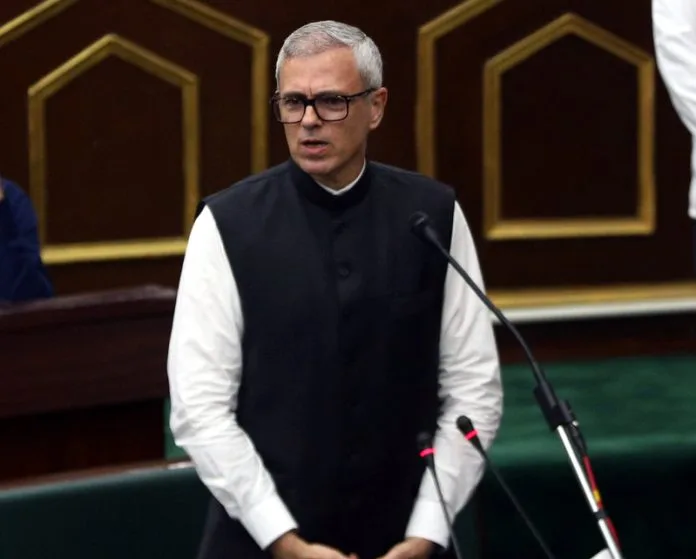
Chief Minister Omar Abdullah struck a deeply emotional and reflective tone during the special session of the Jammu and Kashmir Legislative Assembly, saying that the spontaneous and widespread public outrage over the Pahalgam terror attack could mark a turning point in the Valley’s battle against terrorism.

The Assembly, already united in condemnation of the April 22 killings of 26 civilians at Baisaran, listened intently as Omar emphasized the people’s role in fighting terror:

“We cannot control a terrorist with a gun—but we can end terrorism if people are with us.”


Public Outrage Without Political Call: “A New Ray of Hope”

Highlighting that protests broke out across the state without any party’s call, Omar noted this level of condemnation had not been seen in 21 years.
“From Kathua to Kupwara, people hit the streets—not in anger, but in grief and solidarity,” he said. “Even Srinagar’s Jamia Masjid held a two-minute silence—something unprecedented.”


A Tearful Acknowledgment: “I Failed as CM and Tourism Minister”

In one of the most poignant moments, Omar Abdullah took personal responsibility for the tragedy:

“I invited those tourists to Kashmir as CM and Tourism Minister. I failed to ensure their safe return.”

Fighting emotion, he recounted heartbreaking stories—a child crying beside his father’s bloodied body, a young widow asking what her mistake was.


No Politics, No Demands for Statehood—Only Grief

Rejecting opportunism, the CM declared:

“Curse be on me if I go to Centre now and push for statehood. This is not the time for politics—it is time for mourning and solidarity.”

He promised that the focus must remain on healing and justice, not bureaucracy.


Direct Message to TRF: “Not In Our Name”

Naming terror group The Resistance Front (TRF), which claimed responsibility, Omar asked:

“Did we ask for this? Did we ask for 26 innocent people to be sent home in coffins?”

He stressed that the people of Jammu and Kashmir, regardless of religion or region, categorically rejected the attack and the ideology behind it.


Tales of Valor and Humanity Amid Horror

Paying tribute to Syed Adil Hussain Shah, who died protecting tourists, Omar said:

“He could have fled—but he didn’t.”

He saluted locals who offered free food, rides, and lodging to stranded tourists, citing pony handlers, boatmen, and taxi drivers who displayed Kashmir’s true spirit of hospitality.


Assembly Remembers Its Own Pain

Omar reminded the House of the personal toll terrorism has taken on many MLAs:

“From Shagun Parihar to Sajad Lone, from Rafiq Naik to Sakina Itoo—many among us have lost loved ones to this violence.”

Referring to the 2001 J&K Assembly bombing, he said, “Only this Assembly understands this pain, not even Parliament.”


Warning Against Misinformation

In a stern message, the CM warned social media influencers against spreading fake news.

“90% are truthful. But that 10%—spreading falsehood—must stop. We will not tolerate it.”

Across party lines, lawmakers back Centre’s diplomatic retaliation, call for solidarity and justice

In a rare and powerful show of unity, the Jammu and Kashmir Legislative Assembly on Monday passed a unanimous resolution condemning the barbaric terror attack in Pahalgam that shook the nation last week. Cutting across political and ideological divides, legislators came together to express grief, rage, and determination in the face of violence.

The special session convened in the aftermath of the massacre saw passionate speeches endorsing the diplomatic measures taken by the Government of India on April 23, after a high-level Cabinet Committee on Security meeting.


Sunil Sharma: “PM Will Give Befitting Reply”

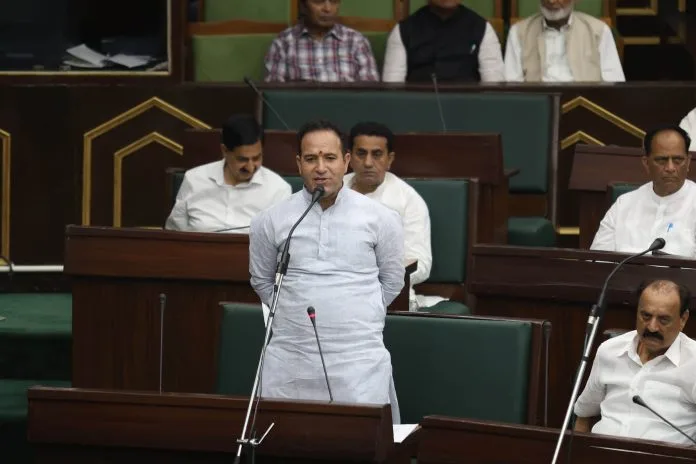
BJP leader and Leader of Opposition, Sunil Sharma, in an emotional address, said the entire nation was watching and mourning. “J&K is known as heaven, and this attack has shaken all humanity,” he said, recounting the pain of a newlywed woman and a young boy who lost loved ones.

Calling for unwavering trust in the leadership of Prime Minister Modi, Sharma stressed patience and unity: “We must trust the Government’s plan. We didn’t eat after the attack, we protested—this unity must now be preserved.”


Opposition Backs Centre, But Flags Security Lapses

Congress MLA Ghulam Ahmad Mir lauded the people’s unity but questioned whether security had failed. “Announcements must become ground action,” he said, warning against lip-service. He also emphasized the need to investigate “black sheep” within the establishment.


No More Dialogue: AAP Demands Military Action

Mehraj Malik of Aam Aadmi Party made a fiery pitch for direct military action against Pakistan. “Enough is enough,” he said. “If we don’t reply in bullet-to-bullet language, this will not stop.”


Valley Rejects Violence: Sajad Lone, Tarigami Echo Shift in Sentiment

Sajad Gani Lone of People’s Conference noted this as a turning point in public perception: “For the first time in 35 years, Kashmiris are rejecting such violence outright.” He called for media sensitivity and national unity.

Veteran leader Mohammad Yousuf Tarigami emphasized communal harmony and participation of local representatives in the anti-terror effort. “Terrorists have no religion. Our message should be clear: we are one.”


Restoring Statehood, Supporting Victims: Wider Concerns Raised

Altaf Ahmad Wani (NC) praised the local people for aiding the injured and emphasized long-overdue restoration of statehood. Waheed Parra of PDP described the massacre as “a crime against humanity,” and called for martyr status for the victims.


Tributes and Proposals: Memorials and Donations

Multiple MLAs including Sheikh Khursheed proposed setting up memorials in Pahalgam and donating legislator salaries to support victims’ families.