Wednesday, July 15, 2026
Home Blog Page 150

India Firmly Rejects China’s Renaming of Places in Arunachal Pradesh: “State Will Always Remain an Integral Part of India

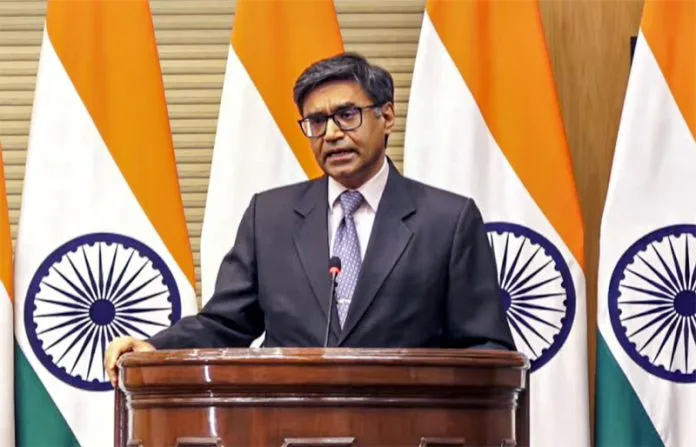
India on Wednesday issued a strong rebuttal to China’s latest attempt to rename several locations in Arunachal Pradesh, calling the move “preposterous” and reaffirming that the northeastern state is an undeniable and inalienable part of India.

The Ministry of External Affairs (MEA) issued the statement in response to China’s release of a new list of Chinese names for places within Arunachal Pradesh — a region that Beijing refers to as part of “South Tibet”, a claim that India has repeatedly and unequivocally rejected.

“We have noticed that China has persisted with its vain and preposterous attempts to name places in the Indian state of Arunachal Pradesh,” said Randhir Jaiswal, spokesperson for the MEA, while addressing media queries.

Consistent with our principled position, we reject such attempts categorically. Creative naming will not alter the undeniable reality that Arunachal Pradesh was, is, and will always remain an integral and inalienable part of India,” Jaiswal asserted.

Background of the Dispute

This is not the first time China has attempted to rename geographical areas in Arunachal Pradesh. Beijing has previously published similar lists under the guise of standardizing place names, an act widely seen by India and the global community as politically motivated and historically baseless.

China’s move comes amid continuing tensions along the Line of Actual Control (LAC) and follows a series of infrastructural and strategic developments undertaken by both sides in the border areas. However, India maintains that its sovereignty over Arunachal Pradesh is absolute and not subject to external dispute.

Diplomatic Reactions

India’s firm response is in line with its consistent diplomatic messaging over the years. Senior government officials and political leaders across party lines have long affirmed that no external party has any locus standi to rename Indian territory, and that such tactics are an affront to India’s territorial integrity.

In recent months, India has also increased infrastructure development and civilian outreach in the border state, sending a clear message that Arunachal Pradesh is not only integral to the Indian Union geographically but also emotionally and politically.

Global Perspective

While China’s assertions are part of its broader regional strategy, they have gained no international recognition, with most nations and global bodies acknowledging India’s administrative control and sovereignty over Arunachal Pradesh.

As geopolitical tensions simmer in the region, experts suggest that India’s unwavering stance on Arunachal Pradesh is a signal of its strategic clarity and commitment to safeguarding national interests against expansionist narratives.

Shaheen Akhtar Becomes First Woman from J&K to Earn FIVB Level-1 Volleyball Coach Certification

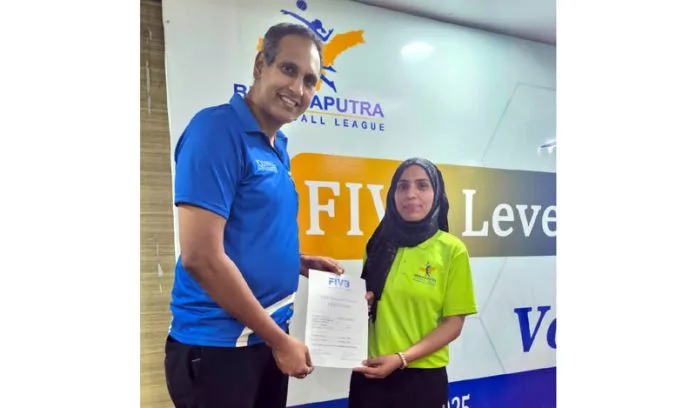
In a groundbreaking achievement for the Union Territory, Shaheen Akhtar, a former national-level volleyball player from District Poonch, has become the first woman from Jammu and Kashmir to qualify as a Level-1 Volleyball Coach under the prestigious International Volleyball Federation (FIVB).

Shaheen successfully completed an intensive five-day coaching course conducted by the BVL Foundation of Assam in Guwahati, emerging as one of just 12 selected participants from across the country — and the only candidate from J&K.


A Career Rooted in Dedication and Excellence

With a rich background in volleyball, Shaheen has long represented Jammu and Kashmir at the national level, earning accolades for her skill and dedication. She further honed her coaching abilities by completing the NS NIS (National Institute of Sports) certification from Bangalore, widely regarded as one of the top coaching credentials in India.

Currently, she is actively coaching young athletes — especially girls — at the Shaheed DySP Manjit Singh Memorial Volleyball Club in Poonch. Her mentorship is playing a vital role in encouraging sports participation and building a sports culture in the region, often challenged by limited infrastructure and opportunities.

“Shaheen’s achievement is a proud moment for the entire region. She is breaking barriers and setting an example for many girls in Jammu and Kashmir who aspire to make a mark in sports,” said Mohd Tariq, Chairman of the Volleyball Club.


Inspiration Beyond the Court

Her success was lauded by the entire volleyball fraternity, with special appreciation extended to Abhijit Bhattacharya, course organizer, and G.E. Sridharan, former national coach of India, who shared invaluable insights and experiences during the training.

“Being trained under such experienced mentors during the course was a transformative experience. It has equipped me with modern techniques and coaching strategies that I can now pass on to the next generation of athletes in J&K,” Shaheen said, beaming with pride.


A New Chapter for Women in Sports Coaching

Shaheen’s milestone is being celebrated not just as a personal victory but as a symbol of progress for women in sports in Jammu and Kashmir. In a region where sports participation among women often faces social and logistical barriers, her success provides a beacon of hope.

“We hope her journey motivates more women to step into coaching and leadership roles in sports,” said a senior official from the Jammu & Kashmir Sports Council.

With her achievement, Shaheen Akhtar has not only carved out her own legacy but has also taken a monumental step toward redefining the landscape of women’s sports in the Union Territory.

Pakistan’s Asia Cup Hockey Participation in Doubt Amid Heightened Indo-Pak Tensions

Pakistan’s participation in the upcoming Hero Asia Cup Hockey Tournament, scheduled to be held in Rajgir, Bihar from August 27 to September 7, remains clouded in uncertainty following escalating tensions between India and Pakistan after the April 22 Pahalgam terror attack and India’s military response through Operation Sindoor.

The continental tournament, which serves as a qualifier for the 2026 Hockey World Cup in Netherlands and Belgium, is slated to feature top Asian teams including hosts India, Pakistan, Japan, Korea, China, Malaysia, Oman, and Chinese Taipei.

However, following a series of high-level retaliatory strikes by India and the current freeze in diplomatic ties, the possibility of Pakistan receiving clearance to compete appears slim, pending a government advisory.

“It is too early to say anything but we will follow the government’s directive on this issue, which has been the case in the past,” said Hockey India Secretary General Bholanath Singh in a statement to PTI.

“We can’t predict anything right now, especially after the recent barbaric Pahalgam attack and the military response that followed. There is still close to three months for the tournament, but we will abide by what our government suggests.”


Diplomatic Fallout Post Pahalgam Attack

The Pahalgam terror attack, which killed 26 civilians, triggered a decisive Indian military response under Operation Sindoor. The Indian Armed Forces carried out targeted missile strikes on terror camps in Pakistan and Pakistan-occupied Jammu & Kashmir, eliminating over 100 militants from outfits such as Jaish-e-Mohammed, Lashkar-e-Taiba, and Hizbul Mujahideen.

In retaliation, Pakistan launched drone and missile attacks across the Line of Control and border regions, which were effectively neutralized by India’s air defence systems. India responded with precision strikes on key military installations, including those in Lahore and Rawalpindi.

Eventually, both nations agreed to a ceasefire on May 10, following an outreach by Pakistan’s Director General of Military Operations to his Indian counterpart.

Despite the cessation of hostilities, India remains firm in its stance. Prime Minister Narendra Modi, in a recent national address, stated unequivocally that future engagement with Pakistan would depend on verifiable actions against terrorism by the neighboring nation.


Awaiting Government Green Signal

Sources within Hockey India confirmed that the decision on Pakistan’s participation hinges solely on a government advisory.

“If the government does not issue an all-clear, Pakistan will not be allowed to participate. The federation has no role beyond implementing what is advised,” said a source familiar with internal discussions, speaking on condition of anonymity.

Should Pakistan be barred, the Asian Hockey Federation (AHF) will have to decide whether to reduce the tournament to six teams or invite an alternate nation to fill the vacant spot.

“It’s very hard to predict right now whether a new team will be added in such a scenario or if it will become a six-team tournament. The AHF will take a call on this,” the official added.


Historical Precedents and Future Implications

The last notable instance of a Pakistani team being barred from a multi-nation tournament in India was the 2016 Junior World Cup, following the Pathankot terror attack. In that case, Malaysia replaced Pakistan in the competition.

A similar shadow now looms over Pakistan’s potential participation in the upcoming Junior World Cup, scheduled to be held in Chennai and Madurai from November 28 to December 10.

The stakes at this year’s Asia Cup are particularly high as the tournament winner will earn a direct entry into the 2026 Men’s Hockey World Cup, to be jointly hosted by Wavre (Belgium) and Amstelveen (Netherlands) from August 14 to 30.

South Korea, the five-time champions, are the defending titleholders, while both India and Pakistan are vying for their fourth Asia Cup crown.

Tri-Service Chiefs Highlight Joint Precision in Operation Sindoor Success

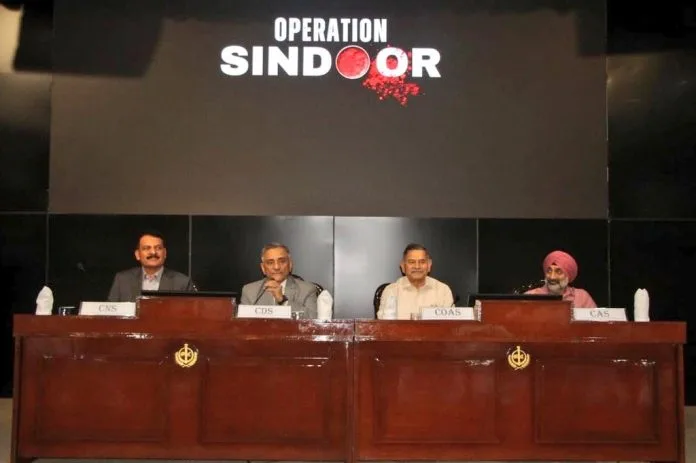
New Delhi – In a rare and strategic briefing on Wednesday, the Apex Leadership of the Indian Armed Forces – Chief of Defence Staff General Anil Chauhan, Army Chief General Upendra Dwivedi, Navy Chief Admiral Dinesh K Tripathi, and Air Force Chief Air Chief Marshal AP Singh – offered a direct and comprehensive perspective on the successful execution of Operation Sindoor.

The high-level interaction, which included discussions with veterans and strategic think tanks, shed light on the Tri-Services synergy, cutting-edge coordination, and multi-domain warfare capabilities demonstrated during the mission.

“Insights on the Tri-Services synergy achieved through clearly stated strategic guidance and the successful execution of new-age multi-domain operations, with an exceptional degree of jointness and integration, were deliberated upon,” the Headquarters Integrated Defence Staff (HQ IDS) stated in a release.


Operation Sindoor: A Decisive Military Response

Launched on May 7, Operation Sindoor was India’s strong military retaliation to the April 22 Pahalgam terror attack, in which 26 civilians lost their lives. The Indian Armed Forces carried out coordinated strikes on terror infrastructure in Pakistan and Pakistan-occupied Jammu and Kashmir (PoJK), resulting in the elimination of over 100 terrorists affiliated with Jaish-e-Mohammed, Lashkar-e-Taiba, and Hizbul Mujahideen.

Following the strikes, Pakistan responded with cross-border shelling and drone incursions across the Line of Control (LoC) and border regions of Jammu and Kashmir. India swiftly responded with a second wave of precision strikes targeting radar installations, communication hubs, and airfields at 11 strategic Pakistani airbases.


Ceasefire Understanding Announced

After days of high-tension military escalation, a mutual understanding for cessation of hostilities between India and Pakistan was reached and announced on May 10, stabilizing the situation across the LoC and airspace corridors.

Despite Pakistan’s initial denials and provocation, India’s prompt and surgical response demonstrated a high degree of operational preparedness, joint force application, and technological dominance across land, sea, and air.

“The world has seen what India is capable of when provoked. Operation Sindoor stands as a testament to the resolve and strength of our forces under unified command,” said a senior military analyst.


India’s New Defence Doctrine in Action

Operation Sindoor is being widely seen as a model of India’s evolving defence doctrine, emphasizing pre-emptive capability, precision response, and integrated warfare strategy. The operation’s success also reflects India’s shift toward multi-theatre preparedness and real-time coordination across services.

Strategic experts note that this level of inter-service cooperation signals a transformative phase in Indian defence policy, directly influenced by the vision of Chief of Defence Staff General Anil Chauhan and empowered by government backing at the highest level.

Yogi Flags Off ‘Bharat Shaurya Tiranga Yatra’, Hails Armed Forces for Retaliatory Strikes

Amid an atmosphere brimming with patriotism, Uttar Pradesh Chief Minister Yogi Adityanath on Wednesday flagged off the ‘Bharat Shaurya Tiranga Yatra’, a state-wide campaign honoring the valor of the Indian armed forces and reaffirming national unity.

Holding the tricolour high, the Chief Minister commended the military for the successful execution of Operation Sindoor, launched in retaliation to the April 22 terror attack on tourists in Pahalgam, Jammu & Kashmir.

“This yatra is a mark of gratitude to our armed forces and Prime Minister Narendra Modi, who have stood firm in the face of adversity. The tricolour represents India’s honour, pride, and valour,” said Adityanath, addressing a massive rally in the state capital.

He lauded the armed forces for a decisive response, calling Pakistan a “failed nation” that has continued to nurture terrorism for over seven decades.

“Pakistan is hollow from within. It has glorified terrorists with state funerals attended by politicians and army officials. But now the world has witnessed India’s might on land, sea, and air. Operation Sindoor has sent a clear message to our enemies—we do not provoke, but if provoked, we do not spare,” Adityanath asserted.

Strong Warning to India’s Adversaries

In a stern tone, the Chief Minister issued a warning to any entity that threatens India’s sovereignty:

“Those who dare raise a finger at India or threaten the dignity of our daughters will find no one to mourn them,” he said, referring to the swift action undertaken by Indian forces during the operation.

Operation Sindoor, which targeted terror infrastructure across the border, reportedly resulted in over 100 militants and their facilitators being neutralized on the very first day.

Despite mounting evidence linking the Pahalgam massacre to Pakistan, Islamabad maintained its stance of denial. However, Adityanath emphasized that India’s firm response has changed global perceptions.

Rally Reflects People’s Faith in Armed Forces

The rally, part of a series being organized by the BJP across Uttar Pradesh, drew thousands in support. Adityanath pointed to the turnout as proof of the deep respect and solidarity the public has with the nation’s defenders.

“This patience and dedication reflect how citizens stood with our soldiers and government during Operation Sindoor,” he noted.

The Chief Minister reiterated Prime Minister Modi’s core philosophy of ‘Nation First’, stating it serves as a beacon of guidance for 140 crore Indians.

“When every citizen acts in the spirit of putting the nation above all else, no power in the world can challenge us. This is how we will fulfill the dream of a developed and powerful India,” he said.

Top BJP Brass in Attendance

The rally saw the presence of several senior BJP leaders, including:

  • Bhupendra Chaudhary – State BJP President
  • Brajesh Pathak – Deputy Chief Minister
  • Suresh Khanna – Finance Minister
  • Swatantra Dev Singh – Jal Shakti Minister

A host of MPs, MLCs, and district-level leaders also marked their participation in the grand event, which signals the beginning of a wider campaign to galvanize nationalist sentiments across the state ahead of upcoming political milestones.

Tariq Hameed Karra Demands Special Relief Package for Poonch Victims, Condemns Pakistan’s Civilian Targeting

Jammu and Kashmir Pradesh Congress Committee (JKPCC) President Tariq Hameed Karra has called upon Prime Minister Narendra Modi to immediately announce a special comprehensive relief and rehabilitation package for the families affected by the recent cross-border shelling in Poonch, Rajouri, and adjoining areas.

Karra, who strongly condemned Pakistan for deliberately targeting civilian populations, extended heartfelt condolences to the families of those martyred and injured. He also expressed solidarity with those who suffered loss of property, livestock, and livelihood.

Karra was accompanied by senior party leaders, including Working President Raman Bhalla, former JKLC Chairman Jahangir Mir, AICC Secretaries Shah Nawaz Chaudhary and Neeraj Kundan, Chief Spokesperson Ravinder Sharma, MLA Iftikhar Ahmed, DCC Poonch President Rajinder Singh Kaka, IYC Secretary Ayaz Chaudhary, Mir Iqbal (Ex-BDC), Kisan Cell Chairman Bharat Priye, and PYC Vice President Arif Qazmi, as they conducted an extensive tour of the affected areas in Poonch district.

Visit to Affected Families

The delegation visited Baila in Mandi to offer condolences to the bereaved family of Islamic scholar Qari Mohammed Iqbal, who was tragically killed in the shelling. They also paid respects to another martyr from Bandichechian. Karra noted with concern that a national news outlet wrongly labeled a martyr as a terrorist, which he termed “highly condemnable” and urged legal action against those responsible for this grave mischaracterization, which he said had deeply hurt the grieving family and tarnished the deceased’s image.

Prayers for Peace and Communal Harmony

As a mark of respect for the region’s cultural and religious diversity, the Congress delegation visited Budda Amarnath Temple and Dera Nangali Sahib, offering prayers for peace, communal harmony, and brotherhood. Later, they paid visits to the Bagyala Masjid Zia-ul-Aloom, Gita Bhawan, Gurudwara Singh Sabha Mohalla, and the residence of martyr Surjan Singh, reaffirming their commitment to unity and solidarity across all communities.

The delegation also visited the district hospital to inquire about the condition of those injured in the attacks, offering words of support and encouragement to the victims and their families.

Demand for Immediate Compensation and Political Response

During the tour, affected residents demanded urgent compensation for loss of life, homes, agricultural land, crops, and livestock. They also called for long-term rehabilitation efforts and increased government support in restoring normalcy to the region.

While addressing reporters, Karra criticized the Prime Minister for not mentioning Poonch even once in his recent speech, despite it being one of the most severely affected areas in the country. He reiterated Congress’s demand for an all-party meeting and the convening of a special session of Parliament to deliberate on the entire security and political scenario—from the Pahalgam carnage to the current ceasefire violations allegedly influenced by a third-party mediation.

A Humanitarian Appeal

Karra concluded by appealing to the central government to rise above political considerations and focus on the humanitarian crisis unfolding in the border districts. He emphasized that the nation must stand united to support its border communities in their hour of need.

Dr. Jitendra Singh Visits GMC Jammu, Praises Medical Team for Handling Shelling Victims

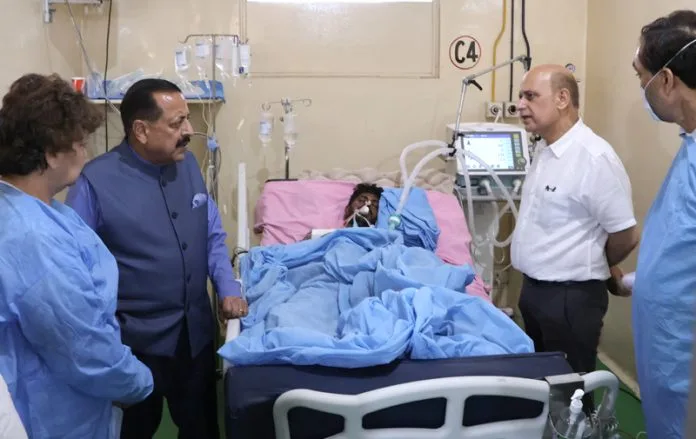
Union Minister Dr. Jitendra Singh today visited the Government Medical College and Hospital (GMC), Jammu, to inquire about the patients injured in recent Pakistan shelling incidents, particularly in the aftermath of Operation Sindoor.

Accompanied by GMC Principal Dr. Ashutosh Gupta, the Minister visited various wards and the Intensive Care Unit (ICU), where several victims are currently undergoing treatment. He personally interacted with patients and medical staff, assessing the recovery process and the standard of care being provided.

Speaking to the media after his visit, Dr. Jitendra Singh lauded the hospital’s staff—including doctors, nurses, and support personnel—for their swift, professional, and dedicated service. He commended their efforts in ensuring that no fatalities had occurred among the injured admitted to the hospital. The Minister also praised the enhanced facilities at GMC Jammu, which ensured no patient had to be referred outside the Union Territory for treatment.

“As a medical professional myself, I am satisfied with the progress the patients are making. Most are recovering well and are likely to be discharged soon,” said Dr. Singh. He expressed concern about one patient in the ICU who had undergone hip surgery and developed fat embolism, resulting in sudden neurological complications. “However, he is under intensive care, and being young and free from comorbidities, we are hopeful for his recovery,” the Minister added.

Following the patient visits, Dr. Singh toured several of the newly developed medical facilities at the college. He expressed pride in the institution’s growth, noting that he had once been a part of GMC Jammu for several decades.

Before departing, a group of nursing staff members greeted the Minister, many of whom were his former trainees. They expressed nostalgia and pride in seeing their mentor now serving in a national leadership role while they themselves held senior positions in the healthcare hierarchy.

PAKISTAN UNLEASHES DRONE SWARM ON INDIA, CIVILIAN FLIGHTS PUT AT RISK

IAF, Army repel 300–400 drone attacks; India strikes back at Pakistani air defence sites

New Delhi — The ongoing military standoff between India and Pakistan escalated dramatically last night as Pakistan launched a massive swarm of 300–400 Turkish-origin drones across Indian airspace, targeting military infrastructure and probing India’s air defence systems.

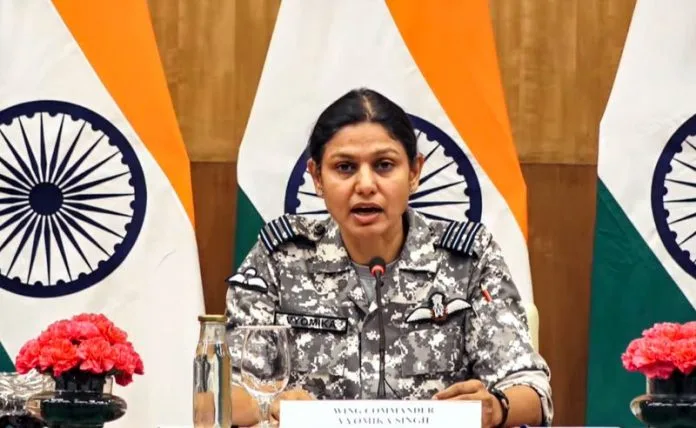
“Indian forces neutralised many drones using kinetic and non-kinetic means,” said Wing Commander Vyomika Singh of the Indian Air Force.

According to officials, Pakistan recklessly kept its civil airspace open during the attack, effectively using civilian airliners as shields, while artillery and drone attacks battered border areas from Leh to Sir Creek.


🛡️ INDIA RESPONDS SWIFTLY

“An armed UAV strike on Bhatinda was thwarted. Indian drones struck back at four Pakistani air defence sites, destroying a radar,” said Singh.

Forensic reports suggest the Pakistani drones were Asisguard Songar models of Turkish origin, used to test Indian defences and gather intelligence.

Colonel Sofiya Qureshi of the Army condemned Pakistan’s tactics, saying:

“Pakistan’s irresponsible behaviour put civilian lives at risk. While India closed its airspace as a precaution, Pakistan kept international flights running, knowing fully that retaliation was inevitable.”

Screenshots of Flightradar24 data were presented, showing civil airlines flying between Karachi and Lahore even as the conflict raged near the border.


💥 BORDER UNDER ATTACK

Pakistani artillery and drones struck Kandhan, Uri, Poonch, Mender, Rajouri, Akur, and Udhampur in Jammu and Kashmir, causing casualties among Indian troops.

“Pakistan Army also suffered major losses in Indian retaliatory firing,” Qureshi added.


🔥 OPERATION SINDOOR: THE TRIGGER POINT

Tensions have soared since India’s Operation Sindoor on Wednesday, which targeted terror infrastructure inside Pakistan and Pakistan-occupied Kashmir.

Pakistan’s attempted attack on 15 Indian cities since then has been largely unsuccessful, with the Indian Air Force exercising “considerable restraint” to avoid jeopardizing international civilian flights.

TENSION HALTS SPORTS IN JAMMU, ATHLETES STAY AWAY FROM STADIUMS

The escalating tensions between India and Pakistan have cast a long shadow over sporting activities in Jammu, with stadiums across the city wearing a deserted look as young athletes stay away out of safety concerns.

The usually bustling MA Stadium, KK Hakku Stadium, Mini Stadium Parade, and other sports venues have been eerily quiet over the past two days following Pakistan’s massive drone and shelling attacks on Indian cities, including Jammu.

“We are unable to practice. This is a crucial time as we were preparing for national championships,” said Adhira Kanotra, a national-level skater.
“We’re just waiting for things to get better,” echoed athlete Dhwani Nanda, who usually trains at the MA Stadium skating rink.


🏟️ STADIUMS EMPTY, DREAMS ON PAUSE

According to Suraj Bhan Singh, Manager of the Indoor Complex at MA Stadium, over 500 athletes usually train daily, but the past two days have seen the venue completely empty.

“Only officials, coaches, and ground staff are present,” Singh confirmed.

Divisional Sports Officer Jammu, Baljinder Pal Singh, said there were no official restrictions, but athletes are staying away voluntarily.

“All sections remain open, but attendance has dropped drastically. On Thursday, minimal turnout; today, not a single athlete came,” Singh said, noting that over 1,000 registered athletes across gymnastics, Wushu, judo, boxing, and badminton have been affected.

Other key sports venues, including Shastri Nagar Stadium and Green Field Ground, also reported zero attendance.


🏏 IPL SUSPENDED AMID ESCALATING MILITARY TENSIONS

In a related development, the Indian Premier League (IPL) has been suspended for a week with immediate effect due to the worsening military standoff between India and Pakistan.

This marks the first time the world’s richest cricket league has been halted due to geopolitical tensions, underscoring the severity of the current situation.

PAKISTAN’S ATTACK ON RELIGIOUS SITES EXPOSES ITS “EVIL DESIGN”: INDIA BLASTS ISLAMABAD’S LIES

New Delhi — In a scathing statement, Foreign Secretary Vikram Misri on Friday condemned Pakistan’s attacks on religious sites in India, including a gurdwara in Amritsar and a religious site in Poonch, calling Islamabad’s attempt to blame India “preposterous” and part of a dangerous disinformation campaign.

“The idea that India would attack its own cities is the kind of deranged fantasy only the Pakistani state can come up with,” Misri said at a media briefing.

Misri accused Pakistan of desperately trying to inject a communal angle into the escalating crisis, warning that Islamabad’s “farcical denials” and “blatant lies” would fail to deceive the global community.


💥 INDIA’S OPERATION SINDOOR TARGETS PAK TERROR HUBS

Tensions between the two nuclear-armed neighbors soared following India’s precision strikes on terror infrastructure in Pakistan and Pakistan-Occupied Kashmir under Operation Sindoor on Wednesday. Among the targets was Bahawalpur’s Markaz Subhan Allah, the Jaish-e-Mohammed nerve center tied to the 2002 murder of Wall Street Journal journalist Daniel Pearl.

“Bahawalpur is JeM’s headquarters. Its leader Masood Azhar is a UN-proscribed terrorist,” Misri said, underscoring India’s resolve against cross-border terrorism.


KARTARPUR CORRIDOR SUSPENDED OVER SECURITY

Amid heightened tensions, India announced the suspension of the Kartarpur Sahib corridor, a key religious route for Sikh pilgrims, citing grave security concerns.


🔥 PAKISTAN’S DISINFORMATION CAMPAIGN

Misri dismissed as “blatant lies” Pakistan’s claim that India had used drones to attack the revered Nankana Sahib Gurdwara.

“Pakistan is trying to stoke communal discord. But India’s unity itself is a challenge to Pakistan,” Misri asserted.