Friday, July 10, 2026
Home Blog Page 13

Jammu And Kashmir Epitome Of ‘Sarva Dharma Sambhav’: LG Manoj Sinha

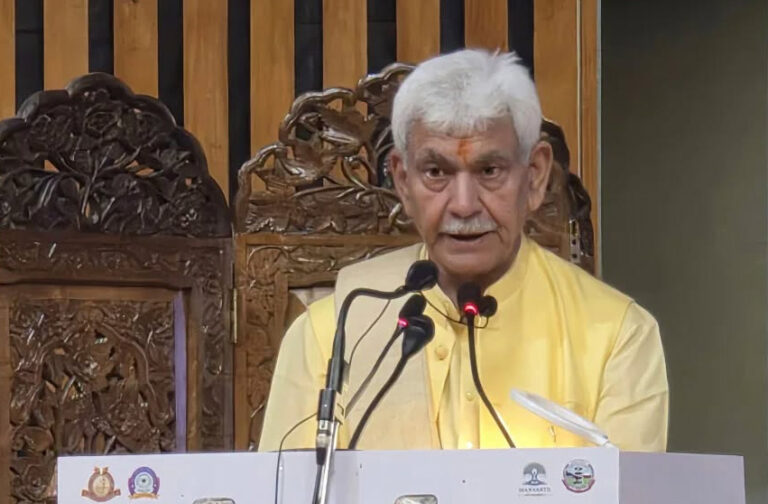
Lieutenant Governor Manoj Sinha on Thursday said Jammu & Kashmir has for centuries represented the spirit of “Sarva Dharma Sambhav” and remains one of the finest examples of coexistence and communal harmony in the world.
Addressing the ‘Rishivar’ Inter-Faith Conference at SKICC Srinagar, the Lieutenant Governor said the essence of harmony and mutual respect has been deeply rooted in Indian civilisation since ancient times.

LG Sinha said the oldest scripture, Rigveda, mentions two Sanskrit words, “Justam” and “Devebhut,” symbolising harmony and the divine light present in all human beings.
He said the Rigveda teaches that the Almighty harmonised the virtues and light of every individual in society without discrimination.
“If one wants to witness the clearest glimpse of this philosophy, it can be seen in Jammu & Kashmir, which for centuries has remained home to almost all major religions,” he said.
The Lieutenant Governor said that while many nations across the world began speaking about coexistence much later, “Sarva Dharma Sambhav” has remained an integral part of India’s civilisational thought since ancient times.

He said coexistence was not merely an idea in India, but a way of life thousands of years ago, adding that Indian traditions have always respected diverse beliefs and schools of thought.
Referring to Sanatan Dharma, Sinha said it is among the world’s oldest faith traditions, with roots dating back over 8,000 years.
“Despite facing many struggles throughout history, Sanatan Dharma survived because it laid emphasis on coexistence, respect for all beliefs and acceptance of diversity,” he said.
The LG said scholars and researchers across the world agree that the philosophy of “Sarva Dharma Sambhav” emerged from the principles of Sanatan Dharma.

Quoting the Atharva Veda, he said ancient sages envisioned a society where people of different faiths, beliefs and consciousness lived together like members of one harmonious family.
He further said the Yajurveda, composed nearly 1,400 to 2,000 years before Christ, preached the idea of viewing every individual with friendship and mutual respect.
Sinha also quoted the Bhagavad Gita, saying Lord Krishna had declared that people approach the Almighty through different paths and the divine fulfils everyone according to their faith and devotion.

Highlighting Kashmir’s historical legacy, the Lieutenant Governor said historians and Rajatarangini mention that Srinagar was established by Emperor Ashoka, who strongly promoted the ideals of communal harmony and religious tolerance.
He said Ashoka had inscribed on stone edicts that a person who glorifies his own religion while insulting another religion actually harms his own faith the most.

“Respecting other religions enhances the dignity of one’s own religion as well,” he said, while referring to the teachings of Buddhism and Jainism.
The LG said India had shown the world the path of peace through its ideas and actions long before many modern civilisations emerged.

He said various faiths, including Christianity, Islam and Sufism, later influenced Indian philosophy, while Sanatan Dharma’s message of coexistence continued to inspire societies globally.

Sinha said Jammu & Kashmir stands as a living example of this inclusive philosophy.

He said before the arrival of Islam and Sufism in Kashmir, philosopher Vasugupta had propagated Shiv Sutras and spiritual teachings centred on universal consciousness.
Referring to Kalhana’s Rajatarangini, the LG said the text mentions that there is not even “a tiny piece of land in Jammu & Kashmir devoid of pilgrimage and sacredness.”
He also quoted mystic poet Lal Ded, saying she preached against divisions between Hindus and Muslims and urged people to recognise their true self and humanity.
Sinha said Sheikh Noor-ud-din Noorani (Nund Rishi) greatly strengthened social harmony and unity among different traditions in Kashmir.

“Different faiths have found their finest confluence in Jammu & Kashmir. Such a beautiful blend of traditions is rarely seen elsewhere in the world,” he said.
The LG referred to the Rishi-Sufi tradition and quoted Nund Rishi’s message of transforming swords into tools for cultivation and peace.
Quoting the Rigveda again, he said society progresses when people share common goals, collective harmony and unity of thought.
“Humanity can progress only when all sections of society move together for collective welfare,” he said.
Sinha said “Sarva Dharma Sambhav” remains India’s most precious gift to humanity and must be continuously nurtured to strengthen unity and prosperity.
He said meaningful social transformation begins with individual conduct and such inter-faith dialogues help strengthen harmony in society.
Referring to the Mahabharata in the context of Kashmir, the Lieutenant Governor spoke about the “struggle against injustice” and said duties and responsibilities evolve according to circumstances.
He said while people may follow different religions and traditions, “today there is only one supreme dharma (religion) for all citizens, and that is the Constitution of India.”
The LG said every public servant and citizen must work according to the Indian Constitution irrespective of personal beliefs.
Speaking about the migration of Kashmiri Pandits, Sinha said ordinary Kashmiris were not responsible for what happened in the Valley.
He also highlighted the participation of Jammu & Kashmir in nationwide celebrations marking 150 years of “Vande Mataram.”
The Lieutenant Governor said despite accounting for only around one percent of India’s population, Jammu & Kashmir secured the top position among all States and Union Territories in all three phases of a national programme organised by the Union Ministry of Culture.
He said several districts of Jammu & Kashmir, including Kulgam and Baramulla, featured among the country’s top-performing districts during the campaign.
“In all the three rounds, Jammu & Kashmir ranked number one nationally,” he said.
Sinha added that many people outside fail to understand the ground realities of Kashmir and asserted that Kashmiris possess a better understanding and awareness of India than often perceived.
Referring to the anti-drug campaign launched on April 11, the Lieutenant Governor said the public response and cooperation received during the drive was unprecedented.
“I have not seen such overwhelming public support in many years,” he said.
He appealed to people to continue supporting the anti-drug movement and expressed confidence that with sustained collective efforts, the menace could be significantly curbed within the next 100 days.
“I request everyone to extend their cooperation and support,” he added. (KNO)
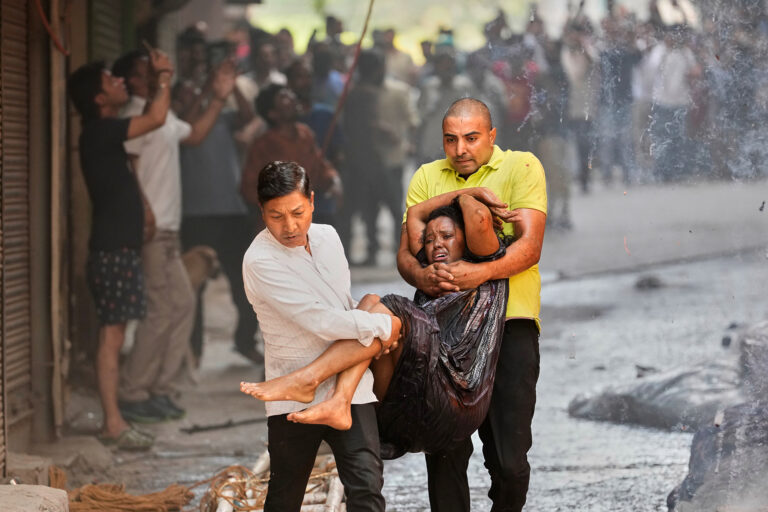
21 Killed In Fire In South Delhi Hotel, Several Foreigners Among Those Dead

A massive fire broke out in a bed and breakfast hotel in south Delhi’s Malviya Nagar on Wednesday, killing at least 21 people.
Several of those killed are foreigners, mainly from Central Asia and Africa, officials said.

Earlier in the day, officials said the fire started in Lemon Green Restaurant at 8.45 am. Police later clarified that the blaze was actually at the Flourish Stay B&B in Hauz Rani in the congested Malviya Nagar area.
More than 40 people were rescued and rushed to hospital where 21 were declared brought dead. There are fears that the death toll might rise further as several of those injured are critical.

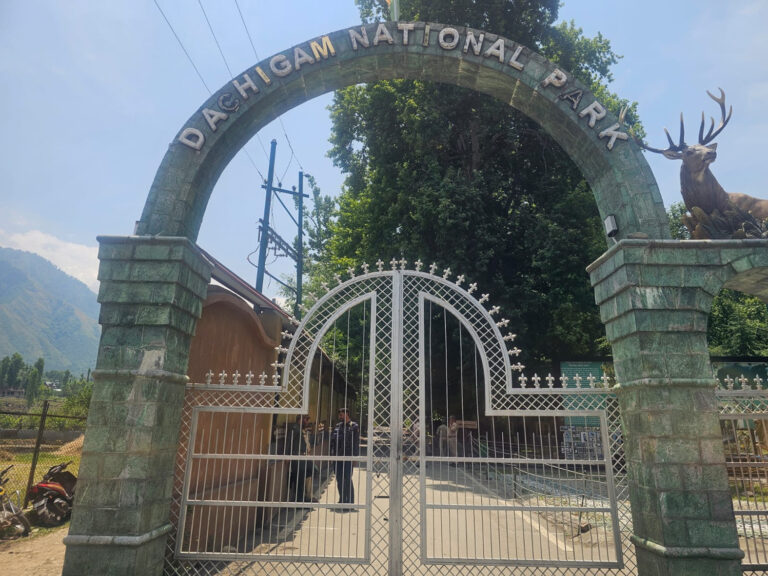
Dachigam Open For Visitors, No Restrictions Imposed Today: Clarifies Govt

The Government on Wednesday clarified that entry to Dachigam National Park remains fully open for visitors and no restrictions have been imposed on public access today.
In an official statement, the Government spokesperson said the clarification was being issued in response to certain claims circulating regarding alleged restrictions on entry to Dachigam National Park on June 3, 2026.

“It is clarified that entry for all visitors to Dachigam National Park remains completely open as per the usual procedure. No restrictions have been imposed by the Government regarding entry to the park for today, June 3,” the spokesperson said.

The statement further advised the public not to pay attention to unverified reports and to follow the standard protocols applicable for visits to the National Park.

“The public is advised to follow standard procedures for their visit and not to pay heed to unverified news,” the spokesperson added. (JKNS)

J&K Govt Forms Panel To Review APS On Abnormally Low Bids

The Jammu and Kashmir Government has constituted a committee headed by the Director General (Codes) to review the imposition of Additional Performance Security (APS) on contractors quoting Abnormally Low Bid (ALB) prices.

Southwest Monsoon Expected To Onset Over Kerala Around June 4: IMD

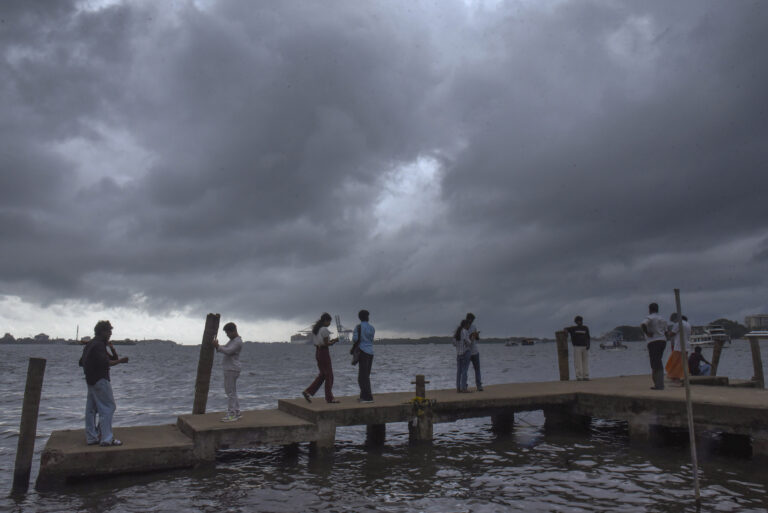
The southwest monsoon is expected to onset over Kerala around June 4, the India Meteorological Department (IMD) said on Tuesday.
Typically, monsoon arrives in Kerala around June 1, which marks the beginning of the southwest monsoon season (June-September).
“Conditions are favourable for further advance of southwest monsoon into some more parts of southwest and southeast Arabian Sea, Lakshadweep Islands, some parts of Kerala and Tamil Nadu around June 4,” the IMD said in its daily forecast.
It added that the monsoon will also advance in some more parts of southwest, westcentral, eastcentral and northeast Bay of Bengal, and the remaining parts of southeast Bay of Bengal around this date.
The IMD had earlier said the monsoon onset over Kerala would take place on May 26. However, it got delayed and the department, on May 29, stated that the onset could happen in the following week.
Last week, the department in its revised forecast for the rainfall during the season said it would be below normal.
The IMD stated that India is expected to see 90 per cent of the long period average (LPA) this year.
LPA refers to the rainfall recorded over a particular region for a given interval, such as a month or a season, averaged over a long period of time, typically 30 to 50 years.
The LPA of seasonal rainfall over the country as a whole, based on data from 1971 to 2020, is 87 cm.
If the monsoon season sees less than 90 per cent of LPA rainfall, the IMD classifies it as “deficient”.
One reason for the below-normal rainfall could be the emergence of El-Nino conditions, which lead to less rain during monsoon in the country.
Currently, neutral El Nino-Southern Oscillation conditions are transitioning towards El-Nino conditions over the equatorial Pacific region.
The IMD said El-Nino conditions are likely to be weak in June, and moderate to strong in September. (AGENCIES)

First Batch Of J&K Haj Pilgrims Returns To Srinagar; Received By CM Abdullah At Airport

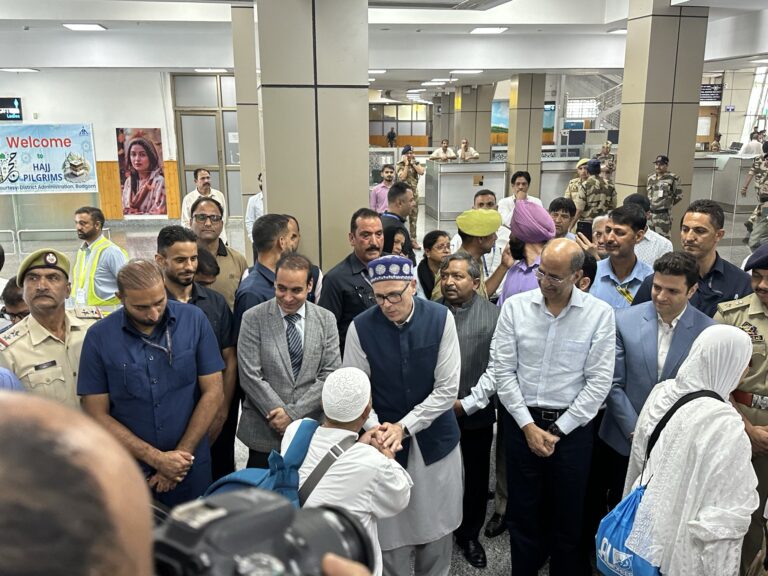
The first batch of Haj pilgrims from Jammu and Kashmir returned from the annual pilgrimage in Saudi Arabia on Tuesday and were received at the airport here by Jammu and Kashmir Chief Minister Omar Abdullah, officials said.
They said the first flight carrying 144 pilgrims arrived at the Srinagar International Airport in the afternoon.

The pilgrims returning from the Haj were received at the airport by the chief minister, who was accompanied by his advisor, Nasir Aslam Wani, and other senior officials.
The return operations, which commenced on Tuesday, for pilgrims from Jammu and Kashmir and Ladakh will continue till June 16, the officials said.

They said 4,641 pilgrims from Jammu and Kashmir performed Haj this year, including 2,583 males and 2,058 females.

Srinagar Airport To Be Shut For Fortnight From Oct 1 For Maintenance; Locals Fear Blow To Business

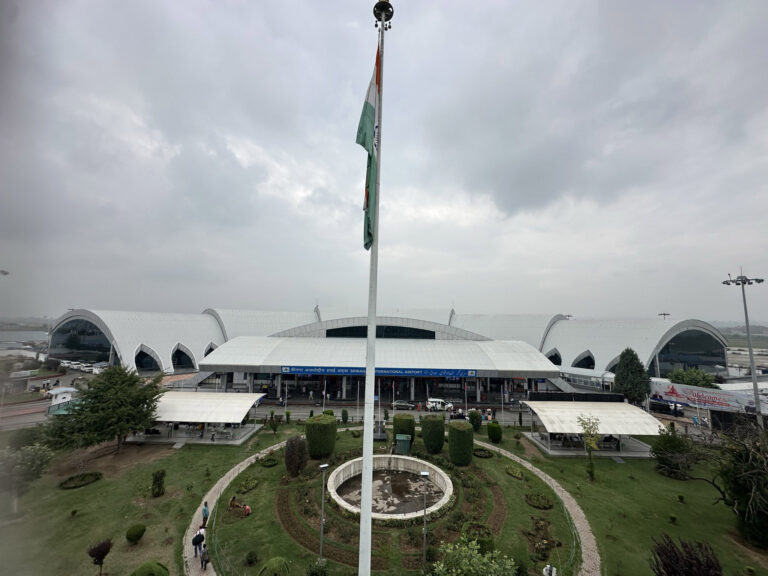
The Srinagar International Airport will suspend all flight operations for 15 days starting October 1 to undergo crucial runway maintenance and repair work, officials said on Tuesday.
The two-week shutdown is expected to deal a massive blow to Jammu and Kashmir’s tourism sector, as it directly clashes with the peak Durga Puja holiday season.

The Valley traditionally witnesses a massive influx of tourists from West Bengal during this period, and travel operators fear the closure will lead to widespread cancellations and heavy financial losses.
According to airport officials, a phased maintenance schedule will begin ahead of the total shutdown.
Starting July, airport operations will be closed for two days every week. This will culminate in the full 15-day closure from October 1 to October 15.

The runway repairs are essential for operational safety, the officials said, adding that flight restrictions have already been in place since April 6 following a Notice to Airmen (NOTAM) issued by the Indian Air Force.
The ongoing engineering work has already drastically shrunk the airport’s operational window and flights currently operate only between 8 am and 5 pm, a significant reduction from the previous schedule of 7 pm to 10 pm.

With the October closure looming, hospitality and travel stakeholders are urging authorities to reconsider the timeline, saying that cutting off air connectivity during one of the busiest domestic tourism blocks of the year could devastate the local economy. (Agencies)

LG Inagurates 15 Common Facility Centres Across Ladakh To Boost Rural Livelihoods

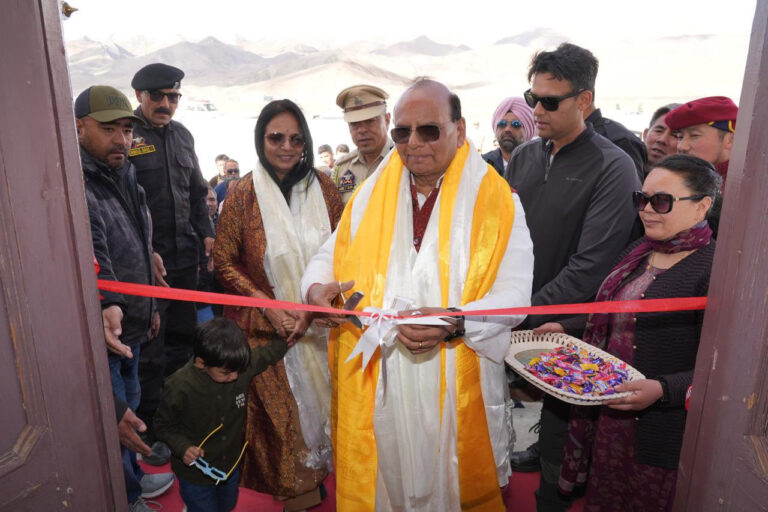
Ladakh Lieutenant Governor Vinai Kumar Saxena on Tuesday dedicated 15 common facility centres (CFCs) across the Union territory to strengthen micro-enterprises, generate livelihood opportunities for women and youth within their own villages and help reduce migration.
He said the CFCs will function as shared workspaces for weavers, spinners, tailors, artisans and women self-help groups (SHGs), providing them with access to modern facilities for producing high-quality products.

“Inaugurated and dedicated to the people, 15 Common Facility Centres (CFCs) across Ladakh, marking a significant step towards building self-reliant villages and empowering rural communities”, the L-G said on X.
Saxena described the initiative as a step towards building self-reliant villages, empowering rural communities and creating sustainable sources of income in the remote areas.
The newly established centres are located at Skurbuchan, Wanla, Saspol, Chuchot, Kharu, Anlay, Koyul, Korzok, Chushul, Phobrang, Sato, Panamik, Diskit, Turtuk and Digger, he said.
The lieutenant governor said that the centres would promote handloom activities, local entrepreneurship and skill development, while creating new avenues of self-employment in rural areas.

He said the initiative is expected to strengthen micro-enterprises, generate livelihood opportunities for women and youth within their own villages and help reduce migration from remote areas by creating sustainable sources of income.
According to him, the CFCs have been envisioned not merely as production units but as hubs of rural development, community participation and economic empowerment.
He said the centres would help preserve Ladakh’s rich handloom heritage while enabling local products to access wider national and international markets, thereby contributing to the overall growth of the rural economy. (Agencies)

Centre Exploring ‘Customised’ Framework For Ladakh After ‘Breakthrough’ Meeting: CS

Describing the May 22 meeting as a “breakthrough” moment for the political dialogue in Ladakh, Chief Secretary of the Union Territory, Ashish Kundra, on Monday said that discussions are now focusing on a “customised” constitutional and administrative framework to address the region’s aspirations within the ambit of the Constitution.
“Over the next few months, we may begin moving towards a concrete outcome,” he said.

The meeting, convened by the Ministry of Home Affairs (MHA) under its political dialogue sub-committee, was attended by its officials, representatives of the Leh Apex Body (LAB) and the Kargil Democratic Alliance (KDA), besides former and sitting Members of Parliament from Ladakh.
Kundra said that the Centre has asked representatives of Ladakhi groups to prepare and submit a document outlining their proposed framework based on the discussions.
“I believe the discussions were held in a highly constructive and open atmosphere. In fact, if I were to describe the May 22 meeting in one or two words, I would call it a breakthrough moment,” he told reporters here.
He said that for many months, and indeed years, there has been an ongoing process driven by political and democratic aspirations. “Different groups have been advocating their respective positions and concerns through dialogue and engagement.” The May 22 meeting “marked a significant step forward in this process, creating an environment where various stakeholders could engage openly and work towards greater understanding and consensus on issues concerning Ladakh’s future”, he said.

Pointing to the difficulties in the dialogue process, he said, “One group would present its views in one manner, while another would put forward its concerns differently, and there was often a lack of coordination or a unified voice.

The LAB and KDA have been jointly engaged in talks with the Centre since 2021 over their key demands, including statehood for Ladakh and inclusion under the Sixth Schedule of the Constitution.
According to Kundra, the latest discussions explored whether a new framework under Article 371 could be developed to address Ladakh’s concerns regarding protection of land, preservation of culture and safeguarding employment opportunities for local youth.
He said the meeting examined the possibility of a “customised solution” unique to Ladakh, including the creation of a body with political, executive and legislative powers and strengthening local governance institutions.

“There was broad in-principle understanding among representatives from Kargil, Leh and the Government of India that the framework discusse deserved further exploration,” he said. Kundra said the Centre acknowledged the aspirations for statehood but pointed out that prevailing financial and administrative realities did not make immediate statehood feasible.
“They acknowledged that people have aspirations regarding statehood. However, under present circumstances, the conditions may not be conducive for granting statehood immediately,” he said. At the same time, he said, the Centre did not reject the aspiration altogether and was instead focusing on practical and constitutionally viable alternatives.

“The question then becomes — if not statehood, what alternative framework could be explored? Discussions have now begun on a customised model for Ladakh, unlike any arrangement existing elsewhere in India,” he said.
Kundra stressed that any constitutional changes emerging from the process would ultimately require Parliament’s approval.

He also sought to dispel confusion over reports relating to the meeting, saying that official minutes had not yet been issued and that a draft record shared among stakeholders was only intended to facilitate discussion.
“I am here for them. People should come forward and speak openly. We will certainly convey their views to the Government of India,” he said, describing himself as a link between the people of Ladakh and the Centre.

On employment, Kundra said the Centre had introduced a reservation formula for Ladakh that was unique among Union Territories and aimed at addressing local aspirations.

The chief secretary also said administrative arrangements for the newly created districts were being streamlined, with proposals relating to Drawing and Disbursing Officers already submitted to the Lieutenant Governor for approval and budgetary allocations planned accordingly.

Emphasising the importance of trust in the ongoing talks, Kundra said the latest round of discussions had generated a new atmosphere of confidence and constructive engagement.
“If both sides continue to move forward in this spirit, more possibilities and solutions will emerge,” he said. (Agencies)

Tharoor Calls Full Rendition Of Vande Mataram At Official Events ‘Unnecessary’

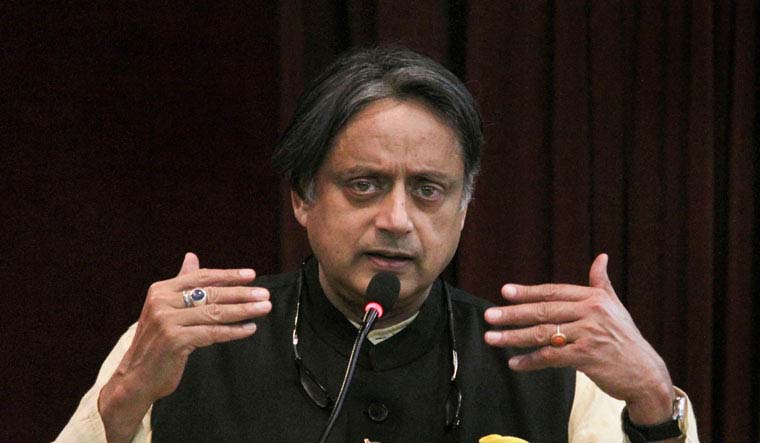
Congress MP Shashi Tharoor has questioned the necessity of playing all five verses of Vande Mataram at the beginning and end of official events, labelling the practice “unnecessary and burdensome” for audiences.
Speaking to reporters here on Monday amid the controversy over the singing of the national song in Kerala, Tharoor said everyone respects Vande Mataram, but making the full version mandatory at every function was difficult to justify.

“Vande Mataram is the national song and we stand up in respect when it is sung. The first verse, or the first couple of verses, is something most people know by heart,” he said.
Tharoor noted that traditionally the song was sung once at the start of an event, while the national anthem was played separately, often at the end.
“Now they want all five verses to be sung at the beginning of every event and again at the end. I think that is an unnecessary imposition,” the Congress Working Committee member said.
The MP said the Kerala government had maintained that singing the full version was optional, while Governor Rajendra Vishwanath Arlekar appeared to hold a different view.
“It may ultimately have to be adjudicated because there is no law passed by Parliament requiring this. It is more a matter of convention,” he said.

Tharoor stressed that he had no objection to the national song itself.
“We all respect Vande Mataram. I can happily sing it for you,” he remarked.

Recalling a book launch event attended by Vice President C P Radhakrishnan in New Delhi, Tharoor said the full song had been played both at the beginning and end of the programme.
“For the audience, standing through a relatively unfamiliar and lengthy song twice became an issue,” he said.

Tharoor argued that the portion of Vande Mataram traditionally rendered in public was roughly the same length as the national anthem and had long been widely accepted and respected.
Calling the dispute “unfortunate”, he said he hoped it would be resolved amicably.
“I can understand singing it once during ceremonial occasions involving the president, vice president or prime minister. But singing the entire song twice during a short programme is difficult to understand. I don’t see the rationale for it, and it is not particularly efficient either,” he said. (Agencies)