Monday, July 13, 2026
Home Blog Page 114

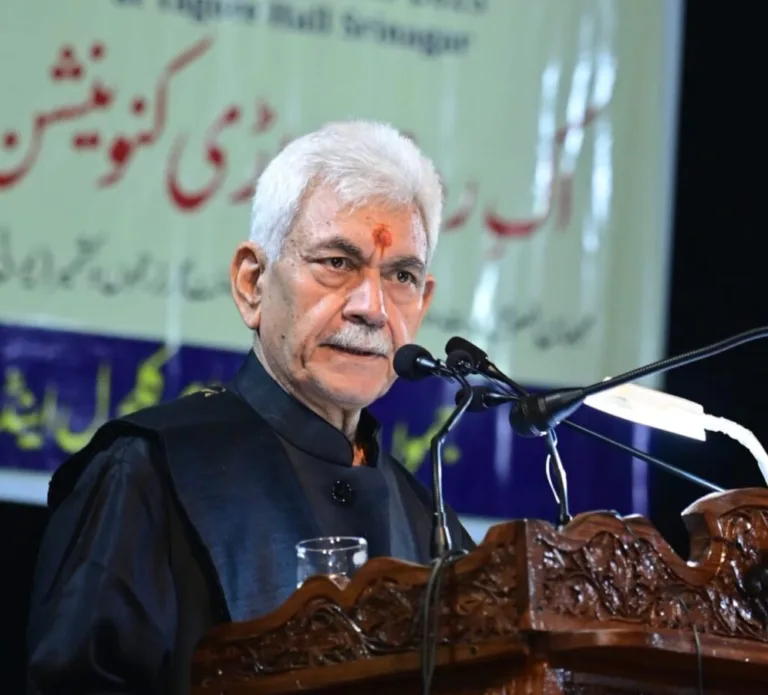
LG Manoj Sinha Calls J&K Assembly Session On Oct 23

0

The Jammu and Kashmir Assembly will be convened here next month.

A notice issued by the J&K assembly secretariat said the LG has summoned the assembly session to meet on October 23 at 10 am.

“I, Manoj Sinha, Lieutenant Governor of the Union Territory of Jammu and Kashmir, in exercise of powers conferred upon me under Section 18(1) of the J&K Reorganisation Act, 2019, do hereby summon the Jammu and Kashmir Legislative Assembly to meet at Srinagar on Thursday, the 23rd October, 2025 at 10.00 AM,” the LG said in an order.

The assembly secretariat urged the members to “make it convenient to attend the session of the legislative assembly on the appointed date, time and place”

Curfew relaxed for 4 hours in violence-hit Leh town, situation peaceful: Officials

0

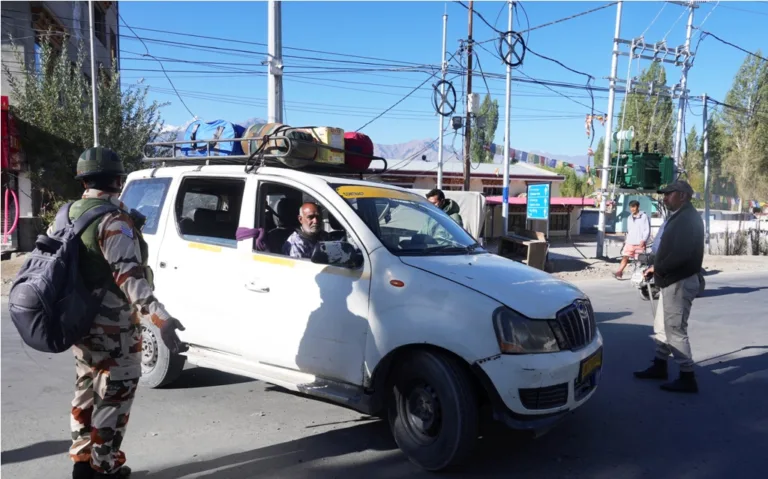
For the first time since curfew was imposed three days ago in violence-hit Leh town of Ladakh, the restrictions were relaxed Saturday afternoon in a phased manner for a few hours, providing relief to residents who lined up outside shops selling essential commodities.

Police and paramilitary forces intensified patrolling and checking since early this morning to maintain law and order following the detention of climate activist Sonam Wangchuk under the National Security Act (NSA) the previous day, officials said, adding no untoward incident was reported from anywhere during the relaxation period.

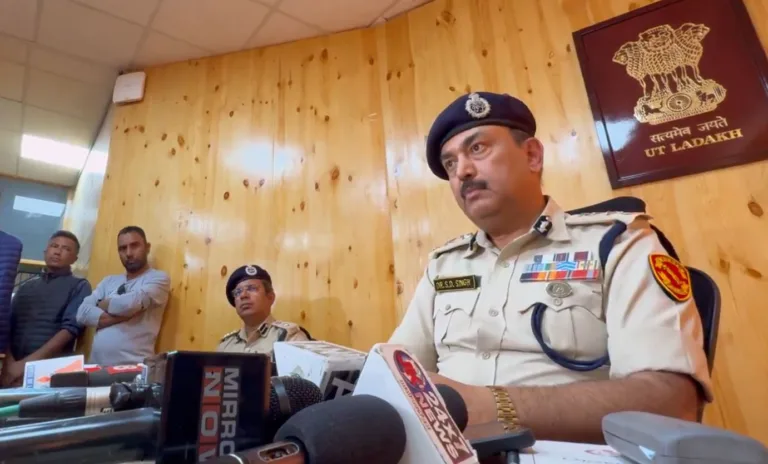
The Director General of Police, Ladakh, S D Singh Jamwal, said that curfew was relaxed for a total of four hours.

“We have taken a decision (to ease restrictions). The curfew is relaxed for two hours from 1 PM to 3 PM in the first phase in old city areas, followed by a two-hour relaxation in new areas from 3.30 pm to 5.30 PM,” Director General of Police, Ladakh, S D Singh Jamwal told reporters here.

The curfew was clamped in the town on Wednesday evening after widespread violence resulted in the death of four persons and injuries to 90 others during a shutdown called by the Leh Apex Body (LAB) to advance talks with the Centre on the demands for statehood and extension of the Sixth Schedule to Ladakh.

Lt Governor Kavinder Gupta chaired a high-level security review meeting at Raj Bhavan, after which the restrictions were eased.

Officials said police parties on Saturday announced the relaxation in the curfew using the public address systems and, soon after, shops selling essential commodities were opened, witnessing a heavy rush.

People were also seen queuing outside ATM kiosks in good numbers as the police and CRPF personnel kept a vigil, they said, adding the relaxation period passed off peacefully in the old city areas.

Jamwal said Wangchuk is being probed for allegedly having links with Pakistan following last month’s arrest of a Pakistani Intelligence Operative who sent videos of his protests across the border.

He described Wangchuk as the “main ring leader” behind Wednesday’s violence.

On the participation of people in the funeral of four persons who lost their lives in Wednesday’s violence, the DGP said that all necessary arrangements have been made to help their relatives take part in their last rites.

“We do not want anyone to have any type of inconvenience during the funeral,” he said.

He said the job of the police is to maintain law and order and “we are involved in that”.

In a statement issued late Friday night, the Lt Governor-led administration justified the detention of Wangchuk, saying a series of alleged provocative speeches by him, with references to the Nepal agitation and the Arab Spring, resulted in Wednesday’s violence that left four persons dead and scores of others injured.

It said the detention of Wangchuk was “important to restore normalcy” in the peace-loving Leh town and also to prevent him from further acting in a manner “prejudicial to maintenance of public order”.

“There was no untoward incident reported from anywhere in Ladakh during the past 24 hours. The restrictions are in place to maintain law and order,” an official said.

The official said the patrolling and checking by police and paramilitary forces in the sensitive areas have been intensified, while raids are also underway to nab the absconding rioters, including a councillor who allegedly instigated the violence.

More than 50 persons were detained following the clashes, while strict restrictions under prohibitory orders banning assembly of five or more persons also remained in force in other major towns of the Union Territory, including Kargil.

The Directorate of Information & Public Relations (DIPR), Ladakh, in a statement late Friday night, said: “Time and again it has been observed that Wangchuk has been indulging in activities prejudicial to the security of the state and detrimental to maintenance of peace and public order and services essential to the community.”

It said that despite clear communication from the government regarding the meeting of the High-Powered Committee (HPC) and the offer of prior meetings before the HPC, Wangchuk, with his “ulterior motive”, continued his hunger strike in the town from 10 September.

“His series of provocative speeches, references to Nepal agitations, Arab Spring, etc, and misleading videos resulted in the violent protests of 24 September in Leh, where institutions, buildings and vehicles were burnt down, and, in the aftermath, police personnel were attacked, leading to the unfortunate death of four individuals.

“The entire episode could have been avoided if he could have risen above his personal and political ambitions by calling off the hunger strike when the dialogue with the government was resumed on the same agenda,” the statement alleged, referring to the demands for statehood and extension of the Sixth Schedule of the Constitution to the region.

The statement said it was important to restore normalcy in the peace-loving Leh town of Ladakh.

It said the administration, based on specific inputs, took a considered decision to detain Wangchuk under the NSA and move him to Jodhpur prison in Rajasthan.

Ending Terrorism is Everyone’s Duty, Says LG Manoj Sinha

0

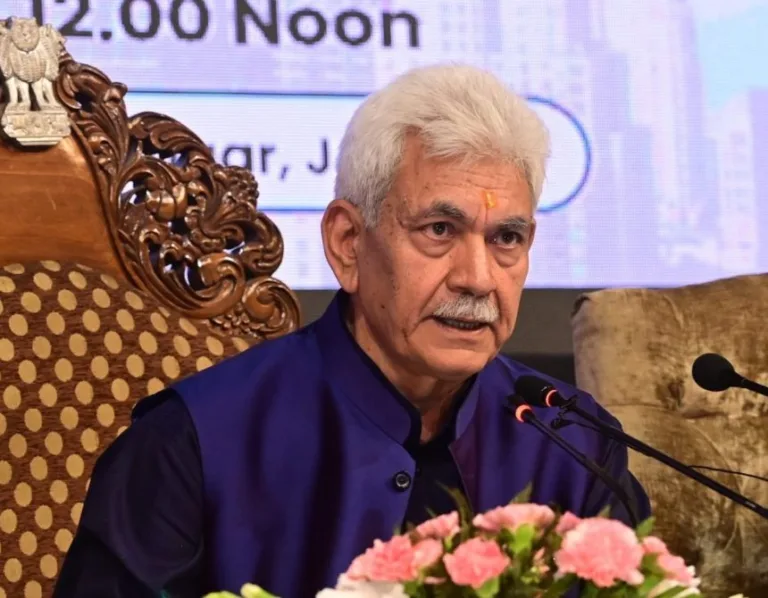
Lieutenant Governor Manoj Sinha stated that while the government and security forces are pivotal in combating terrorism, the eradication of this menace also falls upon the citizens of Jammu and Kashmir. Speaking at an event on Saturday, Sinha underscored the collaborative responsibility shared between authorities and the public.

During his address, Sinha highlighted that terrorism in India has significantly decreased, now predominantly affecting specific regions. He pointed out that areas in the North-East have largely achieved peace, with left-wing extremism confined to very few districts. He expressed confidence that this would be eliminated in the coming months.

“Terrorism has been greatly reduced elsewhere in the country. We see that the North-East is largely terror-free now,” Sinha remarked. He noted that while some districts in Karnataka, Kerala, and Jammu and Kashmir continue to face challenges, there is a pressing need to eliminate such threats.

“It is the biggest hurdle to development and creating employment opportunities,” he emphasized. Sinha added that while security forces and the administration are fully committed to their roles, the citizens’ involvement remains crucial. “The people of Jammu and Kashmir need to refrain from actions that could inadvertently escalate such activities,” he pointed out.

In his speech, Sinha conveyed optimism regarding the current state of safety in Jammu and Kashmir. He noted that incidents of street violence and stone-pelting have diminished significantly, transforming it into a situation comparable to other parts of India.

“Schools, colleges, and businesses operate normally, and importantly, we no longer witness the presence of top commanders from major terror organizations. This year, there has only been one local recruitment into terrorist ranks,” Sinha stated.

Addressing the role of external forces in perpetuating terrorism, Sinha cited Pakistan’s involvement as a significant contributor to ongoing extremism. “Despite noticeable progress, we unfortunately contend with a neighbor engaged in constant mischief,” he remarked. He elaborated on Pakistan’s historical aggression since the partition, emphasizing their failure in conventional warfare against India and their pivot to proxy warfare through radicalization.

Sinha highlighted the tragic human cost resulting from terrorism, stating that over 40,000 lives have been lost to violence in the region. “How long will this continue? It is the duty of the government and the forces to combat terrorism, but the public must also play their part,” he urged.

In closing, Sinha raised concerns about the discourse surrounding terrorism, suggesting that erroneous statements by individuals could mirror extremist narratives, particularly those espoused by groups like ‘The Resistance Front’ (TRF). “When we echo the same sentiments as terrorist organizations, it poses significant dangers,” he concluded.

Engineer Rashid to Stage Hunger Strike in Tihar Ahead of Gandhi Jayanti

0

Sheikh Abdul Rashid, the Lok Sabha MP from Baramulla in Jammu and Kashmir, will embark on a two-day hunger strike in Tihar Jail from October 1 to 3, to commemorate Gandhi Jayanti and underscore the need for non-violence in today’s world.

In a poignant handwritten letter addressed to Mahatma Gandhi, Rashid expressed that the world is in a “desperate need” for peace, asserting that Gandhi’s teachings continue to bear relevance. Currently imprisoned for a terror funding case, Rashid—popularly known as Engineer Rashid—criticised nations that engage in violence while claiming to pursue peace.

“Those who speak most of your message, Bapu, hardly match their words with deeds,” Rashid wrote, voicing his concerns about the pervasive violence that contradicts Gandhi’s ideals. He lamented the situational plight in Kashmir, noting that Kashmiri individuals face severe misrepresentation as anti-national or radical elements.

Reflecting on the legacy of Gandhi during the tumultuous period of Partition, he recalled that Kashmir was once viewed as a symbol of hope and tranquillity. Today, however, he stated, “We Kashmiris are being branded anti-national, Pak proxies, and whatnot,” stressing that the dignity and rights of Kashmiris have eroded.

Rashid highlighted how the struggles of Kashmiris have been misconstrued. He stated, “Being Islamist is an honour for every Muslim, and no true Muslim can ever be radical.” He underscored the issue that despite widespread injustices, few dare to speak against the stringent laws imposed in Jammu and Kashmir.

“Thousands lie in graves, while men in prisons lose their lives due to the misdeeds of Partition,” he lamented, urging for accountability and a recognition of the legitimate rights of his constituents. He also pointed out the lingering challenges faced by Kashmiri Pandits, who he says live as refugees, despite their historical connections to the land.

Rashid wrote, “Tihar jail has become a second home for those who aspire for the vision of non-violence to claim their rights,” associating his hunger strike with a broader call for justice and non-violence.

In his letter, Rashid condemned what he described as divisive politics, noting that Gandhi’s vision has been overshadowed by repressive policies. He voiced concern that state-induced oppression feeds into the narrative of helplessness among Kashmiris, leading to misinterpretations of their commitment to non-violence as weakness.

“I am sure your soul must be in a state of restlessness while watching what we Kashmiris have passed through since 1989,” he stated, appealing to Gandhi’s spirit to inspire change.

Rashid articulated that instead of fostering harmony, discriminatory labels such as ‘Babar ki Aulad’ (children of Babar) exacerbate social divides. He added, “The great Indian state does not need enemies from outside; ultranationalists are doing what external adversaries cannot accomplish.”

With his hunger strike, Rashid aims to remind the nation of the essence of Gandhi’s teachings and the urgent necessity for peace in the current socio-political landscape. His actions seek to evoke a collective reflection on the relevance of non-violence today.

Sonam Wangchuk Under Investigation for Alleged Pak Links

0

Ladakh’s Director General of Police (DGP) S D Singh Jamwal confirmed on Saturday that Sonam Wangchuk is under investigation for potential links to Pakistan. This announcement stems from the recent arrest of a Pakistani intelligence operative who allegedly transmitted videos of protests led by Wangchuk across the border.

Jamwal identified Wangchuk as a pivotal figure in the protests that led to violence claiming four lives and injuring numerous others earlier this week. On Friday, law enforcement detained Wangchuk under the stringent National Security Act, subsequently transferring him to a correctional facility in Jodhpur, Rajasthan.

“The findings from our investigation regarding Wangchuk are sensitive and cannot be disclosed at this time. However, one can infer much from his online presence,” Jamwal stated. He noted that Wangchuk’s speeches, referencing movements like the Arab Spring and unrest in Nepal, Bangladesh, and Sri Lanka, acted as provocations.

“We are reviewing potential foreign funding and violations of the Foreign Contribution (Regulation) Act against him. Importantly, a person of interest from Pakistan was supplying footage back to his country from the protests led by Wangchuk,” he explained.

Jamwal further highlighted Wangchuk’s international involvement, recalling his attendance at a recent event hosted by the Pakistani publication, The Dawn, and a prior visit to Bangladesh. “These visits raise significant suspicion regarding his intents,” he remarked to reporters.

Wangchuk has been a central figure in a movement advocating for statehood and the extension of the sixth schedule to the Union Territory, representing the Leh Apex Body and the Kargil Democratic Alliance.

“Wangchuk sought to commandeer this movement and undermine dialogues between Central leaders and Ladakhi representatives,” the DGP added. The Centre had extended an invitation for fresh discussions set for October 6.

Despite the upcoming informal meeting, Wangchuk continued his hunger strike, a decision deemed provocative given the rising tensions. “A day prior to the informal discussions, there was a direct attempt to disrupt the peace by disseminating inflammatory videos and making incendiary statements, which ultimately contributed to the violence that ensued on Wednesday,” Jamwal clarified.

Commenting on remarks made by Lieutenant Governor Kavinder Gupta concerning foreign conspiracies related to the violence, Jamwal confirmed that three individuals from Nepal were among those hospitalized with gunshot wounds, indicating broader foreign involvement.

In total, police have detained around 50 individuals in connection with Wednesday’s unrest, with around six being identified as critical ringleaders behind the violent episodes. “Wangchuk, as the main instigator, has been placed in a jail outside the region,” the DGP concluded.

National Commission for Women Launches Mahila Jan Sunwai in Jammu

0

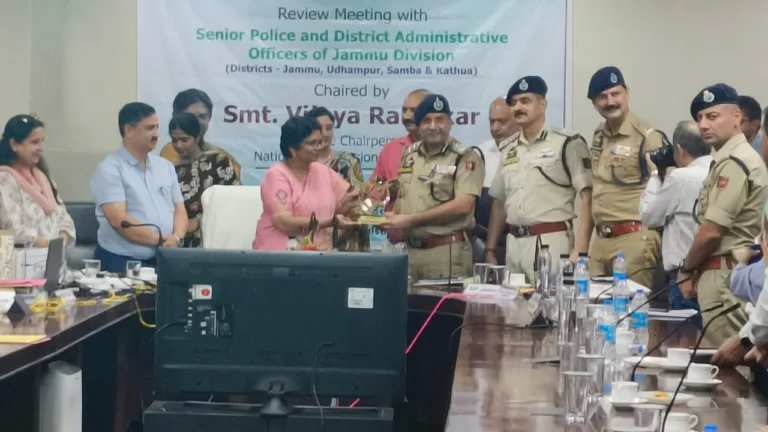
Jammu, 26th September 2025 — Smt. Vijaya Rahatkar, the Hon’ble Chairperson of the National Commission for Women (NCW), spearheaded the Mahila Jan Sunwai (Rashtriya Mahila Ayog-Apke Dwar) in Jammu today. This initiative aims to address and resolve women’s grievances directly, ensuring immediate and effective responses. The event saw enthusiastic participation from numerous women seeking justice.

The program, organized by NCW in collaboration with the Jammu and Kashmir Police, aimed to offer on-the-spot resolutions to various complaints. Women shared their issues ranging from domestic violence to workplace harassment, receiving guidance and relief during the event, which underscores NCW’s commitment to promoting women’s welfare.

During the Mahila Jan Sunwai, NCW successfully addressed multiple grievances, reinforcing its role as a pillar for women’s support and justice. Chairperson Smt. Vijaya Rahatkar commended the J&K Police for their cooperation and swift actions, which facilitate a safe environment for women seeking assistance.

DIG Jammu expressed gratitude to the Commission for selecting Jammu as the venue for this crucial outreach initiative, emphasizing the importance of such programs in fostering greater trust between law enforcement and the community.

This Mahila Jan Sunwai signifies a critical step in enhancing institutional responsiveness and strengthening the social fabric in Jammu regarding women’s safety and dignity. By engaging with community members directly, the initiative aims to empower women and raise awareness about their rights.

A subsequent review meeting followed the event, where senior police officials and district administrative officers convened. The Commission provided guidelines aiming to bolster existing safety plans for women and highlighted the need for organizing more seminars focusing on women’s security and empowerment. This proactive approach aims at continuous improvement and sustainability in addressing women’s issues in the region.

A PowerPoint presentation illustrated by the DIG Jammu included vital statistics and insights into safety measures and resources available to support women. This data-driven approach reflects the commitment to transparency and accountability in law enforcement’s efforts to protect vulnerable populations.

The initiative aligns with national schemes and policies aimed at protecting women’s rights, demonstrating the proactive stance taken by NCW. The event fostered an environment for women to voice their concerns and seek immediate help, marking a significant milestone in the Commission’s ongoing efforts.

CBK Conducts Searches in Srinagar and Budgam for Cheating Case

0

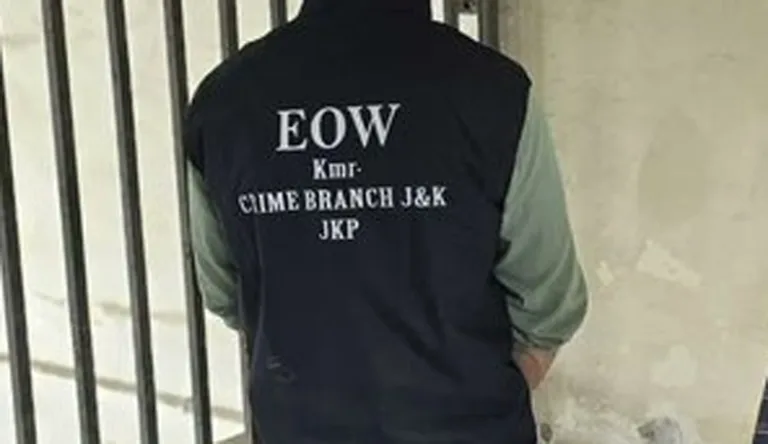
The Special Crime Wing of Crime Branch Kashmir (CBK) conducted house searches at five locations across Srinagar and Budgam districts on Saturday. The operation relates to an ongoing investigation into a cheating case involving fraudulent land sales.

According to an official spokesperson for CBK, the searches aimed to gather evidence connected to allegations that a complainant had been deceived through the sale of land that wasn’t owned by the sellers.

The case arose after the complainant reported being misled by fraudulent land documents. These documents, which the complainant believed to be authentic, led to the payment of substantial sums amounting to lakhs of rupees. However, inquiries later revealed the land was never actually owned by the individuals involved in the sale.

During the operation, teams employed meticulous methods to document findings that could strengthen the investigation. The statement confirmed, “House Searches are underway and further investigation is in progress.” This reflects CBK’s commitment to addressing and resolving cases of public fraud.

The Special Crime Wing, a vital branch of the Crime Branch Kashmir, focuses on serious criminal activities, including fraud and organized crime. Their recent actions underline the increasing vigilance in tackling cheating cases that exploit vulnerable individuals in the region.

The CBK has urged the public to remain cautious while engaging in real estate transactions. “Always verify property documents through legitimate channels,” the spokesperson advised, highlighting the necessity of due diligence to avoid falling victim to similar scams.

With its recent actions, the CBK reinforces its role as a guardian of public trust and safety. The continued efforts of law enforcement agencies intend to bring justice to those wronged by fraudulent activities.

‘Black Day for Ladakh’: Sonam Wangchuk Detained Under NSA

0

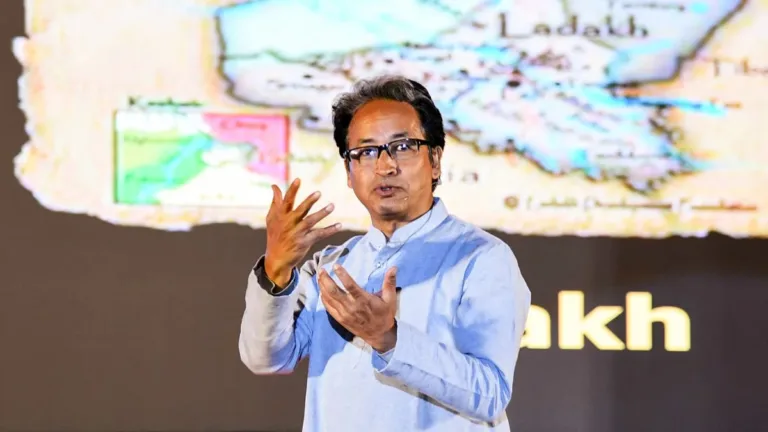
Climate activist Sonam Wangchuk has been detained under the National Security Act (NSA) and transferred to Jodhpur Jail, creating nationwide outrage among netizens. His arrest occurred on September 28, 2023, shortly after violent protests erupted in Ladakh demanding statehood and adherence to the Sixth Schedule.

Late on Friday night, the Ladakh administration confirmed Wangchuk’s detention, stating that his activities posed threats to public order and security. As a prominent figure in the movement for Ladakh’s rights, Wangchuk’s arrest has sparked vehement responses online, with many citizens dubbing it a “black day” for the region.

The protests preceding Wangchuk’s arrest resulted in tragic violence, claiming four lives and injuring over 90 individuals due to police firing. This turmoil highlights the rising tensions in the region as calls for statehood intensify.

Wangchuk initiated a 35-day fast on September 10 in Leh to advocate for the Sixth Schedule, crucial for ensuring tribal rights, alongside demands for statehood and environmental protections for Ladakh’s vulnerable ecosystems. He ultimately concluded his fast on September 24 amidst escalating violence.

In a midnight announcement, the administration expressed concern over Wangchuk’s actions. The official statement noted, “Sonam Wangchuk has indulged in activities prejudicial to the security of the state and detrimental to public order.” Furthermore, it cited his alleged incitement of violence through provocative discussions and online content.

Soon after the announcement, social media platforms erupted with a wave of outrage. Users criticized the administration, with many targeting Lt. Governor Kavinder Gupta, holding him accountable for the disorder that led to civilian casualties.

The official statement portrayed Wangchuk as a catalyst for disorder, claiming that he continued his hunger strike despite government communications suggesting dialogue via the High-Powered Committee (HPC). It accused him of perpetuating unrest through inflammatory rhetoric, including references to the Arab Spring and protests in Nepal.

This tumultuous backdrop indicates a broader struggle for political representation and rights within the region. Prominent social activist and fellow advocate for Ladakh’s statehood, Dr. Anya Rawat, called for public discourse on the government’s response to agitation, stating, “We must engage in constructive dialogue rather than repression. Arresting activists only deepens the divide.”

Meanwhile, the Ladakh administration insists that the decision to move Wangchuk was made in the interest of maintaining peace in Leh. The official communiqué reiterated that it was crucial to restore normalcy and prevent further provocations.

Experts and analysts have voiced concerns that detaining a high-profile activist such as Wangchuk could incite further unrest, potentially undermining the government’s authority in Ladakh. The region, already embroiled in a struggle for autonomy and rights, faces an uncertain future as this episode unfolds.

The ongoing resistance from local communities reflects a growing demand for recognition and political autonomy. As regional dynamics evolve, the significance of individuals like Sonam Wangchuk cannot be underestimated, particularly when advocacy intersects with pressing environmental and social issues.

Looking ahead, the Ladakh administration will face considerable pressure to navigate these complex societal undercurrents while addressing the legality and ethics surrounding the implementation of the NSA against activists. The coming days may very well define the future trajectory of political engagement and activism in Ladakh.

Pakistan Military Urged India for Peace During Operation Sindoor

0

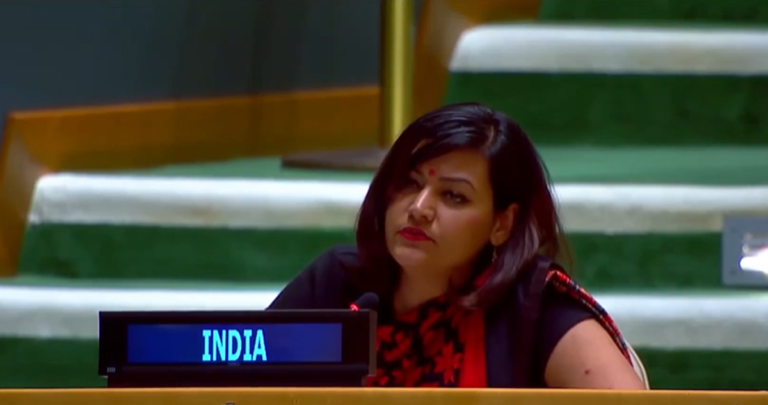
On September 27, India announced that Pakistan’s military made a plea for a cessation of fighting during Operation Sindoor, emphasizing that only bilateral discussions between New Delhi and Islamabad could resolve their issues.

These statements came from Petal Gahlot, India’s First Secretary to the Permanent Mission at the United Nations, in response to remarks delivered by Pakistan Prime Minister Shehbaz Sharif during the 80th session of the UN General Assembly.

Sharif had credited former US President Donald Trump with helping to avert war between the two nuclear-armed nations. Gahlot, however, criticized Sharif’s comments, calling them a display of “absurd theatrics” and accused Pakistan’s Prime Minister of glorifying terrorism.

“This Assembly witnessed absurd theatrics from the Prime Minister of Pakistan, who once again glorified terrorism that is so central to their foreign policy,” Gahlot stated while exercising India’s Right of Reply.

In his speech, Sharif expressed Pakistan’s willingness to engage in “composite, comprehensive, and result-oriented” dialogue with India. He also condemned the situation in Kashmir.

Sharif’s commendation for Trump stemmed from the belief that his efforts helped prevent a major conflict in South Asia. He stated, “In recognition of President Trump’s wonderful and outstanding contribution to promote peace in our part of the world, Pakistan nominated him for the Nobel Peace Prize.”

This recognition highlights Pakistan’s diplomatic efforts amidst a complex geopolitical scenario.

Operation Sindoor, which India initiated on May 7, targeted terrorist infrastructure in Pakistan and Pakistan-occupied Kashmir. This operation followed the devastating Pahalgam terror attack on April 22 that claimed 26 civilian lives.

India’s military maneuvers during this period underscored its commitment to national security and counter-terrorism. India has consistently maintained that any understanding regarding hostilities’ cessation arose from direct discussions between the Directors General of Military Operations of both nations.

The strained relations between India and Pakistan remain a pivotal issue in South Asian politics. Observers note that dialogues and peace initiatives continue to be overshadowed by persistent allegations of terrorism and military aggression.

As India and Pakistan navigate the complex landscape of diplomacy and military strategy, the international community watches closely. Renewed calls for decisive and constructive dialogue echo amidst ongoing tensions.

In conclusion, the event at the UN has once again spotlighted the delicate nature of India-Pakistan relations, with both nations striving for peace yet often hindered by historical grievances and strategic distrust.

BKI Terrorist Parminder Pindi Extradited From UAE to India

0

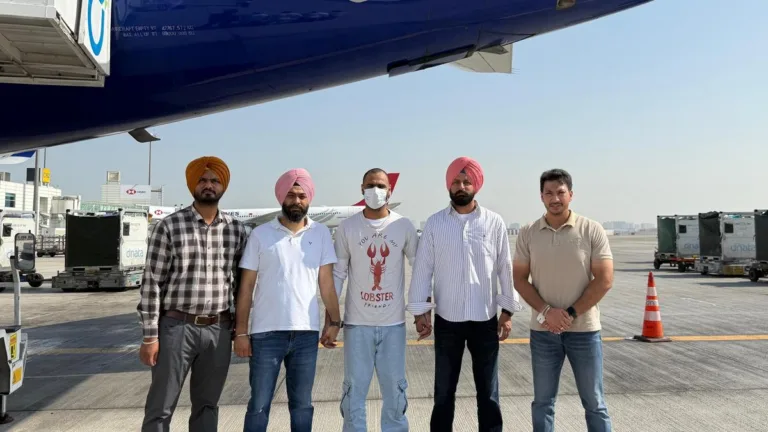
A notorious Babbar Khalsa International (BKI) terrorist, Parminder Singh, also known as Pindi, has been extradited from the United Arab Emirates (UAE) to India, a Punjab Police officer confirmed on Saturday. This move comes as part of a coordinated effort between Indian authorities and their UAE counterparts.

Parminder Pindi is accused of several serious crimes, including petrol bomb attacks, violent assaults, and extortion within the Gurdaspur area of Punjab. His extradition highlights the ongoing collaboration between law enforcement agencies across borders to tackle terrorism and organized crime.

Punjab’s Director General of Police, Gaurav Yadav, disclosed that Pindi’s extradition resulted from swift actions taken after a red corner notice (RCN) was issued by the Batala police. In a detailed statement, Yadav mentioned a dedicated four-member police team led by a senior officer. The team set off for Abu Dhabi on September 24.

During their visit, the team coordinated effectively with the Ministry of External Affairs and local UAE authorities to ensure all legal processes were meticulously followed. After the completion of necessary formalities, they successfully brought Pindi back to India to face the charges laid against him.

Yadav further stated on X (formerly Twitter), “This successful operation underscores our commitment to bringing criminals to justice, regardless of where they seek refuge. The cooperative efforts between Indian and UAE authorities demonstrate the international resolve against terrorism and crime.”

Parminder Pindi’s arrest is a significant development in the ongoing efforts to dismantle BKI’s operations, which have been linked to various terror-related activities in Punjab and beyond. The Punjab Police have remained vigilant in tracking down operatives associated with foreign-based terrorist groups.

This extradition marks a clear message to affiliates of such groups that law enforcement agencies will pursue them relentlessly. As such collaborative operations continue, they signal a unified front against terrorism in India, striving towards a safer environment for its citizens.