Thursday, July 9, 2026
Home Blog Page 1112

India to host UN Security Council members for special meeting on counter-terrorism in October

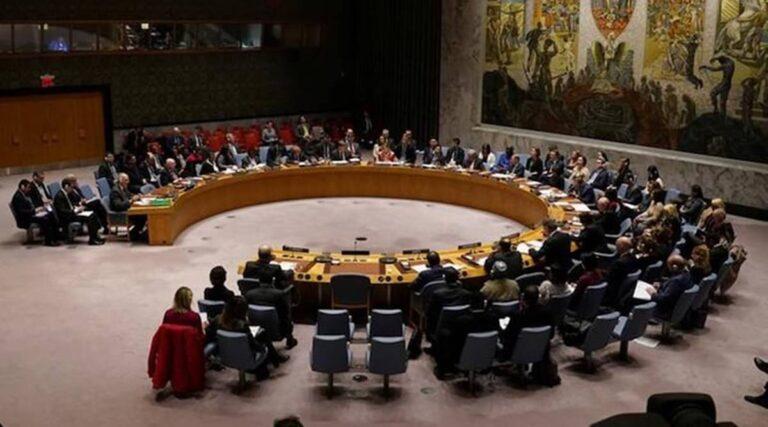
UNITED NATIONS, Aug 4: India will host diplomats of the 15-nation UN Security Council on October 29 for a special meeting on counter-terrorism.
India is halfway through the second year of its two-year term as an elected non-permanent member of the UN Security Council.

India’s tenure at the Council will end in December when the country will also preside as President of the powerful UN organ for the month.
India chairs the Security Council Counter-Terrorism Committee for 2022 and will in October host diplomats of the 15-nation Security Council, including the US, China and Russia, for the counter-terrorism committee’s special meeting.
Current members of the Security Council are Albania, Brazil, Gabon, Ghana, India, Ireland, Kenya, Mexico, Norway and the UAE, along with five permanent members China, France, Russia, the UK and the US.
“Mindful of the increasing threat posed by the misuse of new and emerging technologies,” the United Nations Security Council Counter-Terrorism Committee (CTC) has decided to hold a special meeting on this theme,” with the support of its Executive Directorate (CTED), in India on October 29, 2022, according to information on the Committee’s website.

It said the special meeting will specifically focus on three significant areas where emerging technologies are experiencing rapid development, growing use by member states (including for security and counter-terrorism purposes), and the increasing threat of abuse for terrorism purposes, namely Internet and social media, terrorism financing, and unmanned aerial systems (UAS).
It is not very frequent that the Counter-Terrorism Committee meets outside of New York but the meeting in India will be the seventh time that this is happening. The most recent special meeting of the CTC outside of United Nations headquarters took place in Madrid, Spain, in July 2015, focusing on foreign terrorist fighters (FTFs).
The Committee said further that with the prevalence of technology and rapid rise in digitisation, the use of new and emerging technologies to counter-terrorism is a topic of growing interest among the member states, policymakers and researchers, particularly in the context of the increasing role played by technology in terrorism and counter-terrorism.
This is addressed by the Security Council in a number of counter-terrorism-related resolutions, most recently resolution 2617 (2021), which explicitly cited “emerging technologies”.
The special meeting would be conducted in the six official languages of the United Nations and be open to the wider United Nations membership and other relevant stakeholders.
India’s then Permanent Representative to the UN Ambassador T S Tirumurti had in January this year assumed the Chair of the Security Council Counter-Terrorism Committee for 2022. Ambassador Ruchira Kamboj, the country’s new envoy to the UN, now assumes that role.
Tirumurti had told the UN Security Council briefing on ‘The Use of Digital Technologies in Maintaining International Peace and Security’ in May that there is a need for addressing the abuse of digital technologies by terrorist groups to disseminate terrorist ideologies, radicalise, incite violence, and recruit the next generation of terrorist actors taking advantage of the enhanced online presence of young people.
He had informed the Security Council that India has proposed holding a special meeting of the Council’s Counter-Terrorism Committee in India soon.
“The need for member states to comprehensively address and tackle the implications of terrorist exploitation of the digital technologies more strategically has never been more dire,” he said.
“I am happy to inform this Council that India has proposed holding a special meeting of the Council’s Counter-Terrorism Committee in India soon, which will exclusively focus on this issue and attempt to provide the way forward,” Tirumurti had said.
The Counter-Terrorism Committee (CTC) was established in 2001 in the wake of the 9/11 terrorist attacks. UNSC Resolution 1373 (2001) had established the Counter-Terrorism Committee as a subsidiary body of the Council.
On the eve of assuming Chair of the CTC in December last year, India had voted in favour of a resolution to renew the mandate of the Counter-Terrorism Committee Executive Directorate (CTED).
The UN Security Council, through its written silence procedure, renewed the mandate of the Executive Directorate until December 31, 2025.
“As the Chair of the CTC for 2022, India will make determined efforts to further enhance the role of the CTC in strengthening the multilateral response to counter-terrorism, and more importantly, ensuring that global response to the threat of terrorism remains unambiguous, undivided and effective,” India had said in its explanation of vote to renew the CTED mandate. 
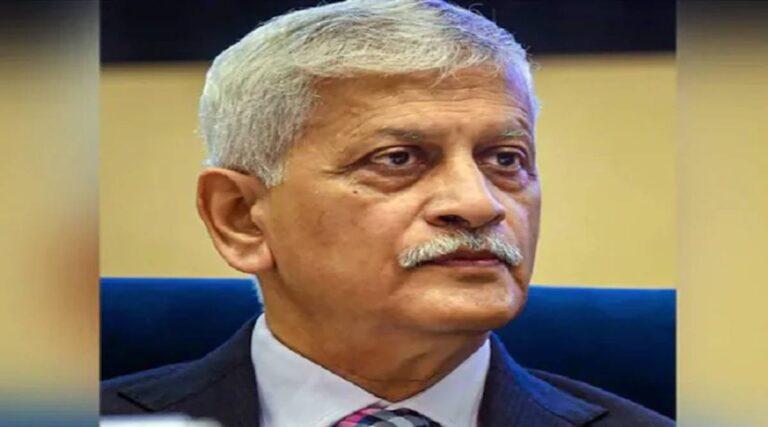
Justice U U Lalit, in line to become next CJI, part of landmark judgements including triple talaq

NEW DELHI, Aug 4: Senior-most judge of the Supreme Court Justice U U Lalit, who is in line to become the next Chief Justice of India (CJI), has been part of several landmark judgements including the one which held the practice of divorce through instant ‘triple talaq’ among Muslims illegal and unconstitutional.
If appointed, Justice Lalit will become the second CJI who was directly elevated to the apex court Bench from the Bar.
Justice S M Sikri, who became the 13th CJI in January 1971, was the first lawyer to be elevated directly to the top court bench in March 1964.
Justice Lalit is in line to become the 49th CJI of India on August 27, a day after incumbent Justice N V Ramana demits the office.
Justice Lalit, who was a renowned senior advocate, was appointed a judge of the Supreme Court on August 13, 2014.
He has since been involved in delivery of several landmark judgements of the apex court.
One of the path-breaking verdicts was the August 2017 judgement by a five-judge constitution bench which by a 3-2 majority ruled the practice of divorce through instant ‘triple talaq’ as “void”, “illegal” and “unconstitutional”.
While then Chief Justice J S Khehar and Justice S Abdul Nazeer were in favour of putting on hold the judgement for six months and asking the government to come out with a law to that effect, Justices Kurian Joseph, R F Nariman and U U Lalit held the practice as violative of the Constitution.
Justices Khehar, Joseph and Nariman have since retired.
In another important judgement, a bench headed by Justice Lalit had ruled the erstwhile royal family of Travancore has the management right over the historic Sree Padmanabhaswamy Temple in Kerala, one of the richest shrines, holding that the rule of “heritability must get attached to a right of Shebait” (servitor) of the temple.
The bench had allowed the appeal of the legal heirs of Uthradam Thirunal Marthanda Varma, the younger brother of the last ruler, Sree Chithira Thirunal Balarama Varma, setting aside the Kerala High Court’s 2011 verdict which directed the state government to set up a trust to take control of the management and assets of the temple.
A bench headed by Justice U U Lalit had ruled that touching sexual parts of a child’s body or any act involving physical contact with ‘sexual intent’ amounts to ‘sexual assault’ under section 7 of the Protection of Children from Sexual Offences (POCSO) Act as the most important ingredient is sexual intent and not skin-to-skin contact.
Quashing the controversial ‘skin-to-skin’ judgements of the Bombay High Court in two cases under the POCSO Act, the bench had said the high court erred in holding that there was no offence since there was no direct ‘skin-to-skin’ contact with sexual intent.
The high court had held that no offence of sexual assault under the POCSO Act was made out if there was no direct skin-to-skin contact between an accused and victim.
Born on November 9, 1957, Justice Lalit had enrolled as an advocate in June 1983 and practised in the Bombay High Court till December 1985.
He shifted his practice to Delhi in January 1986, and in April 2004, he was designated as a senior advocate by the apex court.
He was appointed a special public prosecutor for the CBI to conduct trial in the 2G spectrum allocation case.
Justice Lalit is due to retire on November 8, 2022.

Road infrastructure projects revolutionising connectivity in J&K

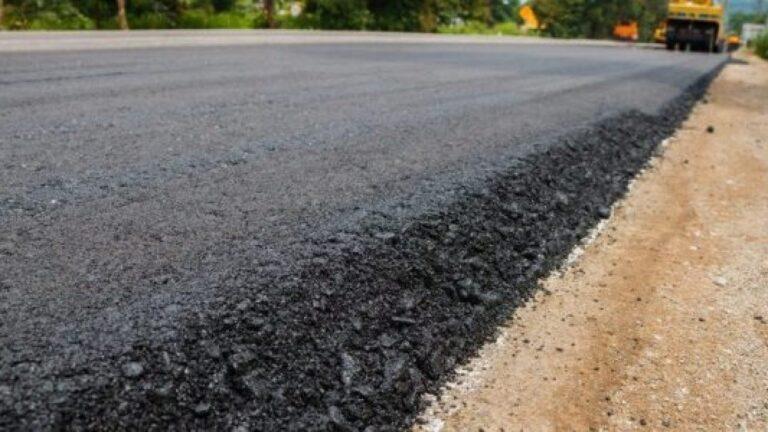
The road projects being executed across the length and breadth of Jammu and Kashmir are revolutionizing the connectivity and bringing economic prosperity across the UT.
With the construction of new roads, the travel time from Jammu to Kishtwar has been reduced from 7.5 hrs to 5hrs and travel time from Jammu to Srinagar has been reduced from 7-12 hours to 5.5 hours for LMVs. Similarly travel time from Srinagar to Gulmarg has been reduced from 3 hours to 1.5 hours and layover of Trucks reduced from 24-72 hours to 12 hours.
The statistics are reflecting that macdamization is being done at record level with average road macdamization in J&K increased to 20.6 km per day in last three years as compared to 6.54 km per day before 2019, which reflects the progressing development happening here.
According to official data, road length in J&K has increased to 41,141 kilometres and the percentage of blacktop roads has reached to 74 percent as compared to 66 percent in 2019.
Under Pothole free road programme, a target of 5900 kilometres was made for 2021-22 of which 4600 kilometres of road length has been made pothole-free till date.
Remarkably, Jammu and Kashmir has once again been ranked among top three performing States/UTs at national level for construction of road length per year under Pradhan Mantri Gram Sadak Yojana (PMGSY).
J&K Maintained its rank for the second consecutive year as the Public Works Department (R&B) constructed PMGSY road length of 3284 kms during the year 2021-22 and connected 114 habitations through road networks by executing 427 schemes in the year.
Under PMGSY, an average 9 kms of road length was constructed per day, which was slightly higher than the achievement for the year 2020-21 with an average of 8.67 kms per day and 119 habitations were connected under PMGSY with 3167 kms of road length constructed.
Nearly after 15 years, inner roads of Nihalpora village in Baramulla district are being repaired and macadamized. Home to 1500 families, the village was never on the priority list of the successive popular governments. Potholed roads, traffic gridlocks and waterlogging were commuting nightmares.
Similarly, the people of Darui Panchayat started celebrating and dancing with joy after the road construction work was taken up in their village for the first time since Independence. As soon as the JCB machine was installed, the people of the village started dancing to the beats of the drum and exchanged sweets among themselves. The construction work on 2.50 kilometer road has been started at an estimated cost of Rs 2.29 crore.
Vimla Devi, the Sarpanch of the Panchayat had played very important role in getting the road built. Vimla Devi said people were engaged in trying to get this road constructed since 2009 but finally the work started in 2022. “People were trying to get this road constructed since 2009 and finally the work has been started in 2022. This road is being built under the NABARD scheme”, she said.

JK readies for Digital Agriculture Mission: Atal Dulloo

Additional Chief Secretary (ACS), Agriculture Production Department, Atal Dulloo held a meeting to discuss implementation of Digital Agriculture Mission (Agristack) in Jammu & Kashmir, at Civil Secretariat here today.
It was first-of-its-kind meeting in which the ACS briefed that Digital Agriculture Mission aims to lead farmers towards precision farming. ‘Equipped with the right technology, farmers will be provided knowledge about their soil health and the most suitable crops, soil treatment and the right kind of pesticides and fertilisers for their farmlands. Timely updates would be delivered through call centres or other media’, he informed.
The ACS remarked that data from PM KISAN, Kisan Credit Card, Soil Health Card schemes is already available with the government for implementation of the mission. He directed that Revenue Department ensure dynamic linking of farmer data with digitised land records. Remote sensing and weather data and databases of National Agriculture Market (e-NAM) could also be used for the purpose, it was told.
It was directed that respective officers ensure Aadhar based e-KYC of farmers is done and data of Pradhan Mantri Fasal Bima Yojana scrutinised. Emphasis was also laid on geo-referencing of village records and it was also told that GIS based real time crop survey would be done by March 2023 in this regard.
Once successfully implement, the farmers would be provided a unique ID and customised alerts for their fields. Committees have also been formed for implementation of the mission in J&K, it was informed.
Those present at the meeting included Divisional Commissioner Jammu, Ramesh Kumar; CEO, JaKeGA, Abhishek Sharma; Director Horticulture Jammu/ Kashmir, Director Agriculture Jammu/ Kashmir and Managing Director, J&K Agro Development Corporation, Arun Manhas among officers from Directorate of Survey and Land Records and other departments were also present at the meeting in person and through video conference.

Former legislator, President J&K JDU call on LG

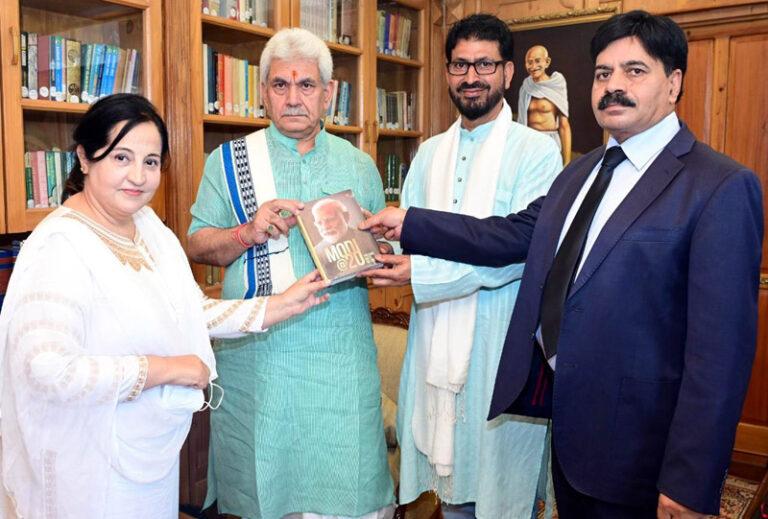
Former legislator, Sh Surinder Ambardar, and President J&K Janta Dal United (JDU), Sh GM Shaheen called on Lieutenant Governor Manoj Sinha at the Raj Bhavan here today.
Sh Surinder Ambardar accompanied by Mrs Dil Afroza Qazi and Mr Shabbir A Qazi of SSM College presented a book on Hon’ble Prime Minister Shri Narendra Modi to the Lt Governor.
He also discussed various initiatives and developments made in the J&K’s education and Industrial sectors, besides other matters.
Sh GM Shaheen expressed gratitude to the Lt Governor led UT Government for the progressive policies and unprecedented reforms brought for rapid development and growth in J&K. He also discussed with the Lt Governor various matters pertaining to better connectivity, development of tourism and power sectors, and the progress on Jal Jeevan Mission. He was accompanied by Sh Khurshid Naqati, State organizer JDU.
The Lt Governor while interacting with the former legislator and JDU leader observed that the UT administration is fully committed to continuously working for touching new levels of development and prosperity in Jammu Kashmir. He urged the public representatives to remain dedicated to the welfare of people of J&K.

Mainly dry weather likely in J&K

0

The weather is likely to remain dry in the next 24 hours in J&K, the Meteorological (MeT) department said on Thursday.

The weather was dry in the union territory during the last 24 hours.

“Weather is likely to remain mainly dry in J&K during the next 24 hours”, said the MeT department official.

Srinagar had 17.8, Pahalgam 13 and Gulmarg 9.4 degrees Celsius as the minimum temperature.

Drass town in Ladakh region had 10, Leh 12.8 and Kargil 16.6 as the minimum temperature.

Jammu had 26.3, Katra 23.1, Batote 19, Banihal 18.6 and Bhaderwah 18.5 as the minimum temperature.

Minor boy’s body recovered day after drowning in Doda

0

Body of a 14-year-old boy was recovered on Thursday, a day after he drowned in Neeru Nullah in Doda district, officials said.

They said the body of Shamoon Hussain, son of Noor Hussain of Chilli Bhalessa, a resident of village Kungla Tehsil Bhalla, was recovered around 7 am, news agency GNS reported.

He had drowned on Wednesday in the water body.

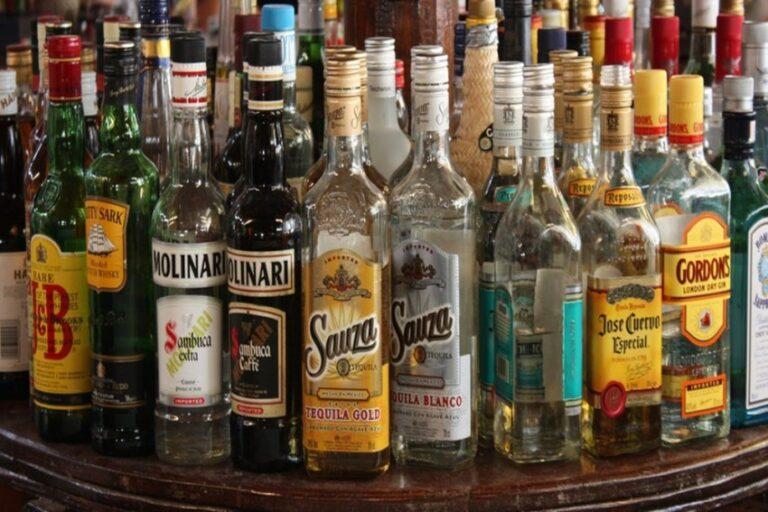
Liquor traders unwilling to place bulk orders, leading to shortage in Delhi

Despite the extension of licence for one month by the AAP government, most of the liquor traders in the national capital are not willing to place bulk orders, leading to an unprecedented liquor crisis in Delhi.

The liquor traders are afraid that if they place orders in bulk, they will be under pressure to clear the inventory anyhow by the end of this month after their licence expires on August 31.

The capital city is not experiencing the liquor crisis for just premium brands, even the non-premium brands are not available at many outlets.

Meanwhile, a total of six zonal licensees have opted out of the extension and surrendered their licences even as private shops reopened on Tuesday after LG V.K. Saxena’s approval for one month extension. It has resulted in the closure of 126 stores out of the total 468 that were presently operating in the city.

At present, there are no liquor shops open in areas like Greater Kaliash, Daryaganj, Punjabi Bagh, Chittaranjan Park, Paharganj, Sarita Vihar, Anand Vihar and Shakarpur, among others.

The city was divided into 32 zones for the implementation of the new excise policy by the Delhi government. However, 16 zonal licences have been surrendered out of the 32 zones.

On the contrary, bars and restaurants in the city are serving liquor as usual now.

Talking to IANS, Rahul Singh, trustee, National Restaurant Association of India, said the licence extension has come as a relief as at least they can continue to serve liquor.

“The wholesalers are allowed to supply liquor to the retail vends which in turn supply to us. We had the old regime for many years. So whatever the government decides, we can only follow,” said Singh.

However, this dilly-dallying approach with the excise policy has confused the consumers and has also impacted the supply chain management.

“This start-stop-start mode or the short-term extension of a month only disrupts the supply chain. This is causing loss to all the stakeholders, be it the government, the manufacturers, the traders or the consumers,” said Vinod Giri, Director General, Confederation of Indian Alcoholic Beverage Companies (CIABC).

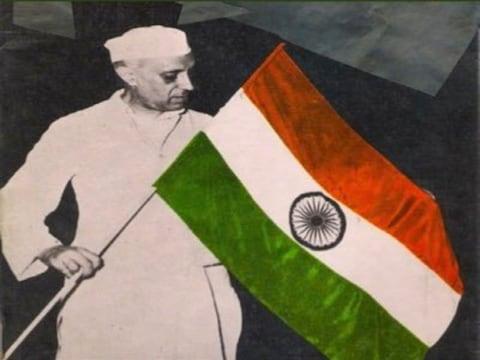
Congress takes jibe at Centre, responds to Har Ghar Tiranga with Nehru’s picture

As the centre launched its ‘Har Ghar Tiranga’ campaign under the Azadi ka Amrit Mahotsav, various leaders from the Congress party took a jibe at the central government over the campaign by adding former Prime Minister Jawaharlal Nehru’s picture to their Twitter display picture and said that it was good that the government was recognising the tricolour.

The party’s media in-charge and Congress leader Jairam Ramesh started the trend. Attacking the Rashtriya Swayamsevak Sangh which uses a different flag, Ramesh said,” Sangh people are now adopting the tricolour. We are putting the DP of our leader Nehru with the tricolour in our hand. But the message of the Prime Minister did not reach his family.”

Another senior Congress leader Pramod Tiwari, who changed his DP, took a jibe at the BJP and said, “Where were their ancestors in the freedom struggle? It is good that now they are adopting the tricolour.”

Earlier on Wednesday, Prime Minister Narendra Modi said that it pains our hearts if some political comments are made at the celebrations related to the Azadi ka Amrit Mahotsav and the celebrations that are organised across the country around the 75th Independence Day.

“We will also call upon Congress and other political parties and leaders to leave politics and put their efforts so that the country can move forward in a positive way.”

“The ‘Har Ghar Tiranga’ campaign is not a political programme. It is a government programme. That’s why today when the Tiranga bike rally took place in Delhi, this call was made by the Minister of State, a ministry of the Government of India. It was given that let’s do tricolour bike rally together in Delhi and its flag-off was done by at the hands of Vice President and Chairman of Rajya Sabha Venkaiah Naidu Ji because it is a politically neutral programme,” he said.

“Politics is happening on this as well. A lot of statements are coming on this. BJP would like to request parties without naming them only with folded hands. Tricolour belongs to everyone and if all MPs participate in it, this animosity will end,” he said.

“It was the Prime Minister’s call to hoist the tricolour in 20 crore homes. For this everyone should have a holy hand and as the PM has said time and again, national policy is above politics. This tricolour is not of any party, but belongs to the nation. The tricolour is to be hoisted in every house. It cannot be the line of any party, but is the line of the new nation.”

India reports 53 new Covid fatalities

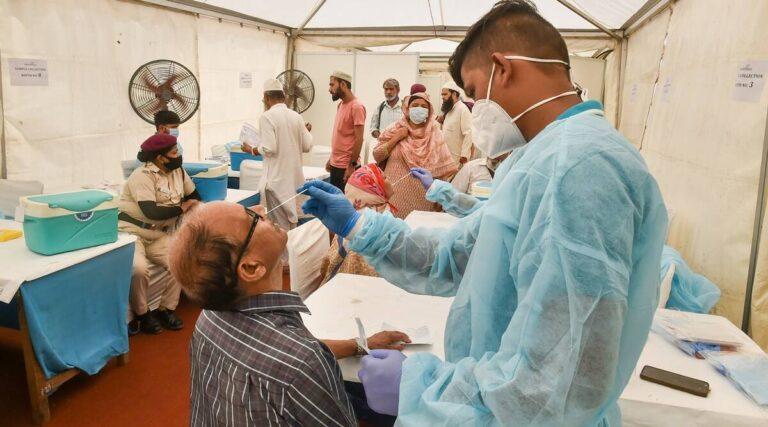
New Delhi, Aug 4: With 19,893 new coronavirus infections being reported in a day, India’s total tally of COVID-19 cases rose to 4,40,87,037, while the active cases dipped to 1,36,478, according to the Union Health Ministry data updated on Thursday.
The death toll climbed to 5,26,530 with 53 new fatalities, the data updated at 8 am stated.
The active cases comprise 0.31 per cent of the total infections, while the national COVID-19 recovery rate was recorded at 98.50 per cent, the ministry said.
A decrease of 579 cases has been recorded in the active COVID-19 caseload in a span of 24 hours.
India’s COVID-19 tally had crossed the 20-lakh mark on August 7, 2020, 30 lakh on August 23, 40 lakh on September 5 and 50 lakh on September 16. It went past 60 lakh on September 28, 70 lakh on October 11, crossed 80 lakh on October 29, 90 lakh on November 20 and surpassed the one-crore mark on December 19.
The country crossed the grim milestone of two crore on May 4 and three crore on June 23 last year. It crossed the four-crore mark on January 25 this year.