
FLORIDA (U.S), Aug 9: Former President Donald Trump said his Mar-a-Lago estate in Florida was raided by FBI agents on Monday, August 8, 2022, which came amid a U.S. Justice Department investigation of Mr. Trump’s removal of official presidential records to the Palm Beach estate.
The Justice Department declined to comment on the raid, which Mr. Trump in a statement said involved a “large group of FBI agents.”
The FBI’s field office in Miami did not immediately respond to a request for comment.
Mr. Trump said the estate “is currently under siege, raided, and occupied.” He did not say why the raid took place.
“After working and cooperating with the relevant Government agencies, this unannounced raid on my home was not necessary or appropriate,” Mr. Trump added.
CNN reported that Trump was not at the estate at the time of the raid, and that the FBI had executed a search warrant to enter the premises.
Mr. Trump, who has made his club in Palm Beach his home since leaving the White House in January 2021, has generally spent summers at his golf club in Bedminster, New Jersey, because Mar-a-Lago typically closes in May for the summer.
The Justice Department launched an early-stage investigation into Mr. Trump’s removal of records to the Florida estate, a source familiar with the matter said in April.
The investigation comes after the U.S. National Archives and Records Administration in February notified Congress that it had recovered about 15 boxes of White House documents from Mr. Trump’s Florida home, some of which contained classified materials.
The U.S. House of Representatives Oversight Committee at that time announced it was expanding an investigation into Trump’s actions and asked the Archives to turn over additional information.
Mr. Trump previously confirmed that he had agreed to return certain records to the Archives, calling it “an ordinary and routine process.” (Agencies)
Donald Trump says FBI agents raided his Florida home

Active Covid cases in country decline to 1,31,807

New Delhi, Aug 9: With 12,751 new coronavirus infections being reported in a day, India’s tally of COVID-19 cases rose to 4,41,74,650, while the active cases have declined to 1,31,807, according to the Union Health Ministry data updated on Tuesday.
The death toll has climbed to 5,26,772 with 42 deaths which includes 10 fatalities reconciled by Kerala, the data updated at 8 am stated.
The active cases comprise 0.30 per cent of the total infections, while the national COVID-19 recovery rate was recorded at 98.51 per cent, the ministry said.
A decrease of 3,703 cases has been recorded in the active COVID-19 caseload in a span of 24 hours.
India’s COVID-19 tally had crossed the 20-lakh mark on August 7, 2020, 30 lakh on August 23, 40 lakh on September 5 and 50 lakh on September 16. It went past 60 lakh on September 28, 70 lakh on October 11, crossed 80 lakh on October 29, 90 lakh on November 20 and surpassed the one-crore mark on December 19.
The country crossed the grim milestone of two crore on May 4 and three crore on June 23 last year. It crossed the four-crore mark on January 25 this year. (Agencies)
2 Shiv Khori Pilgrims Died After Being Hit By Shooting Stones
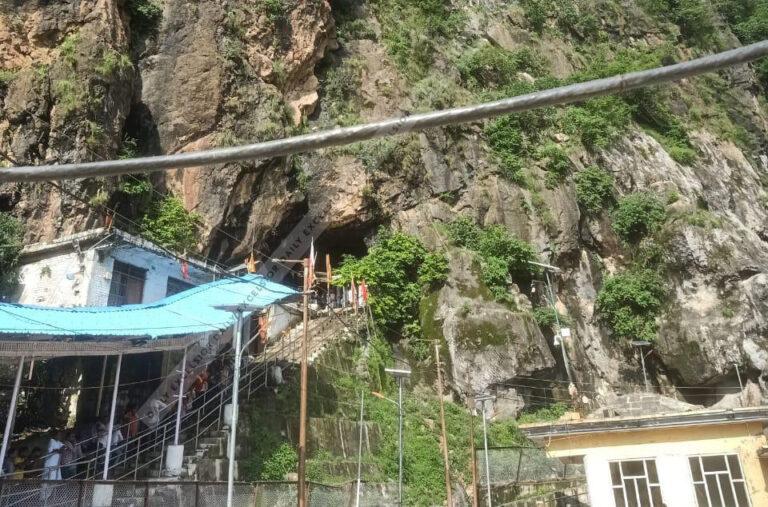
JAMMU, Aug 8: Two pilgrims were killed in the Reasi district of Jammu and Kashmir due to shooting stones, officials said on Monday.
“A pilgrim from Uttar Pradesh and another from Jammu and Kashmir’s Rajouri lost their lives after being hit by a shooting stone near the cave of Shiv Khori Shrine in Reasi district,” said Babila Rakwal, Deputy Commissioner.
LG Manoj Sinha meets President Droupadi Murmu in New Delhi
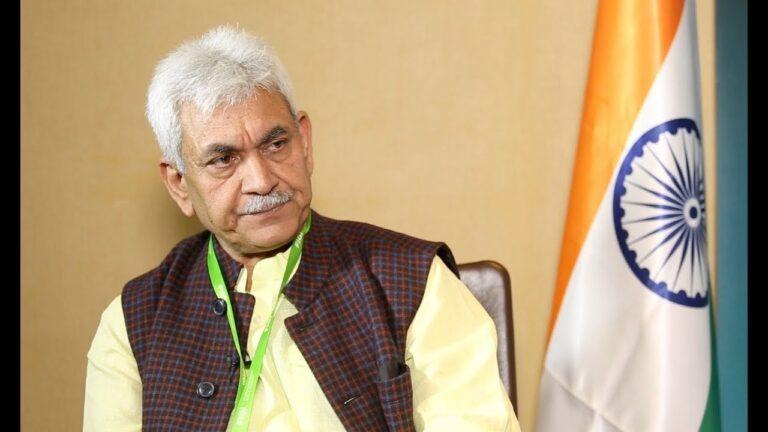
NEW DELHI, Aug 8: Jammu and Kashmir Lieutenant Governor Manoj Sinha called on President Draupadi Murmu at Rashtrapati Bhavan in New Delhi on Monday. During this, Lieutenant Governor Manoj Sinha congratulated her and also talked about Jammu and Kashmir and other subjects.
Dalai Lama congratulates Jagdeep Dhankhar on being elected Vice President
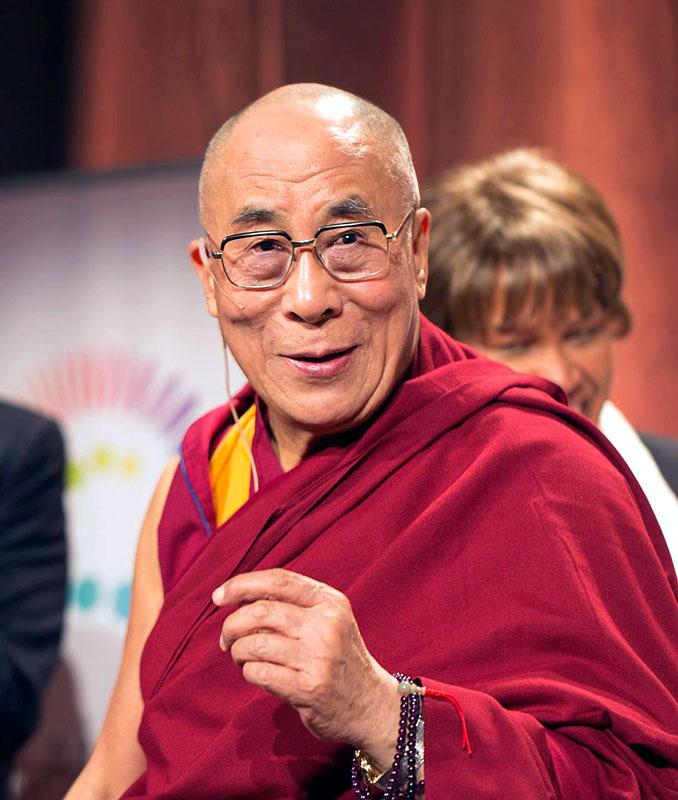
Tibetan spiritual leader the Dalai Lama on Monday extended his congratulatory wishes to newly-elected Vice-President Jagdeep Dhankhar.
The 14th Dalai Lama in his letter to Dhankhar wrote, “Today, the international community is becoming ever more aware of the leadership role that India can play in contributing to the peace and development of all humanity. With your long and rich experience of public service, I am sure you will be able to serve this great nation and its people with success.” The Tibetan spiritual leader said that India is the land of ‘ahimsa’ and ‘karuna’, ideas that can contribute much to the flourishing of humanity.
He expressed his commitment to moving forward to create awareness of this treasure.
“Over the years, India has taken great strides in many fields, especially in science and technology. As someone who has lived here for most of my life, I consider myself very much part of Indian society. It is auspicious that you are taking up this position on the occasion of the 75th anniversary of India’s independence.”
“Mahatma Gandhi made the principle of non-violence spread across the world, and leaders from Dr Martin Luther King to Nelson Mandela turned to ‘ahimsa’ to try to address long-standing differences and social problems. For my part, in addition to applying this principle wherever possible, I am deeply committed to trying to create greater awareness of this treasure, together with the power of compassion, among my Indian brothers and sisters and across the world,” he added.
Dalai Lama praised the traditional techniques of mental training in India, which include Yoga and meditation and said that they can benefit all human beings now and in future.
“I am proud to say that ancient India is the source of an understanding of the mind and emotions – as well as of its traditional techniques of mental training, such as meditation and yoga – that can be of benefit to all human beings, both now and in the future.
“I believe that it is most important to incorporate the study of India’s ancient knowledge into modern educational systems, purely from a secular and academic perspective.”
“India is uniquely well-positioned to combine these two essential bodies of knowledge. I am aware that such initiatives have begun in several states, and I very much hope that they will grow across the nation,” he added.
Dhankhar won the election by 346 votes after defeating Opposition candidate Margaret Alva.
He got 528 votes against opposition candidate Margaret Alva who secured 182 votes.
The next Vice-President of the country will take the oath of office on August 11, a day after the term of the incumbent Vice President M Venkaiah Naidu ends.
Shiv Sena MP Sanjay Raut sent to 14 days judicial custody

Eight days after Shiv Sena MP Sanjay Raut was arrested after by the Enforcement Directorate (ED) in an alleged money-laundering case, a special PMLA Court sent him to 14-days judicial custody till August 22 here on Monday.
The ED had raided Raut’s residence in Bhandup on July 31 and arrested him in the wee hours of August 1 in connection with a money-laundering case.
Meanwhile, the PMLA Court Special Judge M.G. Deshpande granted Raut judicial custody after the ED said it did not require his additional custody.
The cas was detected from the redevelopment project of the Patra Chawl, Goregaon, by Guru Ashish Construction Pvt. Ltd., a subsidiary of the HDIL.
Besides Raut, his the ED had interrogated the MP’s wife, Varsha Raut for around 10 hours on Saturday in the same case in which it had earlier arrested his close associate, Pravin Raut.
Sanjay Raut, 61, was earlier sent to a four-day ED remand which was extended by three more days till August 8, followed by the two-week long judicial custody granted on Monday.
The Special Judge Deshpande took cognisance of the MP’s medical records pertaining to his heart ailments and permitted him home-cooked food along with his medicines as prescribed by the doctor while ordering judicial custody,
In April the ED had attached properties belonging to Varsha Raut and Pravin Raut and two others, worth around Rs 11.15 crore as part of its probe.
On July 1, Sanjay Raut was grilled for over 10 hours by the ED and then summoned again on at least two occasions, but he skipped the same citing the ongoing monsoon session of Parliament.
35-yr-old woman found dead in Kulgam, 2nd incident in two days

Kulgam, Aug 8: A 35-year-old woman was found hanging near her native village in Yarikhan area of Damhal Hanjipora in south Kashmir’s Kulgam district on Monday morning, officials said here.
The spot is some 100 meters from her home in Yarikhan, news agency KNO reported. A case has been registered and further investigations has been taken up in this regard.
Notably, this is the second incident in the last 24 hours in the district, as yesterday a 50-year-old man was found dead under similar circumstances in Turk Tachloo area of Kulgam.
Policeman shoots self dead inside court complex in J-K’s Doda

Doda/Jammu, Aug 8: A policeman allegedly shot himself dead with his service rifle at a court complex in Jammu and Kashmir’s Doda district, officials said on Monday.
Special Police Officer (SPO) Gurmesh Singh (46) was on guard duty at Doda Sessions Court when his colleagues heard a gun shot and rushed towards him, only to see him lying in a pool of blood late on Sunday, they said.
The bullet that pierced his chest resulted in his on-the-spot death, they said, adding preliminary investigations suggested that he might have committed suicide.
The officials said the motive behind Singh taking such an extreme step was not immediately known.
Police have started inquest proceedings in this connection, they said.
CWG 2022: PV Sindhu clinches first-ever Commonwealth Games singles gold of her career, defeats Canada’s Michelle Li in final
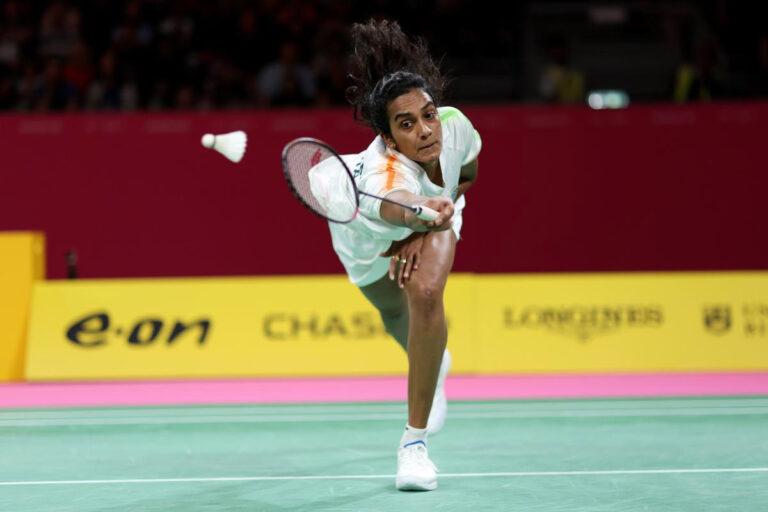
Birmingham [UK], August 8: Ace Indian shuttler PV Sindhu clinched India’s first gold medal in Badminton at the ongoing Commonwealth Games 2022 and the first women’s singles CWG gold medal of her career by defeating Canada’s Michelle Li in the final on Monday.
Sindhu was a dominant figure in the match, though her opponent competed well. The Indian won the match in straight two games by 21-15, 21-13.
PV Sindhu got off to a great start. Halfway through the first game, she was leading by 11-8. Michelle Li offered her Indian opponent great competition but fell short in every rally. The result was a 21-15 win for Sindhu in the first game.
Li started the second game on a good note. But Sindhu took advantage once again within no time. The Canadian kept making errors and it kept widening Sindhu’s lead with every failure. Halfway through the second game, Sindhu was in an advantageous position with an 11-6 lead. She needed ten more points to take home the first CWG 2022 gold medal for India in badminton.
After the break, things started more even, with both players getting two points quickly due to errors committed by their opponent. Sindhu and Li had an exciting rally of 57 shots, which concluded with the Indian losing a point. Li was slowly gaining an advantage over Sindhu as she was cutting the deficit. Eventually, Sindhu’s lead was reduced to 13-11.
Sindhu kept fighting through the second game and eventually won it by 21-13. With the win, she also clinched her first-ever women’s singles medal in Commonwealth Games 2022 and India’s first-ever gold in badminton at CWG 2022.
Later today, India will have a chance to capture two more golds in badminton in following matches:
-2:10pm – Men’s Singles Finals – Lakshya Sen will be in action.
-3pm – Men’s Doubles Finals – Chirag Shetty/Satwiksairaj Rankireddy in action.
CWG 2022 started in Birmingham from July 28 and will go on till August 8. (Agencies)
Petition to recognise minorities at district level is contrary to law: Supreme Court
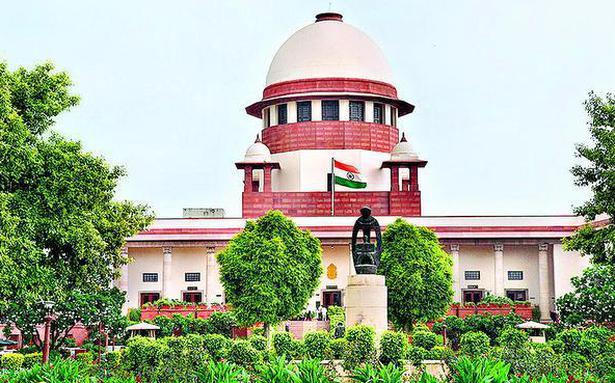
NEW DELHI, Aug 8: The Supreme Court on August 8 orally observed that it is “contrary to law” to identify religious and linguistic minority communities district-wise. A Bench of Justices U. U. Lalit and S. Ravindra Bhat remarked that minority status of linguistic and religious communities have to be considered State wise.
The Court was hearing a petition filed by Devkinandan Thakur Ji, a Mathura resident, claiming that Hindus do not get minority status in States where they are “socially-, economically-, politically non-dominant and numerically inferior”. The petition had also sought a declaration from the Court to identify minorities district wise.
“Your prayer to recognise minorities at the district level is contrary to law. There is a 11-judge Bench judgment which holds that it should be done at the State level,” Justice Bhat addressed the petitioner side.
The judge was referring to the majority verdict given by the 11-judge Bench in the T. M. A Pai versus State of Karnataka case in 2002. The Bench said the Court cannot pass “general” directions to States to bestow certain communities with minority status. “If you bring a concrete case, we can look into it… This has to be done on a case-to-case basis,” Justice Lalit told the petitioner side.
“You want to somehow bring out a case when there is none. We can look into concrete case of denial, the court cannot pass general orders” Justice Bhat said.
At this point, advocate Ashwini Upadhyay intervened to point out that a similar petition was pending before another Bench of the apex court. He urged the Bench to tag this petition along with the other one which has been pending since 2020. Mr. Upadhyay is himself the petitioner in the 2020 case.
The Court tagged Mr. Thakur’s case with the earlier case and scheduled a hearing in the first week of September before the appropriate Bench.
In the previous hearing before Justice Lalit’s Bench, Mr. Thakur had complained that followers of Judaism, Bahaism and Hinduism, who were the real minorities in Ladakh, Mizoram, Lakshadweep, Kashmir, Nagaland, Meghalaya, Arunachal Pradesh, Punjab and Manipur could not establish and administer educational institutions of their choice, thus jeopardising their basic rights guaranteed under Articles 29 and 30.
But the Court had indicated that a religious or linguistic community which were a minority in a particular State could inherently claim protection and the right to administer and run their own education institutions under Articles 29 and 30 of the Constitution.
The Court had asked whether a specific notification, declaring such non-dominant communities as a ‘minority’ in the particular State, was required to be issued at all.
The Court had made it clear that it would not entertain petitions devised in “thin air”. It had challenged the petitioner to bring a “concrete case” in which Hindus were denied rights in States where they were a minority. (AGENCIES)