
The Jammu and Kashmir Government has constituted District-Level Inspection Committees in all districts to conduct regular inspections of hostels functioning across the Union Territory.
According to an order issued by the General Administration Department, the committees will be headed by the Additional District Development Commissioner and will include the Programme Officer ICDS, Assistant Commissioner Development, District Social Welfare Officer and Assistant Director, Food, Civil Supplies and Consumer Affairs as members.
The committees have been tasked with carrying out monthly inspections of hostels, assessing food quality and safety, hygiene and sanitation standards, living conditions, infrastructure, drinking water and waste disposal facilities, besides examining maintenance of records and utilization of funds.
They will also recommend measures for improving management, safety and welfare of hostel inmates.
The committees have been directed to submit monthly inspection reports to the concerned Deputy Commissioners for further action by the respective departments.
J&K Govt Constitutes District-Level Panels To Inspect Hostels
PM Has Promised To Keep Word On Statehood Restoration: Farooq Abdullah
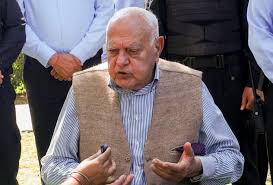
Prime Minister Narendra Modi has told Jammu and Kashmir Chief Minister Omar Abdullah that he would fulfil his promise of statehood to Jammu and Kashmir, National Conference president Farooq Abdullah said on Wednesday.
He said they are waiting for the Centre to fulfil its promise.
“Prime Minister has recently told Omar that he will fulfil his promise (on restoration of statehood to Jammu and Kashmir),” Abdullah told reporters in Anantnag district.
Responding to a question on delay in approval of business rules for Jammu and Kashmir government, Abdullah said his party wants not only the business rules but also restoration of statehood.
“Statehood is their promise before the world. We are waiting for it,” he added. National Conference has announced to hold a protest in Delhi on the first day of the monsoon session of Parliament in support of their demand for restoration of statehood to Jammu and Kashmir.
The decision was taken at the meeting of ruling party legislators chaired by Omar Abdullah on June 3. (Agencies)
CSIR-IIIM, Ambrosia Botanicals Join Hands To Work On Aromatic Crops, Essential Oils Based Botanical Wellness Products

In a significant step towards strengthening India’s aromatic crop value chain and promoting botanical wellness products, the CSIR-Indian Institute of Integrative Medicine (CSIR-IIIM), Jammu, on Wednesday signed a Memorandum of Understanding (MoU) with Ambrosia Botanicals, a Gurugram-based luxury botanical wellness company.Jammu regional news
The collaboration aims to create a robust framework for research, quality standardization, value addition and market development of aromatic crops and essential oils, while opening new commercial opportunities for farmers, entrepreneurs and industry stakeholders associated with the sector.
The MoU was formally signed by Dr. Zabeer Ahmed, Director, CSIR-IIIM, and Pratiba S. Kedia, Founder and Chief Formulator, Ambrosia Botanicals.
Under the agreement, the two organisations will work together on collaborative and sponsored research projects, scientific validation of botanical products and formulations, exchange of technical expertise, and development of value-added products derived from aromatic crops.
The partnership will also focus on strengthening the objectives of CSIR’s Aroma Mission by enhancing market linkages and improving the commercial utilization of aromatic produce.
Speaking on the occasion, Dr. Zabeer Ahmed said the partnership reflects the institute’s continued commitment to translating scientific research into market-driven solutions that benefit farmers, industry and consumers alike.
“CSIR-IIIM has been at the forefront of promoting aromatic crops and essential oil-based enterprises through the Aroma Mission. This collaboration will help bridge the gap between scientific innovation and market requirements. By combining our research expertise with industry insights, we aim to develop high-quality, value-added botanical products, strengthen quality standards and create sustainable livelihood opportunities for growers associated with aromatic crops,” Dr. Ahmed said.
He further noted that the collaboration would contribute to expanding the reach of Indian aromatic products in domestic and international markets while encouraging innovation in the botanical wellness sector.
As per the MoU, CSIR-IIIM will provide scientific and technical support for evaluation, optimization and validation of products and formulations. The institute will also undertake analytical, quality, safety and stability assessments wherever required and feasible. Subject to resource availability, the institute may also facilitate the development and supply of botanical materials, extracts and other natural products for collaborative research activities.
Ambrosia Botanicals, on the other hand, will contribute market intelligence, product concepts, formulation inputs and commercialization strategies. The company will identify emerging market opportunities and facilitate licensing and commercialization of products developed through the collaboration, as per mutually agreed project-specific arrangements.
The MoU also provides for joint research projects, exchange of scientific personnel and technical information, capacity-building programmes, technology dissemination activities and development of annual work plans to identify priority areas of cooperation. The MoU will remain in force for a period of five years and may be renewed by mutual consent.
Among those present during the signing ceremony were Dr. Tasduq Abdullah, Senior Principal Scientist, CSIR-IIIM; Dr. Suphla B. Gupta Scientist-F, Plant Sciences and Agrotechnology Division (PSA), CSIR-IIIM; Dr. Saurabh Saran, Scientist-F, Fermentation and Microbial Biotechnology Division and Principal Investigator, IIIM-Technology Business Incubator, Dr. Mir Asrar, Scientist, CSIR-IIIM and Sandeep Kedia, Business Development, Ambrosia Botanicals.
Massive Forest Fire Erupts Across Multiple Areas In Rajouri Forest Division; Firefighting Efforts Intensified
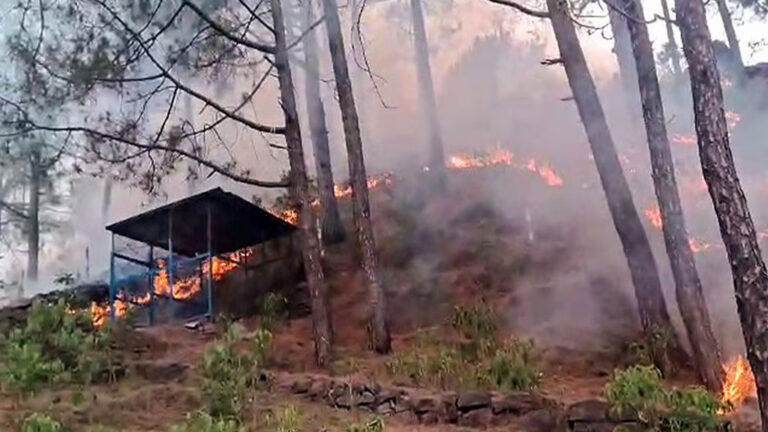
A massive forest fire has broken out at multiple locations in the Rajouri forest division of Jammu and Kashmir, prompting a large-scale response by the forest department, Forest Protection Force (FPF), and residents to contain the blaze and prevent it from spreading further.
According to officials, the fire has affected forest areas in Khadian, Androla, Chakkli, Miahadi, and the Bathuni block. Firefighting operations were underway on Tuesday, with authorities deploying the entire available workforce to bring the situation under control.
Speaking to news agency, Forest Department official Rajesh Kumar said personnel have been mobilised across the affected areas despite significant logistical challenges.
“The entire staff has been deployed. The fire is in the Chakkli, Khadian, and Androla areas. This place is too remote for the fire vehicles to reach. Hopefully, the fire will be doused by evening,” Kumar said.
Officials said the difficult terrain and remoteness of the affected forest regions have hampered firefighting efforts, forcing teams to rely largely on manual methods to contain the flames.
Residents have also joined the operation and have been working alongside forest personnel to prevent the fire from advancing into nearby areas.
A resident involved in the firefighting efforts said villagers had been battling the blaze continuously since the previous day.
“We were working until night to douse the fire yesterday. I reached home from work at around 12 midnight. We are trying to extinguish the fire with the department. But the fire is huge. It is very difficult to control it,” the resident said.
Authorities have not yet provided an estimate of the area affected by the fire or the extent of damage caused to forest cover and wildlife. No casualties or injuries have been reported so far.
The cause of the fire is yet to be ascertained. Forest officials are closely monitoring the situation and have intensified efforts to contain the blaze before it spreads to additional forest compartments.
Meanwhile, local authorities and forest personnel remain on high alert as firefighting operations continue across the affected areas of the Rajouri Forest Division. (AGENCIES)
Union Minister Nitin Gadkari Arrives In Srinagar; LG Manoj Sinha Extends Warm Welcome
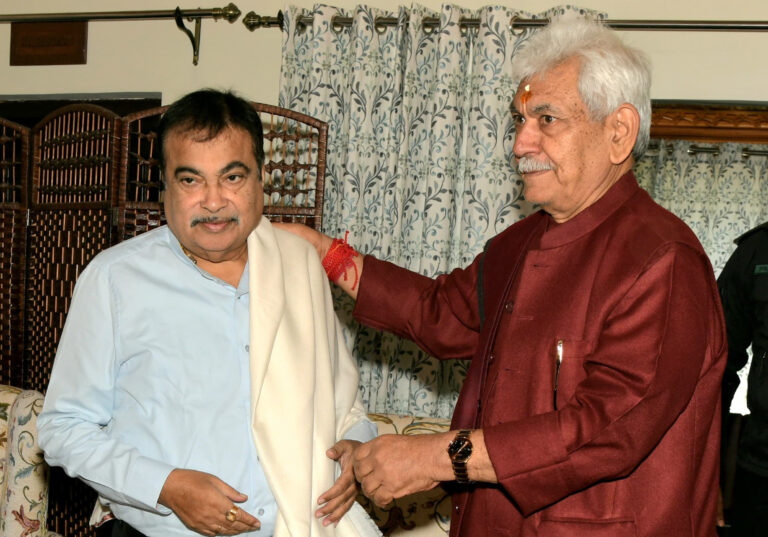
Lieutenant Governor Manoj Sinha on Tuesday welcomed Union Minister for Road Transport and Highways, Nitin Gadkari, upon his arrival in Srinagar.
In a post shared on social media, the Lieutenant Governor said he had the privilege of receiving the Union Minister in the summer capital of Jammu and Kashmir.
Gadkari’s visit assumes significance as several key infrastructure initiatives, including major highway and tunnel projects aimed at strengthening connectivity and boosting development in the Union Territory, are expected to be reviewed during his stay.
The visit comes amid accelerated efforts by the Centre to enhance road infrastructure across Jammu and Kashmir, with a focus on improving mobility, reducing travel time and promoting economic growth in the region.
Monsoon Set to Arrive in North Bengal in 3-4 Days: IMD

The India Meteorological Department (IMD) announced on Monday that the southwest monsoon is likely to enter North Bengal in the next three to four days, covering sub-Himalayan districts such as Darjeeling, Kalimpong, and Jalpaiguri. This development comes after northern districts have already begun experiencing pre-monsoon showers.
The IMD’s bulletin confirmed that conditions are now favorable for the advancement of the monsoon, even as its usual entry date of June 6 approaches. The weather pattern has already led to a humid atmosphere in southern Bengal, despite intermittent rainfall.
According to the forecast, heavy rainfall is on the cards for the next two days across the sub-Himalayan regions, which include Darjeeling, Kalimpong, Jalpaiguri, Alipurduar, and Cooch Behar. Furthermore, light to moderate rain is anticipated for southern districts during this period.
The IMD reported that Alipurduar, which borders Assam, recorded the highest rainfall in the state in the last 24 hours, receiving an impressive 133 mm by 8:30 AM on Monday. Other regions noted precipitation as follows: Jalpaiguri with 53 mm, Cooch Behar at 18 mm, Darjeeling with 7.8 mm, and Kalimpong measuring 19 mm.
Experts indicate that the delayed arrival of the monsoon could have various implications, including a potential impact on agriculture and water supply. Farmers in the region eagerly await the rains to support the cropping season, particularly for rice and paddy.
This year, the monsoon’s lateness may cause fluctuations in agricultural productivity, leading to increased scrutiny of weather patterns and forecasts heading into the farming season.
The IMD encourages residents of North Bengal to prepare for potential inundation and urges caution during heavy rainfall periods, reminding everyone to stay updated through official channels.
Delhi Airport Customs Seize Hydroponic Weed Worth Rs 5.38 Crore Hidden Inside Geysers; Two Arrested

Customs officials at Delhi’s Indira Gandhi International Airport have seized 15.38 kilograms of suspected hydroponic weed valued at approximately Rs 5.38 crore from two passengers arriving from Kuala Lumpur. The contraband was ingeniously concealed inside two brand-new geysers, officials said on Monday.
According to a statement issued by Customs authorities, the passengers were intercepted on June 7 after they crossed the green channel based on specific intelligence inputs and passenger profiling.
During the initial examination, officials noticed that the passengers were carrying two new geysers in addition to their regular checked-in baggage, prompting further scrutiny.
Subsequent interrogation and examination of the passengers’ mobile phone communications raised additional suspicions regarding the appliances. Customs officers then subjected the geysers to X-ray screening, which revealed unusual concealments within their structure.
A detailed dismantling of the appliances uncovered a sophisticated smuggling operation. Officials recovered 145 vacuum-sealed packets hidden inside the geysers.
The packets contained a green leafy substance suspected to be hydroponic weed, a high-potency form of cannabis cultivated in nutrient-rich water rather than soil.
“The total gross weight of the recovered narcotic substance was found to be 15.38 kg. The estimated illicit market value of the seized contraband is approximately Rs 5.38 crore,” the Customs statement said.
The suspected narcotic substance has been seized under the provisions of the Narcotic Drugs and Psychotropic Substances (NDPS) Act, 1985. Both passengers have been arrested.
Officials said investigations are continuing to identify the source and intended destination of the consignment and to determine whether the accused were acting independently or as part of a larger international drug-smuggling network.
The seizure is being viewed as a significant success for Customs authorities in their ongoing efforts to curb narcotics trafficking through India’s airports.
Sunil Sharma Meets Amit Shah, Discusses Security, Development and Political Situation in J&K
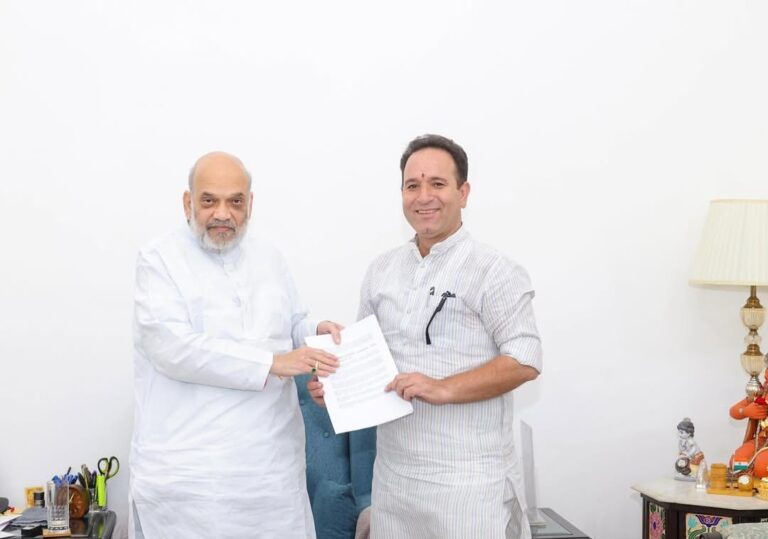
Leader of Opposition in the Jammu & Kashmir Legislative Assembly, Sunil Sharma, on Monday met Union Home Minister Amit Shah in New Delhi and held extensive discussions on a range of issues concerning Jammu and Kashmir.
During the meeting, the two leaders reviewed the prevailing security situation, law and order scenario, ongoing developmental initiatives, and the overall political landscape of the Union Territory. Sharma apprised the Home Minister of various ground-level concerns and highlighted the aspirations of the people for peace, progress, and responsive governance.
The discussions also focused on the Government of India’s continued efforts to strengthen security, promote inclusive development, and deepen democratic institutions at the grassroots level. Both leaders stressed the importance of consolidating the gains achieved in recent years and ensuring that the benefits of development reach every section of society.
Shah gave a patient hearing to the issues raised by Sharma and assured him that the Government of India, under the leadership of Prime Minister Narendra Modi, remains fully committed to ensuring lasting peace, strengthening security, accelerating development, and safeguarding the interests of the people of Jammu and Kashmir.
The Home Minister reiterated that all necessary support would continue to be extended for the overall progress and prosperity of the Union Territory.
Sharma, meanwhile, reaffirmed the Bharatiya Janata Party’s commitment to protecting the interests of the people of Jammu and Kashmir and working towards lasting peace, prosperity, and development. He stated that under the leadership of Prime Minister Narendra Modi and the guidance of Amit Shah, Jammu and Kashmir has witnessed a new phase of development, transparency, good governance, and public empowerment.
The meeting assumes significance amid continuing efforts by the Centre to enhance security, strengthen democratic processes, and accelerate developmental activities across Jammu and Kashmir.
India’s LPG Prices Among Lowest Globally Despite Recent Hike, Says Government
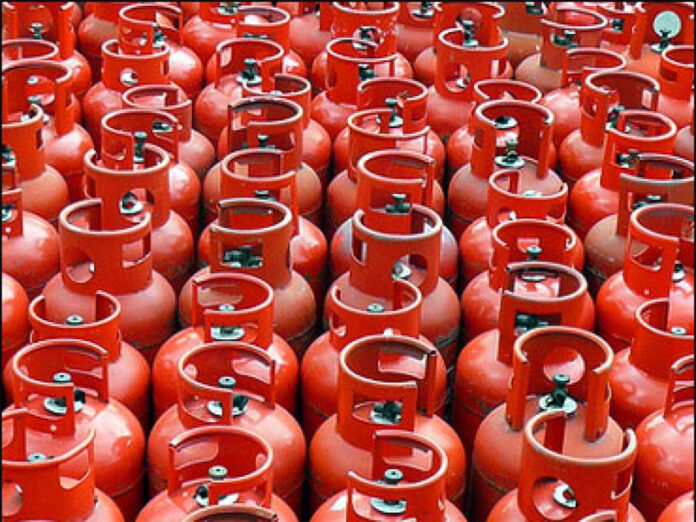
The Central Government on Sunday said that Indian households continue to enjoy some of the lowest cooking gas prices in the world despite a recent increase in domestic LPG rates, attributing the hike to a sharp rise in international fuel prices triggered by disruptions in West Asia.
The statement comes a day after the price of a 14.2-kg domestic LPG cylinder was increased by Rs 29, taking the retail price in Delhi from Rs 913 to Rs 942 per cylinder.
However, beneficiaries of the Pradhan Mantri Ujjwala Yojana (PMUY) will continue to receive a subsidy of Rs 300 per cylinder, effectively paying Rs 642 per refill. The subsidy will be available on the first four refills annually.
The latest revision follows a Rs 60-per-cylinder increase announced on March 7, bringing the cumulative hike in domestic LPG prices to Rs 89 per cylinder this year.
According to the Government, the cost of supplying a domestic LPG cylinder has risen to more than Rs 1,600 due to a sharp increase in global LPG prices following the outbreak of conflict in West Asia earlier this year.
India’s LPG import prices are linked to the Saudi Contract Price (CP), the internationally accepted benchmark for LPG. The benchmark has reportedly surged by around 46 percent since February, largely due to supply disruptions associated with tensions around the Strait of Hormuz, a critical global energy transit route.
Despite rising import costs, the Government maintained that domestic LPG prices in India remain significantly lower than those in neighbouring countries, including Pakistan, Nepal, Bangladesh, and Sri Lanka. Prices are also considerably below those prevailing in developed economies such as the United States, Australia, and Canada.
The Government further highlighted India’s ability to maintain uninterrupted energy imports through the Strait of Hormuz during the ongoing regional crisis. It said proactive measures, including increased domestic production and diversification of import sources, helped prevent shortages of LPG and other petroleum products across the country.
State-run oil marketing companies (OMCs) have been bearing substantial losses on domestic LPG sales. Before the latest price revision, OMCs were reportedly losing around Rs 703 on every LPG cylinder sold.
The Government stated that cumulative under-recoveries on domestic LPG sales reached approximately Rs 60,000 crore by the end of the previous financial year, up from Rs 41,338 crore a year earlier.
To partially compensate for these losses, the Union Cabinet has approved financial assistance of Rs 30,000 crore for state-run oil marketing companies.
The Government reiterated its commitment to ensuring affordable cooking fuel for consumers while balancing the impact of rising global energy prices and maintaining uninterrupted supplies across the country.
Supreme Court Upholds NGT Order, Rules Landlord Not Liable for Tenant’s Environmental Violations
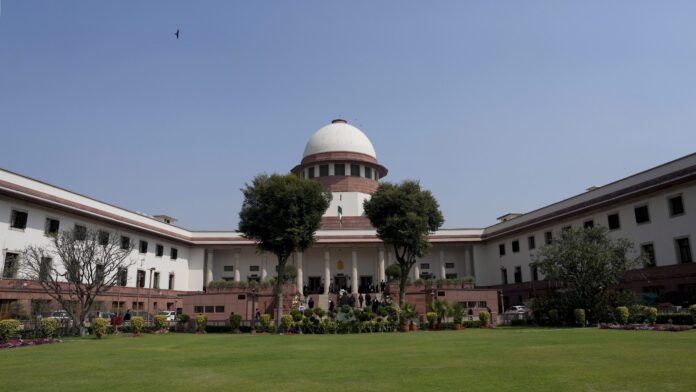
The Supreme Court on Monday upheld an order of the National Green Tribunal (NGT) holding that a landlord cannot be held liable for environmental violations allegedly committed by a tenant operating an industrial unit on rented premises.
A bench comprising Justices Satish Chandra Sharma and Sanjeev Sachdeva declined to interfere with the NGT’s November 14, 2025 order, effectively dismissing a challenge filed by the Gujarat Pollution Control Board (GPCB).
The case arose from proceedings initiated by the GPCB against a chemical manufacturing unit operating in Surat. The pollution control authority had imposed an interim environmental damage compensation of Rs 25 lakh after inspections revealed that effluent discharged by the unit exceeded permissible pollution limits.
The industrial unit, engaged in dye-intermediate manufacturing, had also been operating without fulfilling mandatory regulatory requirements, including obtaining the necessary consent to establish from the pollution control authorities. Following these findings, the GPCB issued a closure order on October 16, 2023, and imposed the environmental compensation.
However, the penalty was also extended to the property’s owner, Jagmohan Lachiram Jalan, who challenged the decision. Jalan contended that he had leased the premises in 2020 to the director of a private company under a valid rental agreement and was unaware that the tenant was operating an unlicensed industrial unit.
He further submitted that upon learning about the alleged violations, he lodged a police complaint against the tenant. Subsequently, he approached the Gujarat High Court, which directed the GPCB to reconsider his representation.
Despite the High Court’s direction, the pollution control board upheld the penalty against Jalan in 2024. Aggrieved by the decision, he approached the National Green Tribunal.
The NGT ruled in Jalan’s favour, observing that there was no material to establish that the landlord had any role in the environmental violations committed by the tenant. Consequently, the Tribunal set aside the Rs 25 lakh compensation imposed on him.
Challenging the Tribunal’s decision, the GPCB moved the Supreme Court. However, the apex court found no reason to interfere with the NGT’s findings and upheld the Tribunal’s order, reinforcing the principle that liability for environmental violations must be based on actual involvement and responsibility rather than mere ownership of the premises.
The ruling is expected to have significant implications for landlord liability in cases involving environmental compliance and industrial operations conducted by tenants.