
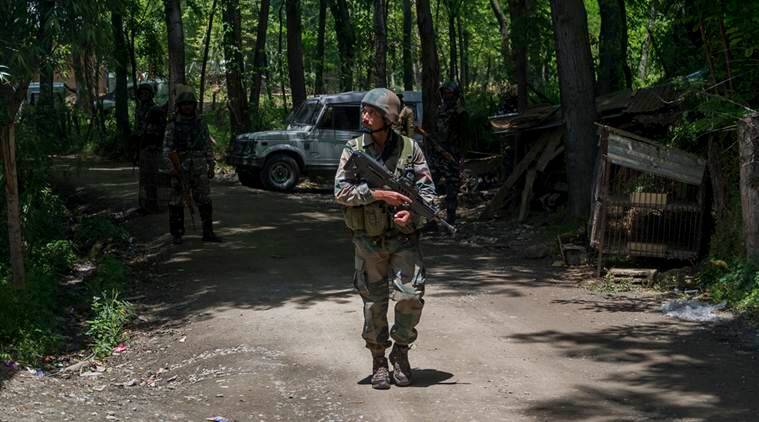
Srinagar, Aug 25: An infiltration bid was foiled along the Line of Control (LoC) in Uri sector of Jammu and Kashmir, officials said on Thursday.
Army and Baramulla Police neutralised 03 infiltrators near Madiyan Nanak post in Kamalkote sector of Uri. More details are to be followed, tweets Kashmir Zone Police
Army troopers noticed suspicious movement along the LoC in Kamalkote area of Uri sector in north Kashmir’s Baramulla district, the officials said.
They said the troops challenged the intruders and there was an exchange of fire.
Three infiltrators killed along LoC in Kamalkote sector of J&K’s Uri: Police
BJP has set aside Rs 800 cr to topple Delhi government: Kejriwal
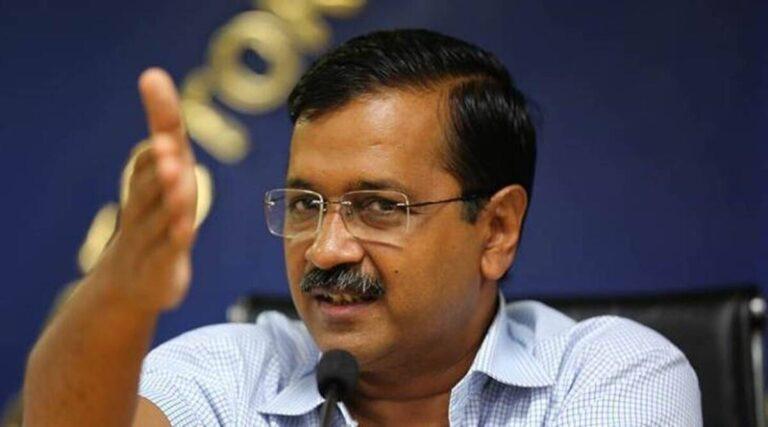
Delhi Chief Minister Arvind Kejriwal on Thursday alleged that the BJP had kept aside Rs 800 crore to buy 40 AAP MLAs in a bid to topple the AAP government, and questioned the source of the money.
In a tweet, Kejriwal said, “They have kept aside Rs 800 crore to bring down the Delhi government — Rs 20 crore per MLA. The country wants to know, whose money is it, and where is it kept. None of our MLAs will break. The government is stable. The good work in Delhi will continue.”
After a meeting of the Aam Aadmi Party (AAP) legislators at his residence, Kejriwal, along with his MLAs, went to Rajghat to pray for the failure of the Bharatiya Janata Party’s (BJP) “Operation Lotus”.
“Even mattresses and walls at my deputy Manish Sisodia’s residence were searched by the CBI but not even a single unaccounted penny was found. A day after the CBI’s raids, Sisodia was approached by the BJP with an offer of the chief minister’s post and to betray Kejriwal. I am lucky to have Sisodia, who has no greed for the chief minister’s post,” Kejriwal told reporters.
He said people have elected a “hardcore honest” government in Delhi, which will not betray them.
Earlier in the day, the AAP alleged that 40 of its Delhi MLAs were targeted by the BJP with an offer of Rs 20 crore each to switch sides, even as all the 62 of its legislators were accounted for during a meeting at Kejriwal’s residence.
The AAP government has also convened a special session of the Delhi Assembly on Friday over CBI, ED probes, raids targeting its ministers and the “poaching” efforts made by the BJP.
The saffron party has challenged the AAP to reveal the names of those who allegedly contacted its MLAs with an offer to switch sides and charged that the Kejriwal-led party is trying hard to divert attention from the Delhi government”s liquor “scam”.
Addressing a press conference at the BJP headquarters, party spokesperson Sudhanshu Trivedi said his party has been consistently asking the Aam Aadmi Party (AAP) to come clean on its excise policy, but the Arvind Kejriwal-led dispensation has been trying every possible trick in the book to divert people’s attention elsewhere.
“The fact that they (AAP leaders) have gone to the Samadhi of Mahatma Gandhi means they have definitely committed an act which is to be considered a sin. So, in order to purify it, the BJP workers will sprinkle Ganga Jal on the Samadhi,” Trivedi said.
“The BJP is asking pointed questions. However, the AAP is beating around the bush and evading the questions,” he added.
Will offer Friday prayers at Srinagar’s grand mosque after 3 years: Mirwaiz
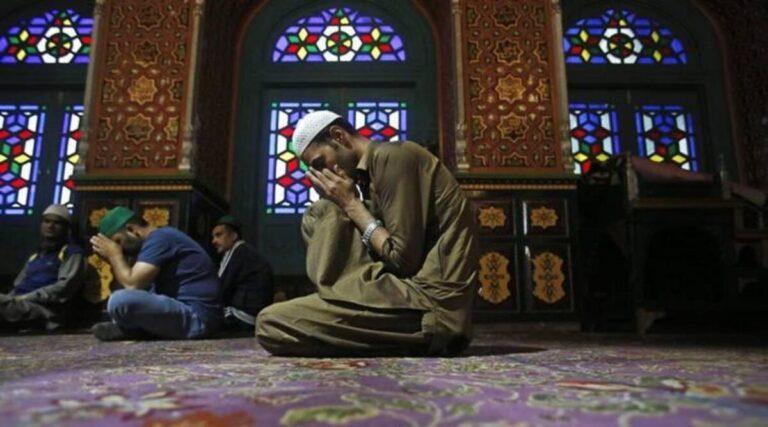
SRINAGAR, Aug 25: Hurriyat Conference chief Mirwaiz Umar Farooq on Thursday said he will offer congregational Friday prayers at Srinagar’s grand mosque for the first time since his detention ahead of the revocation of Jammu & Kashmir’s semi-autonomous status in August 2019. He is expected is deliver a sermon at the mosque, where he is the chief priest, days after lieutenant governor Manoj Sinha’s claimed the Mirwaiz was not under house arrest.
“I am going to offer Friday prayers at Jamia Masjid tomorrow [Friday]…,” the Mirwaiz said even as people close to him added that the administration has so far conveyed nothing to him except moving a truck blocking his residence a bit far from its gates. Security personnel remained deployed there.
PM Modi To Address Smart India Hackathon Finalists Via Video-Conferencing Today
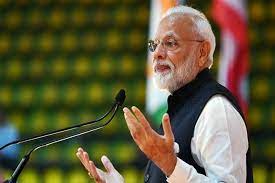
New Delhi: Prime Minister Narendra Modi will be addressing the students taking part in the grand finale of Smart India Hackathon (SIH) on Thursday via video-conferencing, news agency PTI reported.
Speaking at a press conference, Union Minister of State for Education Subhas Sarkar said, “Prime Minister Narendra Modi has been interacting with the student participants of the Smart India Hackathon every year since its inception and he is expected to interact with the students even this year at 8 pm on August 25.”
Launched in 2017, SIH is a nationwide initiative to provide students a platform to solve the pressing problems of society, organisations, and government. The objective of the initiative is to inculcate the culture of product innovation, problem-solving and out-of-the-box thinking among students.
Notably, over 15,000 students and mentors will be travelling to 75 nodal centres to take part in this year’s SIH grand finale.
According to the report, students from over 2,900 schools and 2,200 higher education institutions will handle 476 problem statements from across 53 Union ministries in the SIH finale, including optical character recognition (OCR) of temple inscriptions and translations in Devanagari scripts, IoT-enabled risk monitoring system in cold supply chain for perishable food items, high-resolution 3D model of terrain, and infrastructure and roads conditions in disaster struck areas.
“The scope of the Smart India Hackathon has been widening with every passing year, since its launch in 2017. The increased enthusiasm among participating students and problem statement providing organisations could be seen in their growing participation over the years. Every year, SIH is impacting lakhs of students and provides them with a national platform to test their educational learning for solving real-world challenges,” PTI quoted Sarkar as saying.
“It also aligns their interest toward innovation and entrepreneurship. A total of 476 problem statements were received from 53 government organisations for the SIH this year. The winner teams of institute level hackathons organised under Smart India Hackathon 2022, comprising more than 15,000 students, will participate in this year’s SIH grand finale at national level. These teams will travel to the assigned nodal centre and will work on these problem statements during grand finale,” he added.
It is to be noted that SIH hardware grand finale is scheduled from August 25 to 29 and the software grand finale will be held from August 25 to 26.
Each year SIH is conducted at various nodal centres and this year, as part of ‘Azadi ka Amrit Mahotsav’ celebrations, the Ministry of Education’s Innovation Cell and All India Council for Technical Education have identified 75 higher educational institutes and incubators as the nodal centres to host the participants.
“At each nodal centre, an officer designated by the Ministry of Education’s Innovation Cell will monitor and preside over the proceeding during the entire duration of SIH grand finale. The participation of females in the Smart India hackathon is also very impressive. The male to female ratio of participants that are travelling to the nodal centres for the hackathon grand finale is almost 1.5:1,” Sarkar said.
“SIH has seen a four-fold growth in the number of teams registering from around 7,500 in the first edition to about 29,600 in the ongoing fifth edition,” he added.
The SIH winners on each problem statement will be awarded a prize amount of Rs 1 lakh. Under the category of student innovation, three prizes of Rs 1 lakh, Rs 75,000 and Rs 50,000 will be awarded to the winning teams.
Delhi HC refuses stay on Agnipath scheme, asks Centre to file detailed reply
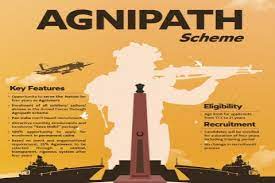
The Delhi High Court on Thursday sought a detailed reply from the Centre on a group of pleas against Agnipath scheme while refusing to pass any interim order on the newly-launched scheme for the Armed Forces of the country.
A division bench headed by Chief Justice Satish Chandra Sharma granted four weeks to the Centre for filing a detailed response in the matter and slated it for further hearing on October 18.
Refusing to pass any interim order, the bench, also comprising Justice Subramonium Prasad, said it will be hearing the matter finally.
During the course of the hearing, the court noted that the bunch of pleas are related to various issues of recruitment for various posts in the armed forces and said the Centre has to give the details in this regard.
Additional Solicitor General Aishwarya Bhati, on behalf of the Centre, apprised the court that a consolidated response would be filed in the matter.
The Supreme Court had recently transferred all the pleas challenging the Agnipath scheme to the Delhi High Court, where similar challenges against the scheme are already pending.
Last week, a former Army Colonel had approached the Delhi High Court seeking to set aside the Agnipath scheme of short-term recruitment into the armed forces and not to cancel the selection of the candidates who have already cleared the recruitment exam for the Indian Air Force in 2019.
Another PIL was moved in the Delhi High Court seeking the resumption of all previous recruitment processes cancelled following the Agnipath scheme.
The plea of a candidate, filed through Advocates Vijay Singh and Pawan Kumar, said the petitioner had applied for the post of Soldier General Duty in Army Recruitment Rally at Sirsa from July 30, 2020 to August 8, 2020.
Another PIL is against the Indian Navy’s recruitment process and shortlisting criteria of Person Below Officer Rank (PBORs).
A writ petition was filed by a group of persons shortlisted for airman selection in the Indian Air Force, who sought a direction that the recruitment process which commenced in the previous years should be completed regardless of the Agnipath scheme.
Two LeT associates held with arms and ammunition in Bandipora: police
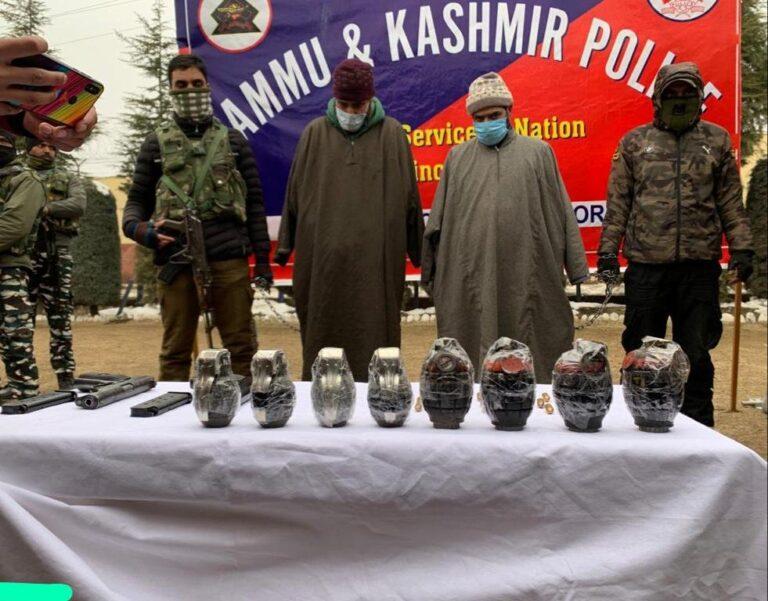
Srinagar 25 Aug: Police in Bandipora on Thursday claimed to have arrested two LeT terrorists along with arms and ammunition.
“Today after receiving a specific information regarding the movement of some terrorist associates of LeT in the JD of police Station Pethkote. Bandipora police along with 26 Assam Rifles arrested two terrorist associates of LeT outfit from Lal Qilla Mode Pethkote during a joint naka.The arrested LET Associates were travelling in a white scorpio bearing Registration No JK05H/0622,” a police spokesman said.
“During serach of the vehicle huge catche of Arms and Ammunition which includes 03 Pistols along with Magzines, 24 Live 9MM Rounds, 05 No. of Hand Grenades, a blanket, Fake police I Card, Fake ID Card of Health Department and other daily use items were recovered from there possession. Both the terrorist associates have been identified as Mohd Yousuf Wani R/o Pethkote Bandipora and Manzoor Ahmed Shah R/o Bagh Bandipora, ” it said.
“During preliminary investigation it was revealed that they where in touch with some active terrorists of LeT and the duo were tasked to revive militancy by motivating youth to join militancy and spread terrorism in the district, besides giving logistic support to terrorists.Timely action/ arrest of these terrorist associates averted a major terror activity in the district.In this connection Case FIR under relevant sections has been registered and further investigation taken up”.
PM Security Breach In Punjab: SC Panel Holds Ferozepur SSP Responsible For Lapses
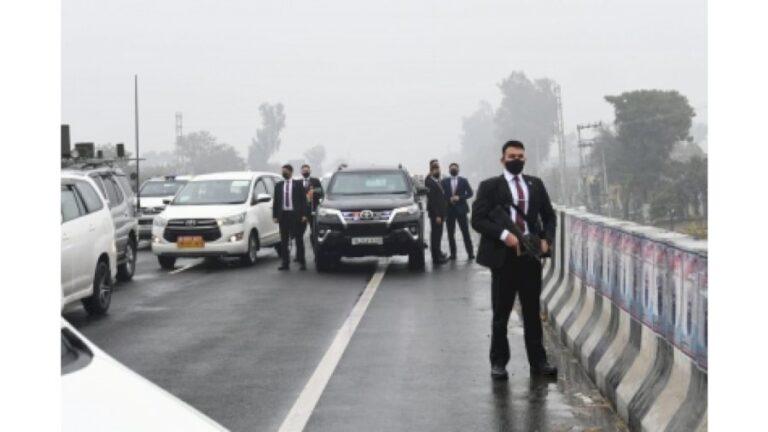
New Delhi, Aug 25: Former Supreme Court judge Justice Indu Malhotra Committee, inquiring into the security lapses in the Prime Minister’s convoy in Punjab in January, informed the top court that there should be an oversight committee for periodic revision of ‘Blue Book’ and indicted Ferozepur Senior Superintendent of Police (SSP) for not taking steps in connection with the security to PM’s convoy.
On January 12, the Supreme Court had appointed retired top court judge Justice Indu Malhotra to head the committee to investigate Prime Minister Narendra Modi’s security breach in Punjab.
Chief Justice N.V. Ramana then had said the panel would inquire into the causes of the security breach, persons responsible for the breach, and also measures to be taken in the future to prevent security breach of the Prime Minister and other constitutional functionaries. The other members of the panel include — Director General of Police, Chandigarh; Inspector General, National Investigation Agency (NIA) or his nominee not below the rank of IG; Registrar General of the Punjab and Haryana High Court; and Additional DGP, Security, Punjab.
The top court order came on a petition by NGO Lawyer’s Voice, which was represented by senior advocate Maninder Singh. The petitioner had emphasised on the importance of protection to the PM of the country and cited previous top court ruling that looked at the SPG Act. (Agencies)
Obscenity and women’s rights
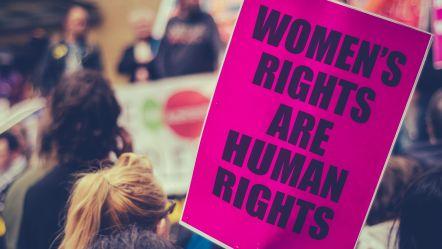
A society that treats its women well is prosperous and more stable than those where treatment is unfair and biased. A woman represents the culture, morality and dignity of society. As rightly said, if a woman is educated, she can educate the whole society. However, women have been treated as the second sex. Women have faced objectification, primarily sexual, of their bodies/figures throughout history.
Even though the laws prohibit it through several legislations, we still can see instances of obscene and vulgar displays of women. The word ‘obscenity’ has been derived from the Latin word ‘Obscenus’ which means filthy and disgusting. Section 292 of the Indian Penal Code 1860 also refers to obscenity as anything that is lascivious or prurient or tends to deprave and corrupt a person. Section 294 of IPC describes obscene acts in any public place as an act that annoys others.
It penalises the person with imprisonment up to 3 months or fine or both. Indian laws have not defined obscenity either in IPC or in any other statute. However, the Indian judiciary has discussed the meaning through several landmark cases. The Madras High Court in the case of Public Prosecutor v A.D. Sabapathy [1958 CriLJ 647] defined ‘obscene’ as anything repulsive, filthy, loathsome, indecent and lewd.
The first case of this nature went to a seven-judge bench of the apex court in the case of Ranjit D Udeshi v State of Maharashtra [1965 SCR (1) 65]. The court held that: “We need not attempt to bowdlerize all literature and thus rob speech and expression of freedom.
A balance should be maintained between freedom of speech and expression and public decency and morality but when the latter is substantially transgressed the former must give way.” It was based on the Victorian-era test of the Regina v Hicklin [1868 L.R. 2 Q.B.] that permitted conviction even if a publication had a mere proneness to titillating thoughts.
This test was famously called the Hicklin Test. Five years later, the apex court in the case of Chandrakant Kalyandas Kakodar v The State Of Maharashtra [AIR 1970 SC 1390] held: “The concept of obscenity would differ from country to country depending on the standards of morals of contemporary society.
What is considered as a piece of literature in France may be obscene in England and what is considered in both countries as not harmful to public order and morals may be obscene in our country.” Article 19 Clause (2) of the Constitution of India, imposes reasonable restrictions in the interest of decency or morality.
Decency can be said to be words and expressions meant to sound pleasing and not disturb the mental peace of a prudent person or the morality of society as a whole. Various laws protect the display of vulgarity of women in India. We also have several judgements and legislations on the same. Some are mentioned below.
The Indecent Representation of Women (Prohibition) Act of 1986 protects women from individuals, groups or companies who commit such acts of vulgarity. Section 2, clause (c) of the Act defines the indecent representation of women as a depiction of a figure or any body part being derogatory or denigrating or likely to deprave or injure public morality. Section 3 and 4 prohibit publishing or exhibiting a vulgar display of women in any form.
Section 6 provides for the punishment and penalty in contravention of these sections. Any offence under this act is cognizable which means that the police can arrest the accused without a warrant. The Information Technology Act of 2000 was enacted to provide legal recognition and prohibition to electronic data that massively replaced the age-old penpaper and print media.
It also protects the virtual presence of women. Section 67 of the Act provides for punishment for publishing or transmitting obscene material in electronic form. The punishment for the first conviction is imprisonment that may extend to 5 years with a fine which may extend to Rs 10 lakh. The punishment for the second or subsequent conviction is imprisonment which may extend to seven years with a fine which may extend to Rs 10 lakh.
The Cable Television Networks Rules of 1994 are read with The Cable Television Networks (Regulation) Act, 1994. The Advertising Code under Rule 7, clause 2, subclause (vi) reads as follows: “…in its depiction of women violates the constitutional guarantees to all citizens. In particular, no advertisement shall be permitted which projects a derogatory image of women.
Women must not be portrayed in a manner that emphasises passive, submissive qualities and encourages them to play a subordinate, secondary role in the family and society.
The cable operator shall ensure that the portrayal of the female form, in the programmes carried in his cable service, is tasteful and aesthetic, and is within the well-established norms of good taste and decency”. Convention on the Elimination of all forms of Discrimination Against Women (CEDAW) is the most comprehensive international treaty of Women’s Rights.
It not only protects women against the state but also requires states to take affirmative actions. India signed the CEDAW Convention on 30 July 1980 and ratified it on 9 July 1993. Article 5 of the Convention requires states parties to “take measures to seek to eliminate prejudices and customs based on the idea of the inferiority or the superiority of one sex or the stereotyped roles for men and women.” It also mandates the state parties “to ensure…the recognition of the common responsibility of men and women in the upbringing and development of their children.
” In Ajay Goswami v. Union of India [(2007) 1 SCC 143], while examining the scope of Section 292 IPC and Sections 3, 4 and 6 of the Indecent Representation of Women (Prohibition) Act, 1986, the Apex Court held that the commitment to freedom of expression demands that it cannot be suppressed, unless the situations created by it allowing the freedom are pressing and the community interest is endangered.
Thus, it shifted from the Hicklin Test for obscenity and adopted a liberalised view of impression and effect on the mind of a prurient reader. The Apex Court of India in S. Khushboo v Kanniammal [CRIMINAL APPEAL NO. 913 of 2010], reiterated the principle of contemporary community standards, the general attitude of a reader and social values. The Supreme Court of India, in 2014, while deciding the case of Aveek Sarkar v State of West Bengal [Criminal Appeal No. 902 OF 2004], expressly discarded the Hicklin Test.
The apex court found that no offence had been committed under Section 292 IPC and then the question of whether it falls in the first part of Section 79 IPC has become academic. The court also appreciated the nude photographs along with the message that it wanted to convey, which was to eradicate the evil of racism and apartheid obviously by alarming the reader of the Ananda Bazar Patrika.
The real message was: ‘love champions over colour and not to shock the conscience.’ Finally, the Roth Test was adopted in India by this judgement. The US Supreme Court in Roth v United States 354 U.S. 476 (1957) held that “The standard for judging obscenity, adequate to withstand the charge of constitutional infirmity, is whether, to the average person, applying contemporary community standards, the dominant theme of the material, taken as a whole, appeals to prurient interest.” The Supreme Court of Canada also held in Brodie v The Queen [1962 SCR 681] that D.H. Lawrence’s novel “Lady Chatterley’s Lover” was not obscene within the meaning of the Canadian Criminal Code. It was also held that literary works must involve reading and must be considered as a whole and not be viewed in isolation. The Madras High Court in the case of P. G. Sam Infant Jones v State [CRL OP(MD). No.7426 of 2021] noted that though it is not illegal to watch pornographic content in India by an adult, it should be in one’s personal living space.
Article 21 of the Constitution of India protects the life and personal liberty of its citizens. In the case of Kamlesh Vaswani v. Union of India (Writ Petition No. 177 of 2013), Justice H.L. Dattu remarked that banning four crore porn websites in India is not possible as it will be ultra vires Article 21 and also that is not the solution as another four crore websites would surface. Adult content originates mostly in foreign countries and they are hydra-headed. However, a young school girl was raped by 4 of her seniors. The reason given by the accused was arousal after watching pornographic content. The High Court of Uttarakhand in the case of In Re v State Of Uttarakhand [Writ Petition (PIL) No. 158 of 2018] directed the MeITY to strictly comply with the order of banning 857 websites that infringed morality and decency in order to protect the children of impressionable age.
The lawmakers are yet to formulate a policy on pornography in India. As laid down in Joginder Kumar v. State of UP. (1994): “The quality of a nation’s civilization can be largely measured by the methods it uses in the enforcement of criminal law.” The glorification of vulgar displays of women is still prevalent through mass media all over the world.
A controversy arose during Miss World 2014 which scrapped the mandatory swimsuit round. The pageant chief Julia Morley believed that she wanted to shift the perception of people from physical to mental beauty and personality. These pageant shows are a patriarchal relic of the past. Cinemas are the mirror of society.
The cinema industry must ban the obnoxious portrayal of women as second sex or items/objects through lyrics and item songs in the movies. It is also to be noted that the scenes must not be seen in isolation as was decided by the Supreme Court in Bobby Art International v. Om Pal Singh Hoon (1996) [Civil Appeal Nos. 7523, 7525-27 AND 7524 (Arising out of SLP(Civil) No. 8211/96]. We have several legislations and commissions such as the Human Rights Commission and the National Commission for Women to safeguard such interests.
However, the need of the hour is to change not only the perception but also the attitude of people. Women in India face such issues not only outside but also at home where they are supposed to feel most safe. We must act on not normalising indecency and vulgarity as a part of our culture.
Social awareness programmes and camps should be organised to make people aware. Parents in India wanting their female child and relatives to get married at the age of 18 is yet another example of the objectification of the female. As such we also see the prevalence of commodification of the female body.
Every other day women have to deal with the ignorance of their personal characteristics such as productivity, intelligence or fertility and the focus is shifted towards suitable body size and appealing features. In such a demanding time, when women after centuries of struggle all over the world have come to a better place in terms of education, career and financial liberty, the US Supreme Court has taken away the constitutional right to abortion for women.
The Court on 24 June 2022 overturned the landmark judgement in the case of Roe v Wade [410 U.S. 113 (1973)] which granted and protected women’s right over their bodies during pregnancy against the State. The need of the hour is to enact new laws, make existing laws more strict and include the curriculum of dignified human life in the early years of education that shape perceptions in later years.
The state must protect women and children and in order to do so, they may make special provisions under Articles 15(3), 39(a), 39(e), 39(f), 42 and 45 of the Constitution of India, 1949. The right to life, enshrined under Article 21 of the Constitution of India, also encompasses the right to live with dignity as was held in Maneka Gandhi v Union of India [AIR 1978 SC 597.]
Light to moderate rain likely in Jammu and Kashmir: MeT
JAMMU, Aug 25: Light to moderate rain is expected in Jammu and Kashmir during the next 24 hours, the Meteorological (MeT) department said on Thursday.
On Wednesday, the people of the union territory experienced an inclement weather.
“Light to moderate rain is likely in Jammu and Kashmir during the next 24 hours”, a MeT department official said.
Meanwhile, Srinagar registered 17.7 degrees Celsius, Pahalgam 15.1 and Gulmarg 10 degrees as the minimum temperature this morning.
Drass in Ladakh region recorded 12.3 degrees, Leh 12.9 and Kargil 15.4, while Jammu had 25 degrees, Katra 22.4, Batote 16.8, Banihal 17.6 and Bhaderwah 17.9 degrees. (Agencies)
Pakistani intruder shot at as BSF troops foil narcotics smuggling bid in J&K’s Samba
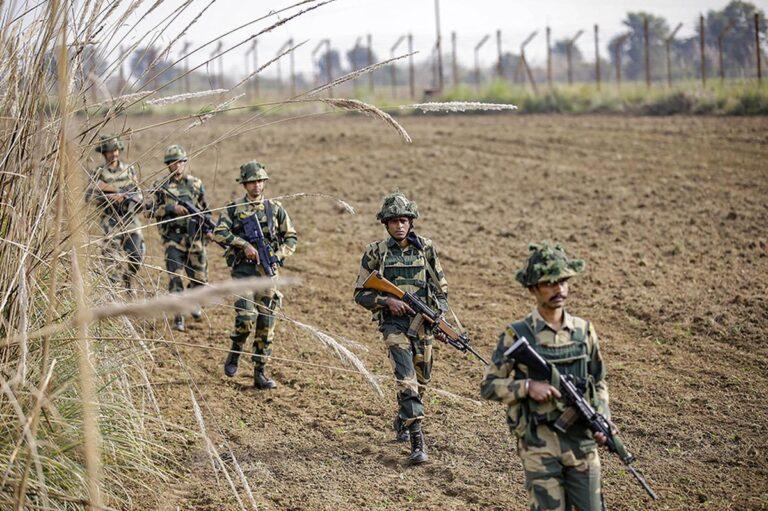
JAMMU, Aug 25: BSF troops foiled a major bid to smuggle narcotics from across the border and shot at a Pakistani intruder in Jammu and Kashmir’s Samba district on Thursday, officials said.
According to a public relations officer of the Border Security Force (BSF), the alert troops noticed suspicious movements of a man near the Chilliyari border outpost along the international border (IB) in the early hours. The man was carrying a bag.
The troops opened fire, resulting in injuries to the intruder, the official said.
Following a search operation, eight packets containing about 8kg of narcotics, likely to be heroin, were recovered, he added.
The official said the injured intruder managed to crawl back to the Pakistani side. (Agencies)