Thursday, July 16, 2026
Home Blog Page 1058

Jammu Bar to resume work after 51-day strike

0

The Jammu and Kashmir High Court Bar Association at Jammu said that it has ended the strike and will resume work from September 12, Bar and Bench reported.

The bar is resuming work after a 51-day strike which began on July 23 demanding construction of a building within the High Court premises to house various tribunals.

The decision to resume work was taken at a general house meeting was presided over by President of J&K High Court Bar Association MK Bhardwaj which was held after the intervention of Jammu and Kashmir High Court Chief Justice Pankaj Mithal.

A press note was issued on Saturday through General Secretary of the Bar Surjeet Singh Andotra, announcing the decision.

“The learned member unanimously decided to resume work for some days in the High Court, District Court, tribunals, commissions and all revenue courts in Jammu, in view of the intervention of Hon’ble Chief Justice Pankaj Mithal and other Judges of the High Court of Jammu & Kashmir and Ladakh,” the press note said.

The Bar Association clarified that resumption of work will not detract the Bar from its struggle to fulfill its demands.

Article 370 will be restored in J&K: Mufti on Azad’s can’t be restored remark

0

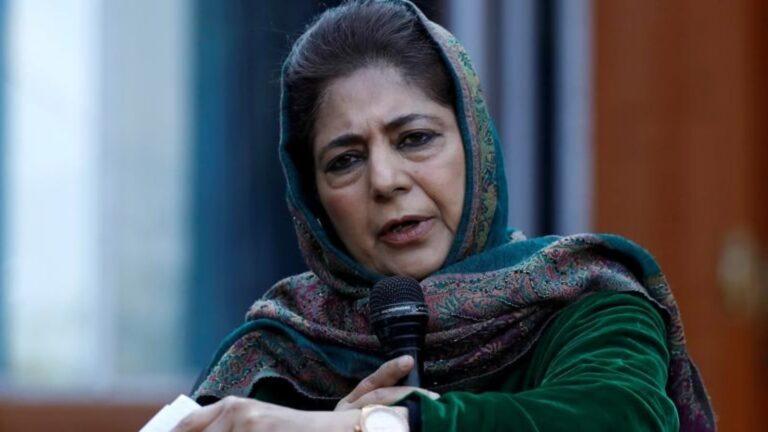
Former Jammu and Kashmir Chief Minister Mehbooba Mufti on Monday reacted to Ghulam Nabi Azad’s ‘Article 370 cannot be restored’ remark and said it was his personal opinion. The PDP leader went on to say that ‘there are voices in Jammu and Kashmir who believe Article 370 will be reinstated.’ “It’s his (Ghulam Nabi Azad) personal opinion…Congress had raised its voice against the British and stopped them. Similarly, there are voices in J&K who believe 370 will be reinstated and this will be resolved,” Mufti said.

Notably, former Congress leader, Ghulam Nabi Azad, during a rally in Kashmir’s Baramulla yesterday, Ghulam Nabi Azad said, “To restore Article 370 would need around 350 votes in the Lok Sabha and 175 votes in the Rajya Sabha. This is a number no political party has or is likely to ever get.”

Azad, who ended his five-decade-long association with the Congress on August 26, said if the grand old party is speaking to restore Article 370, those are false promises. “The Congress has shrunken to less than 50 seats and if they speak of restoring Article 370, they are making false promises,” said the 73-year-old politician.

Active Covid cases in country decline to 46,347

0

New Delhi, Sep 13: India logged 4,369 new coronavirus infections taking the total tally of COVID-19 cases to 4,45,04,949, while the active cases dipped to 46,347, according to the Union Health Ministry data updated on Tuesday.
The death toll climbed to 5,28,185 with 20 fatalities, which includes seven deaths reconciled by Kerala, the data updated at 8 am stated.
The active cases comprise 0.10 per cent of the total infections, while the national COVID-19 recovery rate increased to 98.71 per cent, the ministry said.
A decline of 829 cases has been recorded in the active COVID-19 caseload in a span of 24 hours.
India’s COVID-19 tally had crossed the 20-lakh mark on August 7, 2020, 30 lakh on August 23, 40 lakh on September 5 and 50 lakh on September 16. It went past 60 lakh on September 28, 70 lakh on October 11, crossed 80 lakh on October 29, 90 lakh on November 20 and surpassed the one-crore mark on December 19.
The country crossed the grim milestone of two crore on May 4 and three crore on June 23 last year. It crossed the four-crore mark on January 25 this year. (AGENCIES)

The driving force of the dairy sector in India is small farmers: PM Modi

0

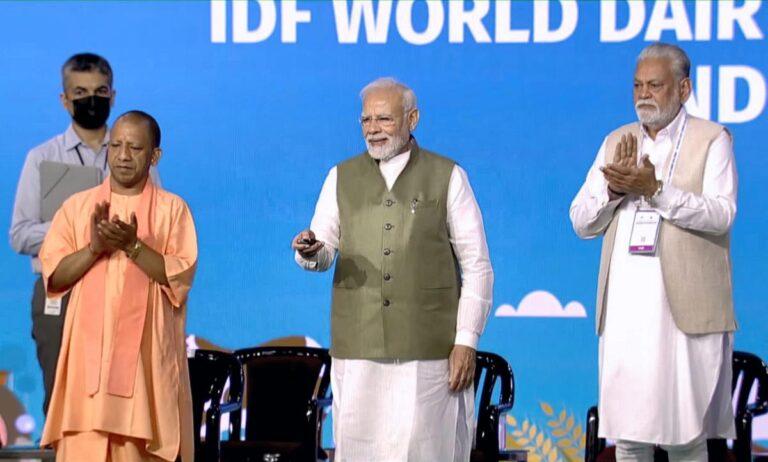
The Prime Minister, Narendra Modi on Monday inaugurated International Dairy Federation World Dairy Summit (IDF WDS) 2022 organised at India Expo Centre & Mart, Greater Noida.

Addressing the gathering, the Prime Minister underlined the centrality of ‘Pashu Dhan’ and milk-related business in the cultural landscape of India.

He pointed out that unlike other developed countries of the world, the driving force of the dairy sector in India is small farmers.

“India’s dairy sector is characterized by production by masses more than “mass production”. India is the largest milk-producing country on the basis of the efforts of these small farmers with one, two or three cattle. This sector provides employment to more than 8 crore families in the country,” he informed.

Explaining further, he said, “There is such a huge network of Dairy Cooperative in India, and one cannot find such an example in the whole world elsewhere.”

The Prime Minister drew everyone’s attention to the fact that there is no middleman in the entire process, and more than 70 per cent of the money that is received from the customers goes directly into the pockets of the farmers. Another unique feature, according to the Prime Minister, is the indigenous breeds that can withstand many adverse circumstances.

He gave the example of the sturdy buffalo breed of Banni Buffalo of the Kutch region of Gujarat. He also talked about other buffalo breeds such as Murrah, Mehsana, Jafrabadi, Nili Ravi, and Pandharpuri; among the cow breeds, he mentioned Gir, Sahiwal, Rathi, Kankrej, Tharparker and Haryana.

In addition, the Prime Minister highlighted the power of women in the dairy sector where he pointed out that women have a 70% representation in the workforce in India’s dairy sector.

“Women are the real leaders of India’s dairy sector”, he said adding, “Not only this, more than a third of the members of dairy cooperatives in India are women.”

He said at more than eight and a half lakh crore rupees, the dairy sector is more than the combined value of wheat and rice. This is all driven by the women power of India.

Modi also mentioned that as compared to the 2 per cent production growth at the global level, India is clocking the milk production growth rate at more than 6 per cent.

The Prime Minister said that the government is working on developing a blanched dairy ecosystem where challenges of the sectors are being addressed along with a focus on increasing production.

He stressed that animal husbandry and dairy are being promoted as a powerful medium of green and sustainable growth in the villages.

Stressing the use of modern technology, the Prime Minister said that India is building the largest database of dairy animals and every animal associated with the dairy sector is being tagged.

“We are doing biometric identification of animals. We have named it – Pashu Adhar”, he said.

The Prime Minister stressed that today, India is paying equal attention to both indigenous breeds and hybrid breeds which will also reduce the risk of damage caused by climate change.

Talking about problem, Modi said, “When the animal is sick it affects the life of the farmer, affecting his income. It also affects the efficiency of the animal, the quality of its milk and other related products.”

The Prime Minister emphasised that in this direction, India is working toward universal vaccination of animals. “We have resolved that by 2025, we will vaccinate 100% of the animals against Foot and Mouth Disease and Brucellosis. We are aiming to be completely free from these diseases by the end of this decade”, the Prime Minister remarked.

The Prime Minister observed that there has been a loss of livestock in many states of India due to the disease named Lumpy in the recent past and assured everyone that the central government, along with various state governments, is trying their level best to keep a check on it.

“Our scientists have also prepared indigenous vaccine for Lumpy Skin Disease”, the Prime Minister added.

The Prime Minister also pointed out that efforts are being made to track the movement of animals to keep the outbreak under control.

Modi invited global leaders of the dairy industry to join the drive to empower the dairy sector in India. “I also appreciate the International Dairy Federation for their excellent work and contribution”, the Prime Minister concluded.

Northern Army commander visits Batalik sector in Ladakh, reviews operational preparedness

0

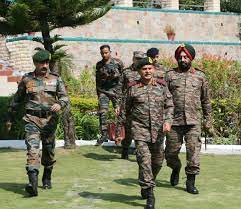
JAMMU, Sept 12: Northern Army Commander Lieutenant General Upendra Dwivedi on Monday visited forward areas in western Ladakh and reviewed the operational preparedness of the troops, officials said.
Lt Gen Dwivedi was received by top Army officials of 14 Corps and he was was briefed about the security situation in the area, they said.
He later visited forward areas along the Batalik sub-sector and reviewed operational preparedness in the belt, the officials said.
Lt Gen Dwivedi exhorted troops of the Tiger Hill bridge to remain alert and excel and emerge victorious in all scenarios, they said. (Agencies)

Fazl ul Haseeb assumes charge as Director Tourism Kashmir

0

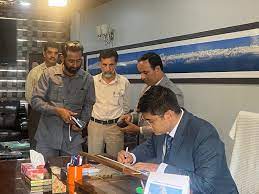
IAS officer Faz lul Haseeb on Monday assumed charge as the new Director Tourism Kashmir.

“Mr Faz lul Haseeb(IAS) assumes charge as Director Tourism Kashmir today, ” a Tourism Department official said.

Haseeb was on Friday transferred as Additional Deputy Commissioner, Srinagar holding additional charge of the post of Chief Executive Officer, Urban Development Agency, Kashmir and posted as Director, Tourism Kashmir.

Dr. Ghulam Nabi ltoo, Director Tourism, Kashmir has been transferred and posted as Special Secretary to the Government, Jal Shakti Department.

Disengagement process in Gogra-Hotsprings area going as per schedule: Army chief Manoj Pande

0

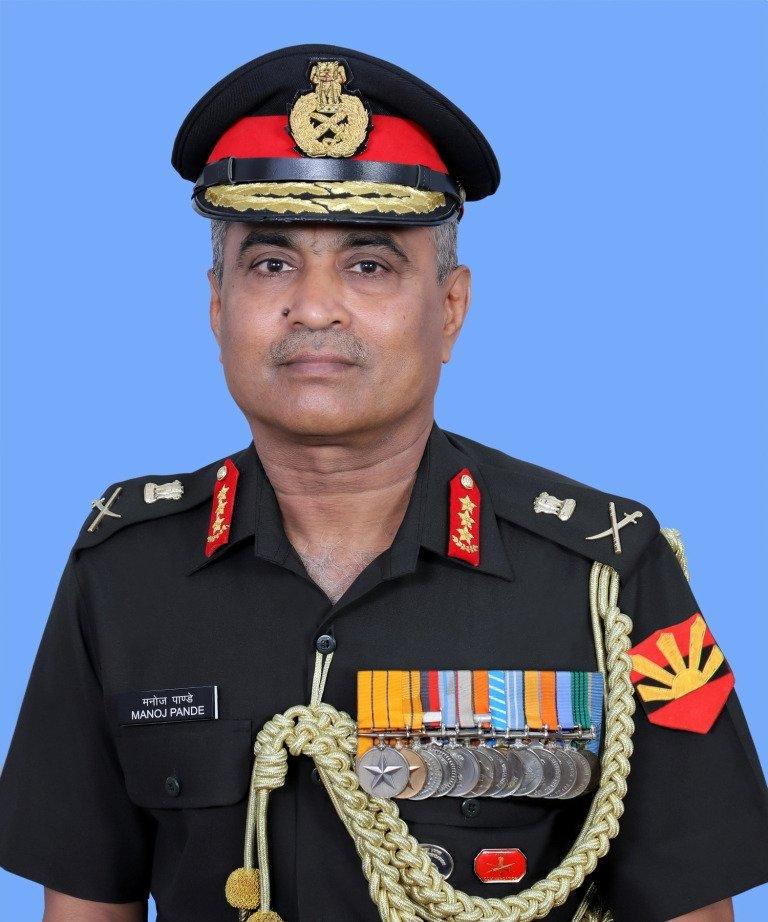
NEW DELHI, Sept 12: Indian Army Chief General Manoj Pande on Monday, September 12, 2022 said the process of Indian and Chinese militaries disengaging from Patrolling Point (PP) 15 in Gogra-Hot Springs area in eastern Ladakh was “going as per schedule”.
The External Affairs Ministry had said on September 9 that the disengagement process will be completed by September 12.
Gen Pande, who has returned to Delhi after a two-day visit to Ladakh, on Monday addressed a seminar on Army logistics at Manekshaw Centre here, and also referred to the eastern Ladakh border standoff that erupted two years ago.
“I will have to go and take stock. But, it (disengagement process) is going as per schedule, and what was decided,” he said on the sidelines of the event, when asked about the status of the process.
Gen. Pande on September 9, 2022 had carried out a comprehensive review of the overall security situation in eastern Ladakh, two days after Indian and Chinese militaries began disengaging from Patrolling Point 15 in the Gogra-Hotsprings area in the region.
The eastern Ladakh border standoff erupted on May 5, 2020, following a violent clash in the Pangong lake areas. Both sides gradually enhanced their deployment by rushing in tens of thousands of soldiers as well as heavy weaponry.
The Ministry’s comment on September 9 had come a day after the Indian and Chinese armies had announced that they have begun to disengage from the Gogra-Hotsprings Patrolling Point 15.
External Affairs Ministry spokesman Arindam Bagchi had said that according to the agreement, “the disengagement process in this area started on September 8 at 8:30 am and will be completed by September 12”. (Agencies)

One terrorist killed in encounter in J&K’s Shopian

0

SRINAGAR, Sep 12: Security forces shot dead an terrorist in an ongoing gun battle in Shopian district of Jammu and Kashmir, police said on Monday.
The gun battle erupted in Heff Shirmal village during a cordon and a search operation.
“The CASO turned into an encounter when hiding terrorists opened fire on joint parties,” a police official said, adding the exchange of fire is still underway in the area.
Police said one terrorist has been killed so far in the gun battle. (Agencies)

Pakistani Drone Spotted Near International Border In Punjab, BSF Troops Open Fire

0

Gurdaspur (Punjab), Sept 12: A Pakistani drone was spotted near the International Border in Punjab’s Gurdaspur early Monday morning.
According to the information, the drone flew back towards the Pakistani side as the alert troops of the Border Security Force (BSF) fired several rounds at it.
The drone was spotted near the International Border at around 5 am, in the area of BSF’s Rosa Post BOP 89 Bn in Gurdaspur, Punjab.
However, a search operation by BSF and Police is underway.
This was the third recent incident and the number of drones being sighted in Punjab, coming from Pakistan has seen a significant rise this year as compared to the Jammu sector.
According to BSF, till July this year total of 107 drones flying from across the border were spotted inside Indian territory, as compared to 97 drones spotted the whole of last year.
As many as 97 drones coming from across the border were sighted by the BSF in 2021 along International Border (IB) including 64 such cases in Punjab, 31 in Jammu, and two drones were seen entering from the Line of Control (LOC) in Jammu.
Till July 2022, as many as 107 drones were sighted along IB that including 14 in Jammu and 93 in the Punjab sector.
A senior BSF officer said that most of these drones have come from Pakistan and are used to deliver narcotics, weapons, explosives, and ammunition.
“There are teams with anti-drone guns deployed in borders. The patrolling parties keep watch on any suspicious aerial activity and often they recover narcotics substances and arms delivered from these drones,” he said.
In 2021, BSF shot down one drone in the Ferozpur sector while this year seven drones were shot down and a huge quantity of narcotics that was supposed to be delivered through drones was also recovered.
The total length of Punjab’s border with Pakistan is 553 kilometres and the 198-km stretch of the India-Pakistan border in the Jammu region is guarded by BSF. Another BSF officer said that there is no effective anti-drone technology available to shoot down every drone crossing the international border but their men on the ground keep watch on drones or any aerial object crossing the border.
“Not only ground, but we also keep an eye on the sky, and BSF personnel are trained to shoot down unidentified UAVs. Sometimes drones fly too high to get detected, we only detect it by humming sound when it comes close to ground,” he said. (Agencies)

Lumpy Skin Disease | Centre Trying To Control The Disease In Cattle With States, Says PM Modi

NEW DELHI, Sept 12: Prime Minister Narendra Modi on Monday said that the Union government is trying along with states to control the Lumpy Skin Disease in cattle.
The disease has infected and killed a large number of cattle across the country. Recently, India developed a vaccine for Lumpy Skin Disease but it’s still in pre-market stage and it would take some time for it to be available for mass inoculation. .
“Our scientists have also prepared indigenous vaccine for Lumpy Skin Disease,” Modi said addressing the International Dairy Federation World Dairy Summit (IDF WDS) 2022 being organised at India Expo Centre & Mart in Noida.
The Lumpy Skin Disease has emerged as a concern for the dairy sector as output is likely to be affected as cattle are infected. The outbreak has been reported in at least 13 states and Union territories, infecting lakhs and killing several thousands of animals.
The inaugural function was also attended by the Minister of Fisheries, Animal Husbandry and Dairying Parshottam Rupala and Uttar Pradesh Chief Minister Yogi Adityanath. Minister of State for Fisheries, Animal Husbandry and Dairying Sanjeev Balyan was also present.
What is Lumpy Skin Disease?
Lumpy Skin Disease is a viral disease which spreads through bites of some kinds of flies, mosquitoes, and ticks, according to European Food Safety Authority (EFSA).
“It causes fever, nodules on the skin and can also lead to death, especially in animals that that have not previously been exposed to the virus,” notes EFSA.
The Lumpy Skin Disease was first reported in India in 2019, according to a press release by the Union Ministry of Agriculture and Farmers Welfare. (Agencies)