
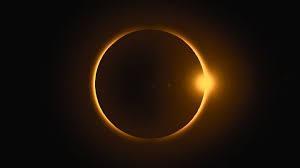
New Delhi, October 25: A partial eclipse of the sun began in India on Tuesday evening and it will be visible for the longest duration from Dwarka in Gujarat.
The partial eclipse is visible over most of India including some parts in the northeast.
The ending of the eclipse will not be visible from India as it will be in progress after sunset.
The obscuration of the sun by the moon will be approximately between 40 and 50 percent at the time of the maximum eclipse in the north-western parts of the country. In other parts of the country, the percentage coverage will be less.
In Delhi and Mumbai, the percentage coverage of the sun by the moon at the time of the greatest eclipse will be around 44 per cent and 24 per cent respectively.
The duration of eclipse from the beginning up to sunset time will be one hour and thirteen minutes in Delhi and one hour and nineteen minutes in Mumbai.
In Chennai and Kolkata, the duration of the eclipse from the beginning up to sunset time will be 31 minutes and 12 minutes respectively.
In Dwarka, the partial sun eclipse will be visible for one hour and forty-four-and-a-half minutes. The partial solar eclipse occurred a day after Diwali.
The eclipse is visible in the region covering Europe, the Middle East, north-eastern parts of Africa, western Asia, the North Atlantic Ocean and the North Indian Ocean.
India will witness a total solar eclipse on August 2, 2027.
A solar eclipse occurs on a new moon day when the moon comes in between the earth and the sun and when all three are aligned. A partial solar eclipse will occur when the lunar disk covers the solar disk partially.
An official release said eclipsed sun should not be viewed with the naked eye, even for a very short time.
It will cause permanent damage of the eyes leading to blindness even when the moon covers most portion of the Sun. Safe technique to observe the solar eclipse is either by using a proper filter like aluminized mylar, black polymer, welding glass of shade number 14 or by making a projection of the sun’s image on a white board by telescope. (AGENCIES)
Partial solar eclipse visible from most parts of India
Rishi Sunak takes charge as UK’s first Indian-origin PM after meeting King Charles III
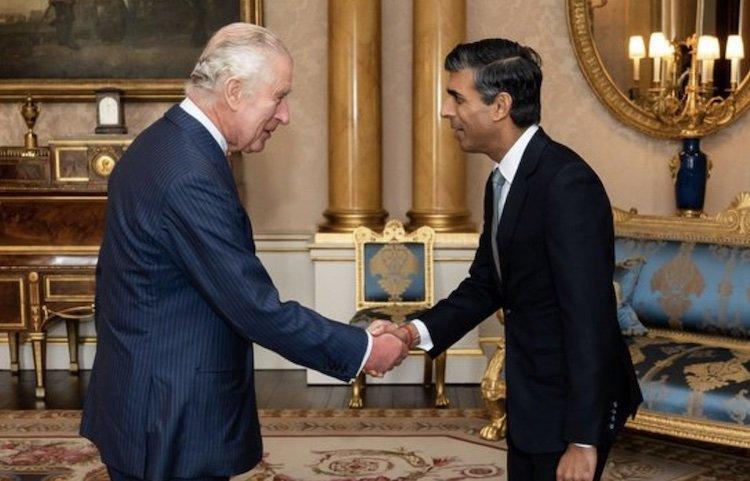
LONDON, Oct 25: Rishi Sunak has formally taken charge as Britain’s first Indian-origin Prime Minister after an audience with King Charles III on Tuesday, a day after he was elected the new leader of the Conservative Party in a historic leadership run.
Outgoing Prime Minister Liz Truss chaired her final Cabinet meeting at 10 Downing Street on Tuesday morning before making her way to Buckingham Palace to formally tender her resignation to the 73-year-old monarch.
Sunak then arrived at the palace for his meeting with the King, who then invited him to form a government as the UK’s 57th Prime Minister and the monarch’s second in just over six weeks.
The 42-year-old former Chancellor of Exchequer, a devout Hindu, is the youngest British prime minister in 210 years. He is also Britain’s first Hindu Prime Minister.
Sunak, the second prime minister in as many months and the third this year, will make his first prime ministerial address on the steps of 10 Downing Street, expected to be joined by his wife Akshata Murty and daughters Krishna and Anoushka. He is then expected to start finalising his Cabinet, with the key roles of Chancellor, Foreign Secretary and Home Secretary expected to be announced soon.
”The UK is a great country, but there is no doubt we face a profound economic challenge,” said Sunak in his first address as Prime Minister elect on Monday, with reference to the economic turmoil he is inheriting following former prime minister Liz Truss’ disastrous tax-cutting mini-budget last month.
”We now need stability and unity and I will make it my utmost priority to bring our party and our country together; because that is the only way we will overcome the challenges we face and build a better, more prosperous future for our children and our grandchildren. I pledge that I will serve you with integrity and humility and I will work day in day out to deliver for the British people,” he said.
Sunak’s victory on Diwali has resonated among the Indian diaspora groups across the UK, who have hailed it as a “historic moment” in British social history.
”Rishi Sunak becoming the first British Indian Prime Minister is an historic moment. This simply would not have been possible even a decade or two ago,” said Sunder Katwala, Director of British Future think tank.
“But we should not underestimate this important social change. When Sunak was born in Southampton in 1980, there had been no Asian or black MPs at all in the post-war era. There were still no black or Asian Conservative MPs when he graduated from university in 2001. That Rishi Sunak is set to be Prime Minister during the coronation of King Charles III next spring tells an important story about our society, where we have come from and where we are going in the future,” he said.
The Archbishop of Canterbury urged Britons to pray for Rishi Sunak as he enters No. 10 Downing Street at a turbulent time.
”At a time of great difficulty and uncertainty for this country, please join me in praying for Rishi Sunak as he takes on the responsibilities of leadership,” Justin Welby wrote on Twitter.
”May he, and all leaders of all parties, work across divides to bring unity and offer stability for those who need it most,” he said.
Sunak’s victory in the Tory leadership race came at the end of a dramatic few days in Westminster since Liz Truss resigned last Thursday in the wake of a disastrous tax-cutting mini-budget and several policy U-turns.
Former prime minister Boris Johnson ruling himself out from the contest over the weekend and Leader of the Commons Penny Mordaunt conceding defeat just moments before the shortlisting deadline on Monday paved the way for a remarkable political comeback for Sunak – having lost the Tory membership vote to Truss just last month.
However, his popularity as the frontrunner among his party colleagues was replicated yet again as more than half the Tory MPs came out publicly in his support. He now faces the enormous challenge of steering the UK economy through massive inflationary turbulence and also uniting the different wings of a divided Conservative Party. (Agencies)
WhatsApp resumes after over an hour of disruption

New Delhi, Oct 25: Popular messaging app WhatsApp faced a global outage from the UK to India, with users being not able to send and receive text and video messages for more than an hour.
The services were restored for some users after the unexplained disruption that last over an hour.
The resumption of service was confirmed by several users.
WhatsApp’s services across many parts of India and the world were disrupted on Tuesday afternoon as thousands of users were unable to send or receive messages on the Meta-owned platform.
After the snag hit, WhatsApp had said it is working to restore services.
“We’re aware that some people are currently having trouble sending messages and we’re working to restore WhatsApp for everyone as quickly as possible,” a Meta company spokesperson said in a statement.
Downdetector reported a significant rise in complaints around Whatsapp outage; nearly 29,000 reports were flagged by users.
Downdetector’s heatmap was showing WhatsApp users in major cities, including Delhi, Mumbai, Bengaluru and Kolkata were impacted by the disruption. (Agencies)
Hurriyat leader Bilal Gani Lone likely to join mainstream politics
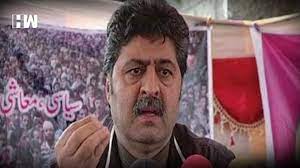
Srinagar, October 25: Separatist Leader and Chairman of the Jammu and Kashmir Peoples Independent Movement Bilal Gani Lone is likely to switch to mainstream politics, sources said.
Bilal Gani Lone is the son of veteran separatist leader Abdul Gani Lone who was killed at Eidgah in Srinagar. People aware of the matter said that Lone will formally join active electoral politics in the coming days.
“His father was a three-time MLA before joining the separatist ranks. So, if he is joining the mainstream politics he will reclaim that legacy and can make a bigger and visible impact, especially at the time when elections are about to happen,” a political analyst observed.
The reports suggested that Lone will soon part ways with Hurriyat Conference as he has firmly decided to fight the upcoming Assembly Elections from his ancestral “strongly held” North Kashmir.
“Bilal Lone’s joining of mainstream politics will be a colossal development as it will be the second major exodus of any Hurriyat leader after his brother Sajad Lone bid farewell to the separatist politics,” political analysts on the basis of anonymity expressed to a local media house in the Union territory.
This political development gives insight into a huge change in the political dynamics of Kashmir valley where Hurriyat and separatist politics are becoming obsolete and irrelevant with every passing day.
With Bilal Lone’s decision to join mainstream politics, many leaders will also revisit their political affiliation with separatism which shall force them to think about the relevance and ultimate need for shunning the old political factions and integrating with popular politics. (Agencies)
Rishi Sunak’s rise as next British PM triggers war of words between BJP, opposition leaders
NEW DELHI, Oct 25: With opposition leaders using the elevation of Rishi Sunak as Britain’s next prime minister to lament alleged majoritarianism and divisiveness in India, the BJP on Tuesday cited APJ Abdul Kalam’s and Manmohan Singh’s rise as the country’s president and prime minister to hit out at them. The BJP also rejected any parallel between its leaders’ opposition to prime ministership for Sonia Gandhi, who is of Italian origin, after the Congress won the Lok Sabha poll in 2004 and the Britain’s ruling party choosing Indian-origin Sunak as its leader, paving the way for him to become the country’s next PM.
“Can’t differentiate between Italy-born Sonia (who refused to take Indian citizenship for several decades after marriage with Rajiv) and UK-born Rishi with Indian ancestry,” BJP’s foreign affairs department head Vijay Chauthaiwale said responding to a Twitter user.
Reactions from BJP leaders came after leaders from various opposition parties, including the Congress, appeared to take a swipe at the BJP while lauding the rise of Sunak.
PDP president and former Jammu and Kashmir chief minister Mehbooba Mufti said it was a proud moment that Indian-origin Sunak was elected as the UK’s prime minister but it should also serve as a reminder that Britain has accepted an ethnic minority member as its premier but “we are still shackled by divisive and discriminatory laws like NRC and CAA.”
Congress leaders P Chidambaram and Shashi Tharoor welcomed the move and hoped one day this practice is adopted in the country. TMC MP Mohua Moitra welcomed the move and hoped India too becomes more tolerant.
“First Kamala Harris, now Rishi Sunak. The people of the US and the UK have embraced the non-majority citizens of their countries and elected them to high office in government,” Chidambaram said on Twitter.
“I think there is a lesson to be learned by India and the parties that practise majoritarianism,” he also said.
Tharoor said, “If this does happen, I think all of us will have to acknowledge that the Brits have done something very rare in the world, to place a member of a visible minority in the most powerful office. As we Indians celebrate the ascent of @RishiSunak, let’s honestly ask: can it happen here.”
Former law minister and BJP leader Ravi Shankar Prasad hit out at them.
Taking a swipe at Mehbooba, he asked her to answer if she will accept a minority as Jammu and Kashmir’s chief minister.
“Some leaders have become hyper active against majoritarianism after election of Rishi Sunak as PM of UK. Gently reminding them about the extraordinary Presidency of APJ Abdul Kalam, Manmohan Singh as PM for 10 years. A distinguished tribal leader Droupadi Murmu is now our President,” he said.
Prasad said a competent leader of Indian origin Sunak becoming the UK’s prime minister needs to be complimented by them all on this extraordinary success.
“It is tragic that some Indian politicians are unfortunately trying to make a political brownie point on this occasion,” he said.
BJP’s IT department head Amit Malviya noted that India has had three Muslim and one Sikh president besides a Sikh prime minister for 10 years and minorities in top judicial positions and the armed forces.
“It need not learn about diversity and inclusivity from any other country. But Mehbooba must walk the talk and back a Hindu for J&K’s CM,” he said. (Agencies)
Former Hurriyat chairman and prominent Shia leader passes away

SRINAGAR, Oct 25: Former Hurriyat chairman and a prominent Shia scholar of Kashmir Molana Abbas Ansari, 86, passed away after a prolonged illness on Tuesday, family sources said.
Ansari, who was also the founder of Ittihadul Muslimeen, an organisation that advocated unity between Shia and Sunni Muslims, passed away at his residence in Srinagar, they said.
Ansari was a moderate separatist voice and advocated peaceful settlement of Kashmir issue.
In 2004, when Ansari was the chairman of All Parties Hurriyat Conference, he led the five member delegation who held a first-ever meeting with the then Prime Minister Atal Bihari Vajpayee. The group also held several discussions with the then deputy Prime Minister Lal Krishna Advani.
Ansari was also a part of the group of Kashmir separatist leaders that travelled to Pakistan, through Srinagar-Muzaffarabad bus service. It was during Ansari’s tenure that Hurriyat split in two parts as Syed Ali Geelani formed his own faction.
Ansari was the last surviving politician from the Plebiscite Front era. He also served as convenor of the Muslim United Front (MUF)- a coalition of political parties that challenged the National Conference-Congress in the 1987 assembly polls. The alleged rigging in 1987 elections is widely believed to have triggered the armed violence in Kashmir.
Several political leaders condoled the death of Ansari. (Agencies)
201 fire calls in Delhi reported on Diwali
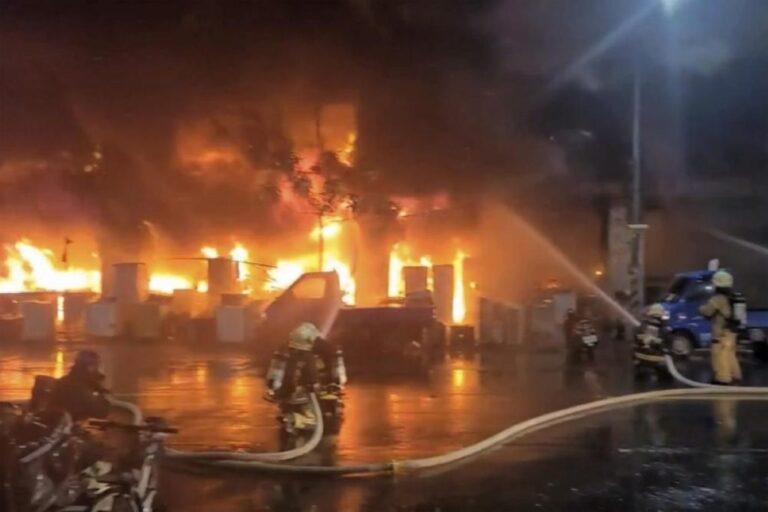
Despite a complete ban on firecrackers in the national capital, the Fire Department received as many as 201 calls during Diwali, officials said on Tuesday.
“A total of 201 calls pertaining to fire incidents were received in Delhi, yesterday during Diwali,” said Director, of Delhi Fire Services, Atul Garg. Ahead of the festival, the Fire chief had said that the department was prepared to fight fires through drones with which they could access high-rise buildings. Fire tenders were deployed near congested areas.
Meanwhile, on Monday evening a fire broke out at an apartment in a residential society in Greater Noida West on Diwali evening, officials said.
The fire broke out in the flat located in Vedantam Society in Gaur City 2 area, under Bisrakh police station limits, prompting relief operations at the site, according to police officials.
Chief Fire Officer Arun Kumar Singh said that efforts are on to douse the fire completely.
“We got information at around 10.05 pm about a fire at a flat on the 17th floor of Tower B2 of Vedantam society. The fire reached the 18th floor too. Fire tenders were brought and the fire was controlled in an hour,” he said.
Singh further said that no casualties were reported so far.
The cause of the fire and the damage caused were yet to be ascertained, the official added. As the whole nation was celebrating the festival, many cases of fire were reported across the country.
Delhi’s air quality ‘very poor’ after Deepavali but relatively better than previous years
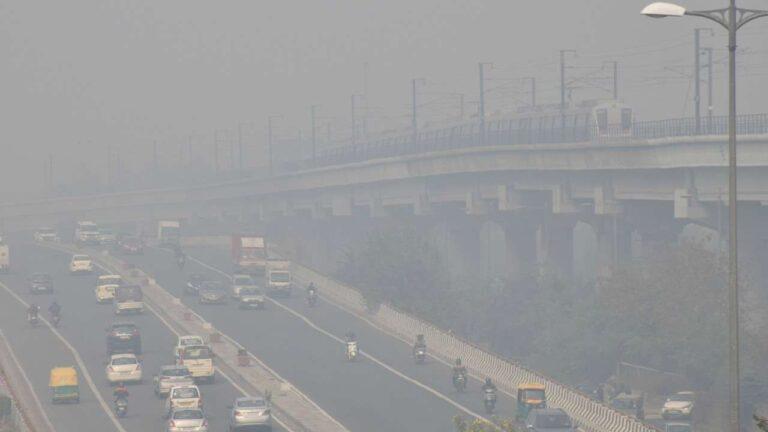
NEW DELHI, Oct 25: The air quality in Delhi on the morning after Deepavali was recorded in the ‘very poor’ category but the situation was relatively better than previous years due to favourable meteorological conditions which diluted the effect of firecrackers and stubble burning.
The capital’s air quality index (AQI) stood at 326 at 8 am on October 25, 2022.
The neighbouring cities of Ghaziabad (285), Noida (320), Greater Noida (294), Gurugram (315) and Faridabad (310) reported ‘poor’ to ‘very poor’ air quality.
An AQI between zero and 50 is considered ‘good’, 51 and 100 ‘satisfactory’, 101 and 200 ‘moderate’, 201 and 300 ‘poor’, 301 and 400 ‘very poor’, and 401 and 500 ‘severe’.
The relatively better air this morning doesn’t mean it’s good air. The PM2.5 levels at 30 out of the 35 monitoring stations in the capital were five to six times the national standard of 60 micrograms per cubic metre at 8 am.
PM2.5 are fine particles that are 2.5 microns or less in diameter and can travel deep into the respiratory tract, reaching the lungs and entering the bloodstream.
Though people burst firecrackers in several parts of Delhi despite a ban on them, the intensity appeared less as compared to the last two years.
The Delhi government had in September announced a complete ban on the production, sale and use of all types of firecrackers till January 1, 2023, including on Deepavali, a practice it has been following for the last two years.
Farm fires raged across Punjab and Haryana on Monday but the wind speed was moderately unfavourable for the transport of smoke. Hence, the contribution of stubble burning to Delhi’s pollution (around 10 per cent) was also “not very significant”, said Gufran Beig, chair professor, National Institute of Advanced Studies, Indian Institute of Science.
Emissions from firecrackers and farm fires have contributed significantly to Delhi’s PM2.5 pollution on Deepavali over the years.
Their share this year was relatively less than previous years due to reduced firecrackers bursting and moderately warm and windier conditions which prevented rapid accumulation of pollutants.
Deepavali was celebrated on November 4 in 2021 and on November 14 in 2020 when temperatures were considerably low and winds calm.
According to the Early Warning System of the Indian Institute of Tropical Meteorology (IITM), the air quality is predicted to remain in the ‘very poor’ category during the day (Tuesday) and is likely to improve slightly over the next two days.
Delhi recorded a 24-hour average AQI of 312 at 4 pm on Monday — the second best for Deepavali day in seven years.
Before this, the city recorded an AQI of 281 on Deepavali in 2018.
Delhi had recorded an AQI of 382 on Deepavali last year, 414 in 2020, 337 in 2019, 319 in 2017, and 431 in 2016, according to Central Pollution Control Board data.
On Sunday evening, the city reported a 24-hour average AQI of 259, which was the lowest for Deepavali eve in seven years.
“The share of PM2.5 in Delhi’s air has increased which is indicative of contribution from firecrackers and stubble burning,” said Beig, also the founder project director of SAFAR, a forecasting agency under the Union Ministry of Earth Sciences.
“Though the active fire counts have doubled, the wind direction is north westerly and the wind speed is moderate (not very favourable for the transport of smoke from farm fires). Hence, the contribution of stubble burning is not very significant,” he said.
Stubble burning is likely to account for 12 to 15% of Delhi’s PM2.5 solution on Tuesday, he added.
The Indian Agricultural Research Institute reported 1,019 farm fires in Punjab, 250 in Haryana and 215 in Uttar Pradesh on Monday evening.
The System of Air Quality and Weather Forecasting and Research (SAFAR) had earlier predicted that the air quality in Delhi will be recorded in the ‘very poor’ category if no firecrackers are burst.
In case firecrackers are burst like last year, the air quality may plunge to ‘severe’ levels on the night of Deepavali itself, it had said.
Delhi Environment Minister Gopal Rai had earlier said bursting of firecrackers on Deepavali in the city will attract a jail term up to six months and a fine of ₹200.
He had said production, storage and sale of firecrackers here will be punishable with a fine of up to ₹5,000 and three years in jail under Section 9B of the Explosives Act.
A total of 408 teams have been constituted to implement the ban. The Delhi Police has set up 210 teams under assistant commissioners of police, the Department of Revenue has set up 165 teams and the Delhi Pollution Control Committee has constituted 33 teams. (Agencies)
India logs least number of daily Covid cases in 196 days
NEW DELHI, Oct 25: India logged 862 new coronavirus infections, the lowest in 196 days, taking the tally of COVID-19 cases to 4,46,44,938, while the active cases declined to 22,549, according to the Union Health Ministry data updated on Tuesday.
The death toll climbed to 5,28,980 with three fatalities which include two deaths reconciled by Kerala, the data updated at 8 am stated. One death has been reported from Delhi in the last 24 hours.
The country had earlier reported low Covid cases on April 11 when 796 infections were logged.
The active cases comprise 0.05 per cent of the total infections, while the national COVID-19 recovery rate increased to 98.76 per cent, the ministry said.
A decrease of 644 cases has been recorded in the active COVID-19 caseload in a span of 24 hours.
The daily positivity rate was recorded at 1.35 per cent while the weekly positivity rate was recorded at 1.02 per cent, according to the ministry.
The number of people who have recuperated from the disease surged to 4,40,93,409, while the case fatality rate was recorded at 1.18 per cent.
According to the ministry, 219.56 crore doses of Covid vaccine have been administered in the country so far under the nationwide COVID-19 vaccination drive. India’s COVID-19 tally had crossed the 20-lakh mark on August 7, 2020, 30 lakh on August 23, 40 lakh on September 5 and 50 lakh on September 16. It went past 60 lakh on September 28, 70 lakh on October 11, crossed 80 lakh on October 29, 90 lakh on November 20 and surpassed the one-crore mark on December 19.
The country crossed the grim milestone of two crore on May 4 and three crore on June 23 last year. It crossed the four-crore mark on January 25 this year. (Agencies)
Clear sky, partial solar eclipse will be visible in J&K on Tuesday
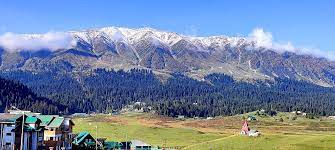
JAMMU, Oct 25: Partial solar eclipse will be visible in Jammu and Kashmir onTuesday as the weather will remain dry and the sky will be clear, said the Meteorological (MeT) office here.
“Partial solar eclipse will start at 4.17 p.m. in Jammu and at 4.14 p.m. in Srinagar today. The eclipse will end after sunset.
“Weather would otherwise be dry in J&K during the next 24 hours,” an official of the MeT department said.
Srinagar had 4.8, Pahalgam 0.6 and Gulmarg 1.8 degrees Celsius as the minimum temperature.
Drass town in Ladakh region had minus 4.3, Kargil minus 1.5 and Leh minus 2.6 as the minimum temperature.
Jammu and Katra both had 13.4, Batote 8, Banihal 4.6 and Bhaderwah 5.7 as the minimum temperature. (AGENCIES)