Leh: Joyous cries of “freedom” had rippled across Leh’s mountain air in August 2019 when the Modi government carved Ladakh out into a Union territory from the erstwhile state of Jammu and Kashmir. But today, many of the same voices are rising in protest.
They say ‘freedom’ from J&K has come at the cost of the special status which the nullified Article 370 had granted, and there’s now a fight to protect the region’s identity, land, environment, and autonomy.
The most prominent face of the agitation is Sonam Wangchuk, the engineer, education reformer, and Magsaysay Award winner who first shot to national fame as the inspiration for Aamir Khan’s character in the 2009 film 3 Idiots. Last month he concluded a five-day ‘Save Ladakh’ hunger strike that he had begun on 26 January, garnering support from thousands of people in Ladakh and beyond.
Back in 2019, though, Wangchuk had tweeted his gratitude to Prime Minister Narendra Modi for “fulfilling Ladakh’s longstanding dream” of becoming a Union territory. “Thank you”, he had said, to all who helped bring about “democratic decentralisation”.
But anger has now replaced gratitude.
Wangchuk, like many others here, believes that the Union government has not delivered on the “dream” that it had promised, instead leaving Ladakh at the mercy of ‘outside’ authorities who lack a complete understanding of the region’s needs and vulnerabilities. Further, there is widespread dissatisfaction with the lack of jobs and political representation.
When ThePrint Wednesday visited Wangchuk’s mud-and-wood home, situated amid barren hills, he seemed calm but determined. The fast is over, but the fight to protect Ladakh’s ecology and self-determination is not, he said.
“We are not asking for anything illegal. We are asking for what the government had promised us but is now ignoring,” he said.
At the core of the battle is a demand to include Ladakh under the Sixth Schedule, which provides for the administration of certain tribal areas by autonomous district councils that also have powers to make laws in areas like land and forests, among others.
The purpose of this provision, which comes under Article 244 of the Constitution, is to safeguard the interests and culture of tribal populations while also providing for their development.
Wangchuk explained that without the Sixth Schedule, Ladakh’s fragile ecology could be severely impacted by an influx of industries.
“We are already telling the government that Ladakh is not like the rest of the country. It is different. Even when tourists come here, the burden increases. If a big industry comes, Ladakh will not be able to bear it and that is why we are demanding Schedule Six,” he said.
He also claimed that budgetary allocations for Ladakh were not being spent properly. “The Lieutenant Governor and bureaucrats come here for two-three years and by the time they understand the place, it’s time to leave. They don’t know how to spend the budget,” he said.
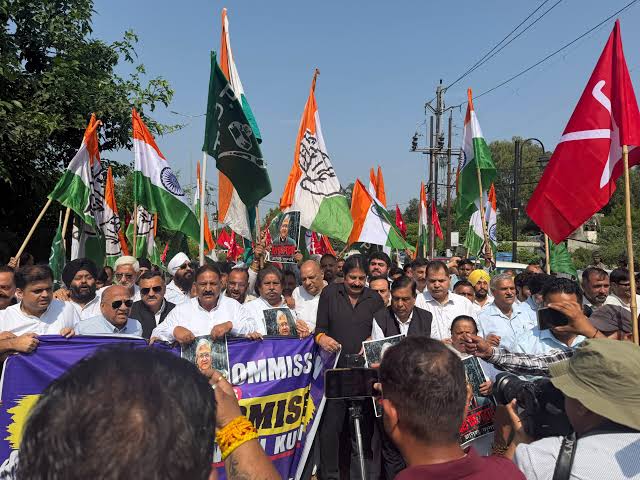
Wangchuk is not the only voice raising such issues. Since 2021, two umbrella outfits called the Leh Apex Body (LAB) and Kargil Democratic Alliance (KDA) have been consistently demanding more safeguards and autonomy for Ladakh. The two bodies — which comprise political and religious leaders, union workers, as well as youth and women outfits — even staged a largest protest in Jammu last month.
“We have four demands which we have been raising for a long time — statehood, constitutional safeguards under the Sixth Schedule, separate Lok Sabha seats for Leh and Kargil districts, and job reservation for locals,” Sajjad Kargili, a member of the KDA, told The Print. “These are not our demands but those of everyone in Ladakh.