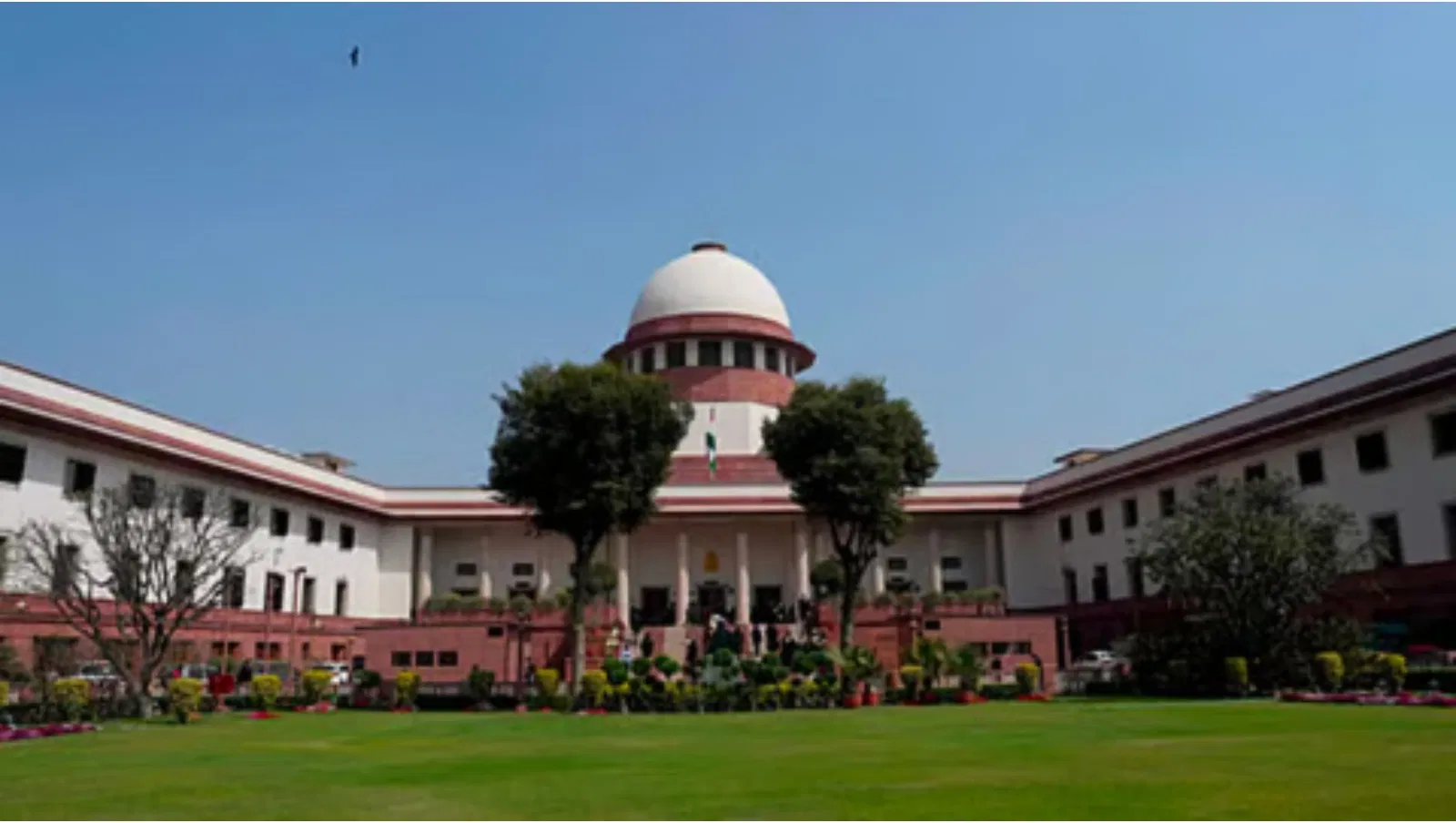
The Supreme Court on Thursday declined to grant interim relief on a plea challenging the implementation of the CBSE’s three-language policy for Class 9 students from the 2026-27 academic session. A bench comprising Chief Justice Surya Kant and Justice V. Mohana ordered that the petition be tagged with similar matters already pending before the court.
The plea, filed by NGO Friends of People for Active Democracy, questioned the implementation of the policy rather than the three-language formula itself. During the hearing, the bench observed that no interim order could be passed at this stage, stating that the matter had already been argued extensively. The case has been listed for further hearing on July 14.
In a lighter moment, Chief Justice Surya Kant remarked on the NGO’s name, asking whether such nomenclature was intended to create fear among the court or the public. The counsel clarified that the trust was established in 2013 and informed the bench that CBSE was expected to issue detailed guidelines by June 15.
Earlier, on May 27, the apex court had issued notices to the Centre, the Central Board of Secondary Education (CBSE), and the National Council of Educational Research and Training (NCERT), seeking comprehensive responses. It had also directed the Centre to submit a report on the preparedness of the CBSE to implement the policy.
Under a circular issued by the CBSE, the study of three languages, including at least two native Indian languages, has been made compulsory for Class 9 students from July 1, 2026. The move is aimed at aligning the curriculum with the National Education Policy (NEP) 2020 and the National Curriculum Framework for School Education (NCF-SE) 2023.
According to the board, students choosing a foreign language may do so only as a third language after studying two native Indian languages or as an additional fourth language. No board examination will be conducted for the third language at the Class 10 level, and all assessments for the subject will be school-based. The performance of students in the third language will, however, be reflected in the CBSE certificate.
The board has also provided for case-by-case exemptions for foreign students returning to India and relaxations for children with special needs under the Rights of Persons with Disabilities Act, 2016. Schools facing a shortage of qualified language teachers have been advised to adopt flexible arrangements, including inter-school resource sharing and virtual teaching support.
The three-language formula forms part of broader curriculum reforms announced by the CBSE, which also include the introduction of two-level systems for mathematics and science from the 2026-27 academic session.