The Indian National Congress on Friday accused the Centre of convening a “special session” of Parliament to push key legislations related to women’s reservation and delimitation, alleging the move is aimed at gaining political mileage ahead of elections in key states.
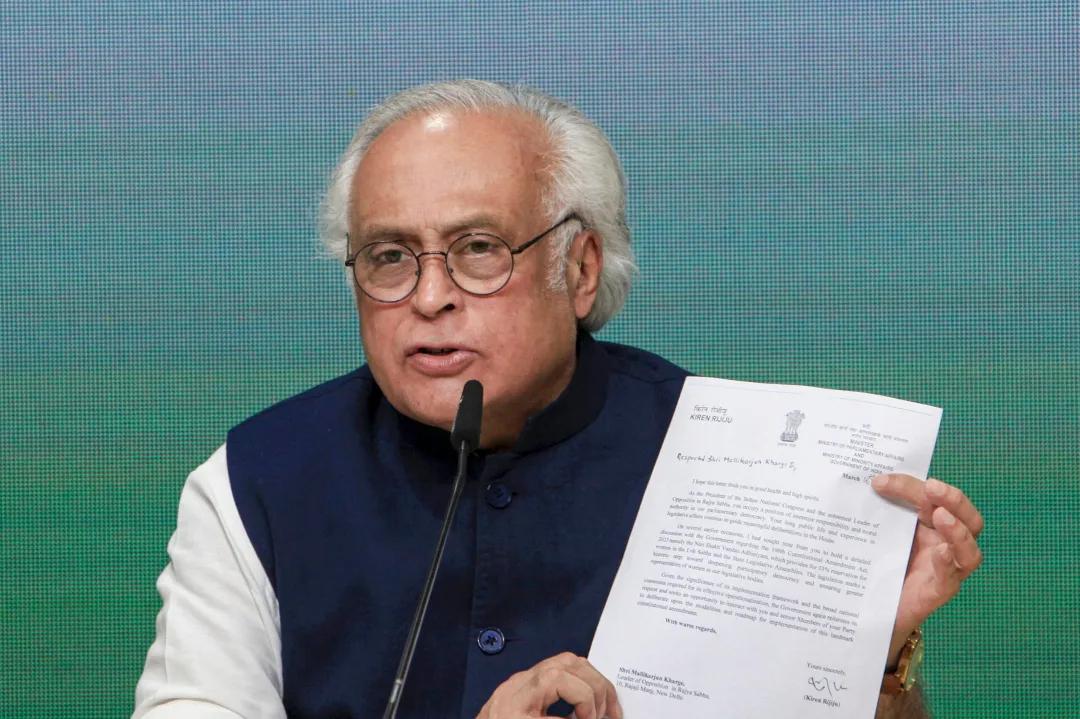
Addressing a press conference, Congress leader Jairam Ramesh claimed the government had remained inactive for nearly 30 months after passing the Nari Shakti Vandan Adhiniyam 2023, only to revive the issue during the election season.
He further alleged that the proposed session—scheduled from April 16 to 18 as part of the Budget session—would include legislation on delimitation, despite no formal communication from the government. “Off the record, we have been told that there could be a proportionate increase in Lok Sabha seats, but in reality, this could severely impact smaller states, especially in the South, Northeast, and West,” Ramesh said.
Raising concerns over representation, he claimed that states like Uttar Pradesh could see a significant increase in seats, while states such as Kerala may witness only marginal gains. He termed the alleged move “dangerous” for federal balance.
The Congress also questioned the timing of the session, calling it a violation of the Model Code of Conduct in force due to ongoing elections in states like West Bengal and Tamil Nadu. “The only objective is to influence polls. Could this not have been scheduled after a few weeks?” Ramesh asked.
Meanwhile, Congress president Mallikarjun Kharge and senior leader Rahul Gandhi are expected to hold consultations with party MPs and other opposition leaders ahead of April 16 to formulate a joint strategy.
The government, however, has maintained that it is within its अधिकार to decide the timing of legislation. In the Rajya Sabha, Leader of the House J P Nadda defended the move, while Kharge accused the Centre of attempting to “bulldoze” crucial amendments for political advantage.
Sources suggest the proposed legislation could increase the strength of the Lok Sabha from 543 to 816 seats, facilitating implementation of women’s reservation. However, the opposition fears that such a move—especially if delinked from the Census—could disproportionately benefit larger states.
The political face-off comes amid an intense election calendar, with voting underway or scheduled across multiple states, setting the stage for a fresh confrontation between the government and opposition over legislative priorities and timing.