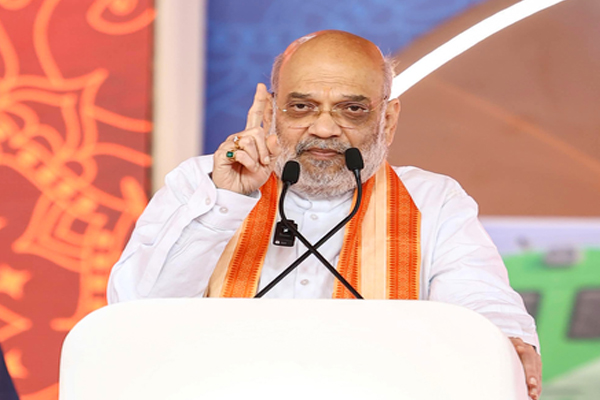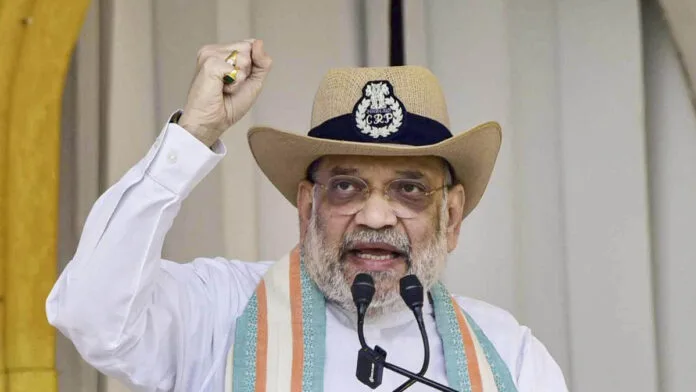
Guwahati, Assam — Union Home Minister Amit Shah on Saturday asserted that Naxalism would be completely eliminated from India by the government’s March 31, 2026 deadline. He made the announcement while addressing the 87th CRPF Day Parade, held in the Northeast for the first time.
Shah highlighted the CRPF’s role in bringing stone-pelting incidents in Jammu and Kashmir down to zero, controlling ethnic violence in Manipur, and breaking the back of Maoists in just three years. He also praised the 21-day Operation Black Forest in the Karreguta Hills on the Chhattisgarh–Telangana border in April–May 2025, during which 31 Naxals were killed. CRPF personnel operated in scorching heat of 46°C, enduring extreme physical hardship to dismantle Naxal strongholds.
The Home Minister reflected that 10–11 years ago, India had three major hotspots — terrorism in Jammu and Kashmir, Naxal-affected areas, and insurgency in the Northeast — which are now centers of peace and development. He credited CRPF personnel for their sacrifices, noting that 700 personnel were killed in the Northeast, 780 in Naxal areas, and 540 in Jammu and Kashmir.
Shah said the peace achieved in Jammu and Kashmir post the abrogation of Article 370 would not have been possible without CRPF’s efforts. On the occasion, 15 CRPF personnel were awarded Gallantry Medals, 6 were conferred the President’s Police Medal for Distinguished Service, and the best-performing battalions received trophies.
CRPF Director General G.P. Singh described Operation Black Forest as having “broken the back of Naxals” and reiterated that Naxalism would be eradicated by the government-set deadline.
The ceremonial parade at Sarusajai Stadium featured eight contingents from across India, including women personnel, the Rapid Action Force (RAF), CoBRA commandos, and units from various sectors. Demonstrations included a complex rifle drill by women personnel, a high-risk hostage-rescue simulation by commandos, and a jungle warfare exercise by CoBRA, representing anti-Naxal operations.
The CRPF was first raised in 1939 as the Crown Representative’s Police (CRP) under British rule. Post-independence, in 1949, it was renamed the Central Reserve Police Force (CRPF) by India’s first Home Minister, Sardar Vallabhbhai Patel.