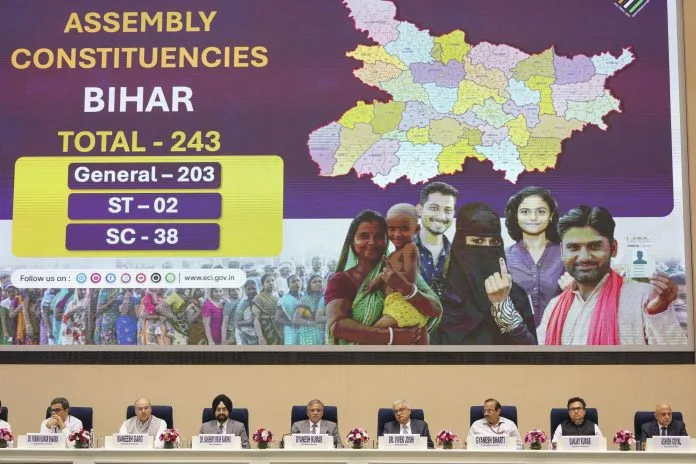
Chief Election Commissioner Gyanesh Kumar announced on Monday that the Bihar Assembly elections will occur in two phases, scheduled for November 6 and 11. The counting of votes will take place on November 14, with the entire process concluding by November 16. This announcement has triggered significant interest as millions prepare to participate in this crucial democratic exercise.
Kumar, emphasizing the election’s importance, referred to it as the “mother of all elections”. He underscored the Election Commission’s commitment to transparency and integrity during the election process across all constituencies. This upcoming election cycle is poised to shape the political landscape of Bihar significantly.
According to the schedule released by the Election Commission, a total of 121 Assembly constituencies will go to the polls in the first phase on November 6. The second phase will cover 122 constituencies on November 11. The counting process is crucial, as it determines the future leadership of the state, and the Chief Election Commissioner has stressed that postal ballot counting must precede final count rounds.
“It is mandatory to complete counting of postal ballots before the last two rounds of counting of votes,”
said the Chief Election Commissioner, clarifying procedures critical to ensuring reliable election outcomes.
The nomination process for candidates opens the door to various contenders, with significant deadlines approaching. For the first phase, the last date for filing nominations is set for October 17, followed by scrutiny on October 18. Candidates must withdraw their nominations by October 20.
In the second phase, candidates must submit their nominations by October 20. Scrutiny will unfold on October 21, and the final date for withdrawal is October 23. These dates are critical for the political parties as they strategize their approaches and candidates for the elections.
The term of the current Bihar Legislative Assembly ends on November 22, making this election not only necessary but urgent. With 243 Assembly constituencies in total—including two reserved for Scheduled Tribes (ST) and 38 for Scheduled Castes (SC)—the elections will reflect the diverse representation of the state’s population.
The upcoming Bihar Assembly elections are drawing the attention of political analysts, parties, and the public as they prepare for a robust electoral contest. The implications of these elections could resonate through Bihar’s governance and political direction in the years to follow.