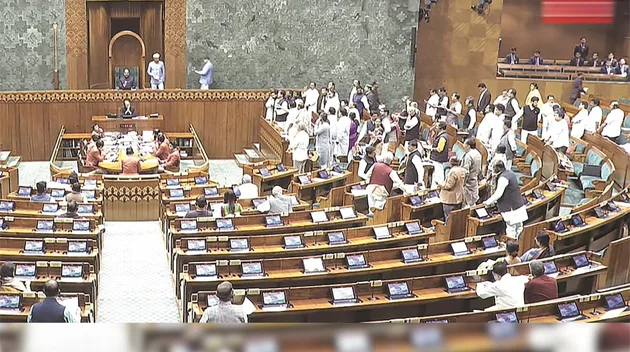
The Congress party is likely to stay away from the Joint Parliamentary Committee (JPC) set up to investigate three contentious Bills concerning the removal of government officials arrested for 30 consecutive days on serious charges. This decision, according to party insiders, will be formally communicated to Lok Sabha Speaker Om Birla shortly.
In a show of united opposition, at least three other parties—the Trinamool Congress, Shiv Sena (UBT), and the Aam Aadmi Party—have already declared their intention not to participate in the committee. The Samajwadi Party has also signaled support for a collective boycott, leaving multiple parties undecided, yet none have expressed interest in joining the committee.
Earlier this month, Lok Sabha Speaker Om Birla commented on the situation, noting that no party had officially notified him regarding a boycott of the JPC. He stated,
“On the issue of JPC, no political party has communicated to me in writing on this subject,”
addressing concerns from various political quarters.
The controversy surrounding the Bills began during the last day of the Monsoon Session when Home Minister Amit Shah introduced three crucial pieces of legislation:
- The Government of Union Territories (Amendment) Bill
- The Constitution (One Hundred and Thirtieth Amendment) Bill
- The Jammu and Kashmir Reorganisation (Amendment) Bill
These proposals have significant implications, seeking to allow the removal of a sitting Prime Minister, Chief Ministers, and other ministers if they face arrest for 30 consecutive days on serious charges. This legislative effort has sparked intense backlash across the political spectrum, with numerous parties labeling the Bills as unconstitutional and suggesting they are politically motivated attempts to target opposition leaders controlling state power.
The JPC, still awaiting formation, is set to include 21 members from the Lok Sabha and 10 from the Rajya Sabha. However, as protests escalate, the timeline for its constitution remains uncertain.
While many in the opposition call for collaborative action, the lack of clarity surrounding participation in the JPC raises questions about the future of these controversial Bills. The coming days shall reveal how this political saga unfolds within Parliament as parties consider the implications of their possible absence.
Leave a Reply