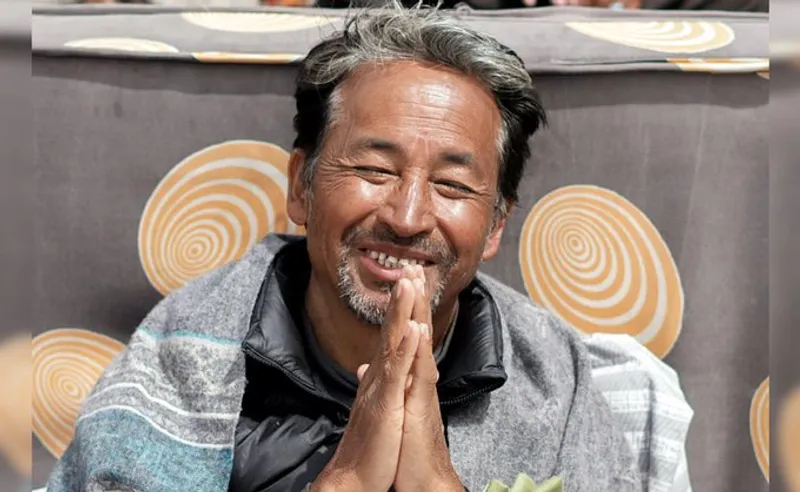
New Delhi, Sep 25: The Union Home Ministry has cancelled the FCRA licence of the Students’ Educational and Cultural Movement of Ladakh (SECMOL), an organization founded by renowned climate activist Sonam Wangchuk, with immediate effect. This decision came after the ministry discovered alleged irregularities in the organisation’s financial practices.
The ministry’s action stems from discrepancies detected in SECMOL’s accounts, notably a controversial fund transfer from Sweden deemed against “national interest.” The order detailed that the ministry had previously issued a show-cause notice to SECMOL regarding these financial irregularities, particularly relating to foreign contributions.
SECMOL, established to promote cultural and educational initiatives in Ladakh, had received approval to accept foreign donations. However, scrutiny of their financial records revealed concerns. Reports indicate that during the fiscal year 2021-22, Wangchuk deposited ₹3.5 lakh into the association’s FCRA account improperly, a move violating Section 17 of the FCRA.
In response to these allegations, SECMOL clarified that this amount stemmed from the sale of an old bus, purchased with funds obtained through FCRA donations. They stated that any proceeds from selling assets acquired via foreign funding should be directed back into the FCRA account.
However, the ministry contested this explanation, citing that the funds were received in cash and therefore not adequately disclosed. The order stated, “an amount of ₹3.35 lakh has been reported by SECMOL as a foreign contribution from Sonam Wangchuk, yet this transaction is absent from the FCRA account, which is a violation of Section 18 of the Act.”
In another alarming discovery, the ministry flagged a transfer of ₹54,600, which SECMOL described as an error in depositing local funds into its FCRA account. Additionally, a sizeable foreign contribution of approx ₹4.93 lakh from Sweden aimed at raising awareness on migration, climate change, and food security is still under investigation.
The Union Home Ministry has rejected SECMOL’s defense arguing that foreign contributions for studies involving national sovereignty violate public interest. As a result, the ministry invoked its powers under Section 14 of the FCRA to promptly revoke SECMOL’s licence.
Following the cancellation, Sonam Wangchuk expressed concerns over the government’s motives, asserting that they are attempting to fabricate allegations against him. Wangchuk, who has led efforts advocating for statehood and constitutional rights for the people of Ladakh, warned of potential personal repercussions.
“I see they are building up a case to bring me under the Public Safety Act and throw me in jail for two years,” Wangchuk stated in a recent interview. “I am ready for that, but Sonam Wangchuk in jail may cause them more problems than a free Sonam Wangchuk,” he added.
This situation raises significant questions regarding the intersection of activism, funding, and national interests in India’s socio-political landscape. With international scrutiny on NGOs and their funding sources, the case of SECMOL highlights the evolving challenges faced by non-profits operating under foreign contribution regulations.