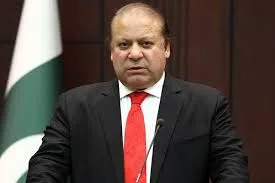
Lahore, April 27: Pakistan’s former Prime Minister Nawaz Sharif is poised to reclaim the leadership of the ruling PML-N next month, aiming to navigate the party through internal challenges, seven years after stepping down due to a Supreme Court disqualification.
Nawaz, aged 74, is expected to be elected president of the party on May 11 during a meeting of party leaders, according to a senior Pakistan Muslim League-Nawaz (PML-N) official. In 2017, Nawaz was disqualified by the Supreme Court of Pakistan as prime minister and party president over allegations of corruption exposed in the Panama Papers. He relinquished his positions within the party following the disqualification, which also led to his removal from the prime minister’s office. Rana Sanaullah, PML-N Punjab president, announced during a press conference that the decision to reinstate Nawaz as party president was made at a recent party meeting. “A resolution was passed today to reinstate Nawaz Sharif as PML-N president to rectify the injustice he faced in 2017 by the Supreme Court,” Sanaullah stated. The party intends to invite Nawaz to accept the presidency upon his return from a private visit to China, where he is currently. “Nawaz Sharif was unfairly removed from the party presidency through a conspiracy. Now that Nawaz has been acquitted in all corruption cases, he should resume leadership of the party,” Sanaullah emphasized, highlighting plans for party reorganization under Nawaz’s guidance. This development arises amidst internal tensions within the ruling party both at the provincial and federal levels, as reported by The Express Tribune. Several prominent figures within the party, including Sanaullah himself, have voiced criticisms regarding cabinet formations and the party’s alignment with the establishment, straying from its “vote ko izzat do” (respect the vote) slogan. Such expressions of discontent have impacted the party’s reputation as a proponent of democracy. After returning to Pakistan following a four-year self-exile in London last October, Nawaz was acquitted in major corruption cases, reportedly with the support of the influential military establishment. Although poised for a potential fourth term as prime minister, his party failed to secure a clear majority in the National Assembly during the February 8 general elections. Subsequently, Nawaz endorsed his younger brother and current party president Shehbaz Sharif, perceived as favorable to the military establishment, to lead a six-party coalition government at the federal level.