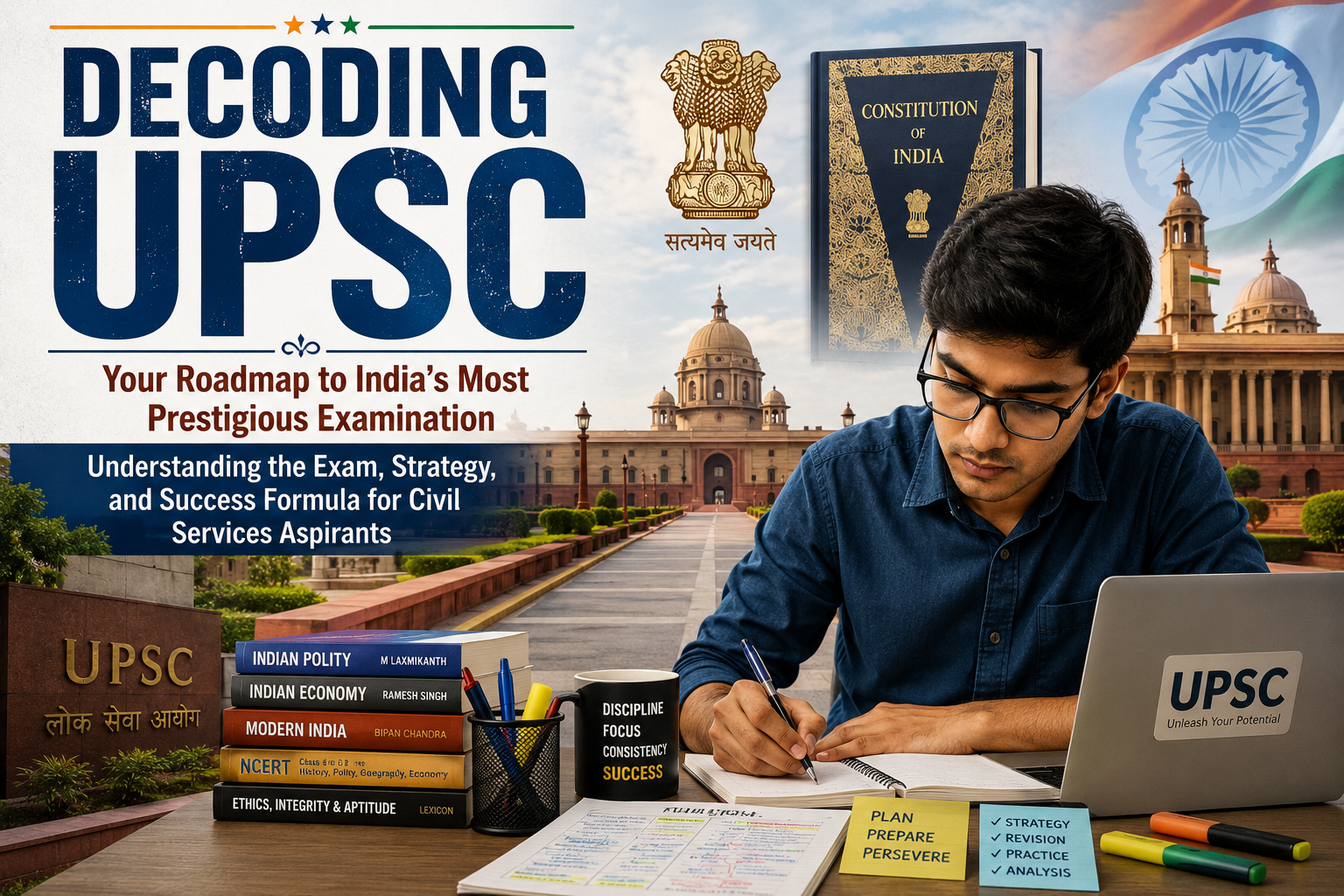
The Union Public Service Commission (UPSC) examination is a gateway to prestigious positions in the civil services of India. With its rigorous selection process, the UPSC demands specific qualities and competencies from aspirants. Understanding what UPSC truly demands is essential for aspirants to tailor their preparation effectively. Let’s delve into the core requirements of the UPSC examination.
- In-depth Knowledge: UPSC expects aspirants to possess a comprehensive understanding of various subjects. It goes beyond surface-level information and demands a deep grasp of concepts, theories, and their practical application. Aspirants must focus on building a strong foundation in subjects like history, geography, economics, polity, and current affairs.
- Analytical and Critical Thinking: The UPSC examination aims to assess an aspirant’s ability to analyze complex issues critically. Aspirants must develop strong analytical skills, evaluate diverse viewpoints, and present a balanced perspective. This demands the ability to analyze problems, connect dots, and arrive at logical conclusions.
- Clarity of Expression: Effective communication is paramount for aspiring civil servants. UPSC seeks individuals who can express their thoughts clearly, concisely, and convincingly. Aspirants must hone their writing and verbal skills to articulate their ideas effectively, as both the written and interview stages assess this aspect.
- Current Affairs Awareness: Being well-versed in current affairs is crucial for UPSC aspirants. They must stay updated with national and international news, government policies, socio-economic issues, and emerging trends. Aspirants should read newspapers, follow reliable news sources, and participate in discussions to enhance their awareness and analysis of current events.
- Adaptability and Flexibility: UPSC aims to identify individuals who can adapt to diverse situations and work under challenging circumstances. The examination demands aspirants to be flexible in their approach, open to different perspectives, and willing to learn and unlearn. Developing a growth mindset and embracing change is vital for success.
- Ethical and Moral Integrity: Integrity and ethical conduct are non-negotiable qualities for civil servants. UPSC looks for aspirants with a strong moral compass, honesty, and ethical values. Aspirants should cultivate a sense of integrity, display empathy towards society, and demonstrate a commitment to serving the nation selflessly.
- Discipline and Consistency: UPSC demands discipline and consistency from aspirants throughout their preparation journey. Aspirants must devise a well-structured study plan, adhere to it diligently, and maintain a consistent approach. Regular revision, practice, and self-evaluation are essential for achieving success in this highly competitive examination.
- Leadership and Decision-making: Civil services require individuals who can lead and make sound decisions. UPSC seeks aspirants who demonstrate leadership qualities, effective decision-making skills, and the ability to handle responsibilities. Aspirants should develop these attributes through active participation in extracurricular activities, volunteer work, and group discussions.
Conclusion: Cracking the UPSC examination demands more than just academic knowledge. It requires a holistic approach, combining intellectual abilities, moral integrity, effective communication, and adaptability. Aspirants must understand and fulfill the demands of UPSC to increase their chances of success. By embracing these qualities and traits, aspirants can embark on a rewarding journey of serving the nation through the civil services.