

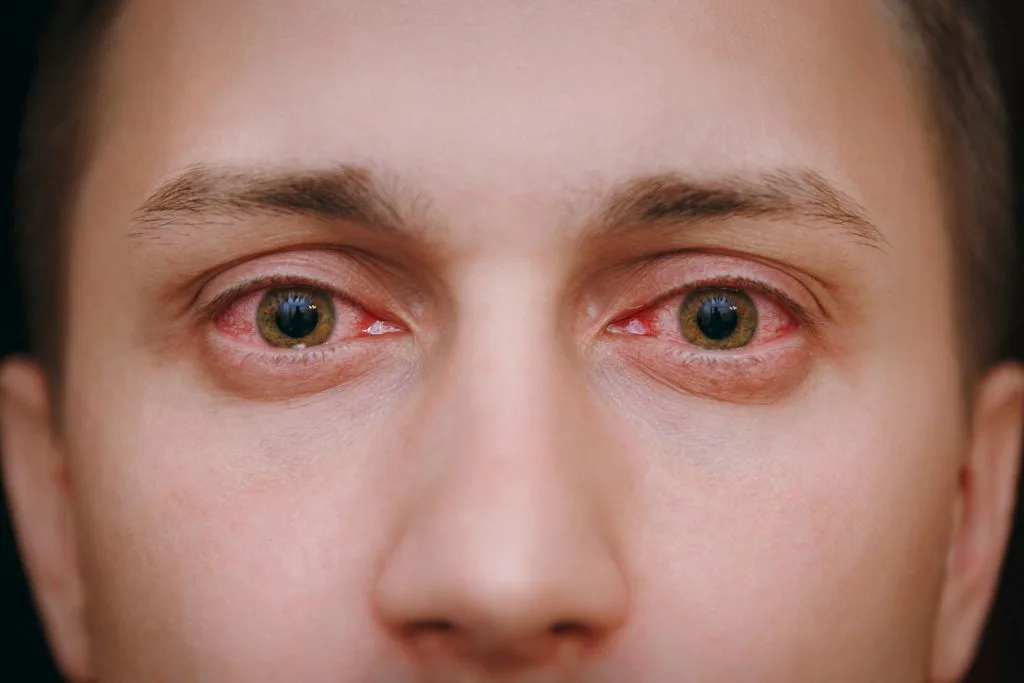
Air pollution, long known for causing respiratory and cardiac diseases, is now being flagged by medical experts as a serious risk to eye health, with hospitals reporting a sharp rise in cases of eye infections, allergies, dryness and vision-related problems, particularly during winter months.
Doctors say fine particulate matter, especially PM2.5, is the main cause behind problems such as allergic conjunctivitis, scratches on the eye surface, irritation, blurred vision and increased sensitivity to light.
“Every winter, we see a significant rise in patients complaining of red, itchy, watery and burning eyes. The main reason is high air pollution, especially fine particles known as PM2.5,” said Dr Ajay Sharma, Co-founder of Eye Q Eye Hospital.
He explained that PM2.5 consists of tiny particles released from vehicle emissions, dust, burning waste and firecrackers. Due to their extremely small size, these particles easily enter the eyes and settle on the cornea — the transparent front layer of the eye.
“Solid particles irritate and scratch the surface of the eye, while liquid pollutants carry chemicals that mix with tears and weaken the eye’s natural protective layer. This leads to dryness, irritation, blurred vision and increased sensitivity to light,” Dr Sharma said.
He added that children, elderly people, office-goers and patients who have recently undergone eye surgery are particularly vulnerable during the winter smog season.
Dr Taru Dewan, Head of the Department of Ophthalmology at RML Hospital, said winter pollution is especially harmful because smog lingers in the atmosphere for long periods.
“As smog engulfs the city, the eyes bear the brunt along with respiratory illnesses. We are seeing many patients with allergic conjunctivitis of varying severity. Cases of eye dryness also worsen due to constant exposure to smoke,” she said.
She also warned that the risk of eye infection increases when people rub their eyes with unclean hands. “I advise my patients to avoid polluted environments as far as possible and maintain proper hygiene. While individuals cannot control pollution alone, reducing pollution at one’s own level can collectively make a difference,” she added.
Dr Umesh Bareja, Senior Consultant (Ophthalmology) at Sitaram Bhartia Hospital, said eyes, being constantly exposed organs, are directly affected by pollution.
“The most common condition is allergic conjunctivitis, which causes redness, irritation and watering. Pollution also aggravates dry eye disease, especially in people who stare at screens for long hours or use contact lenses,” he said.
Dr Bareja also flagged smoking as a major risk factor. “Even passive smoking damages eye health. Smoking increases the risk of cataract, glaucoma, uveitis and macular degeneration,” he warned.
He stressed that public awareness and strong policy measures are needed to curb vehicular and industrial pollution, burning of waste and coal, deforestation and unregulated construction activity, adding that tobacco consumption should be avoided at all costs.
Dr JS Bhalla, North India Representative in the Scientific Committee of the All India Ophthalmological Society (AIOS), said both indoor and outdoor air pollution contribute to serious eye diseases.
“High levels of PM2.5, while linked to neurological and heart diseases, can also contribute to adult and childhood glaucoma. We are witnessing nearly a 30 per cent increase in dry eye patients in outpatient departments,” said Dr Bhalla, who is also a senior consultant at Perfect Eye Centre, Delhi.
Offering practical advice, Dr Anshika Luthra Sharma, Ophthalmologist and Cornea, Cataract and Refractive Surgeon at Eye Q Eye Hospital, said simple precautions can significantly reduce the impact.
“People should wear wrap-around glasses when stepping outdoors, wash their face and eyes with clean water after returning home, avoid rubbing their eyes, stay well-hydrated and limit outdoor exposure on high-pollution days. If symptoms persist, they should consult an eye specialist instead of self-medicating,” she said.

