

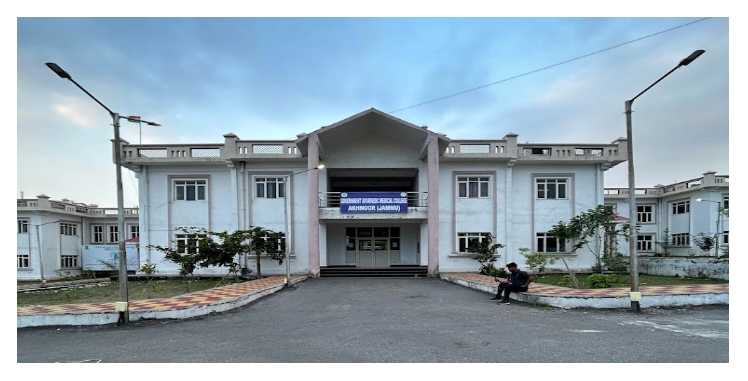
Despite Courses Commencing, PG Programme at GAMC Akhnoor Faces Scrutiny Over Faculty Eligibility and Process Lapses
The introduction of postgraduate (PG) courses at Government Ayurvedic Medical College, Akhnoor has come under intense scrutiny following the surfacing of official records that point to serious procedural irregularities, questionable faculty deployments, and alleged misrepresentation before statutory and administrative authorities. Notably, the PG courses have already commenced.
According to documents accessed by this newspaper, a medical officer appointed during 2016–17 as Nodal Officer for the limited purpose of coordinating the commissioning of the college continued to exercise wide-ranging administrative and academic control well beyond the original mandate. While the position was intended to be temporary and strictly administrative, records indicate that it gradually evolved into a centre of authority influencing faculty postings and academic proposals.
GAMC Jammu was established in 2017 with medical officers deputed from various dispensaries on academic arrangement. These arrangements were discontinued when the college shifted to Akhnoor in 2021, and the officers were repatriated to their parent postings. However, official correspondence suggests that the Nodal Officer continued at the institution despite the absence of a clear sanction for any permanent academic role.
The controversy deepened with the submission of proposals to start PG courses in seven Ayurveda subjects. Departmental communications and replies obtained under the RTI Act clearly state that PG Medical Officers are not eligible for postgraduate teaching under the norms prescribed by the National Commission for Indian System of Medicine. Despite this position, documents show that PG Medical Officers were projected as having teaching and research experience and were shown as eligible higher faculty, including Professors and Heads of Departments, in submissions made to regulatory bodies.
Government orders issued in March 2025 directed the deployment of medical officers from dispensaries to GAMC Akhnoor for the proposed PG courses. Records further reveal that on the very next working day, deployment orders were issued placing these officers—including the Nodal Officer himself—as Professors and Heads of Departments. These orders reportedly bore the initials of the same officer, raising serious questions about conflict of interest and the alleged misuse of administrative authority.
Additional concern has been expressed over the delay in creating sanctioned professor posts, which are considered essential for any PG programme. Instead of forwarding a separate proposal exclusively for professor positions, the administration allegedly submitted a consolidated proposal for 97 posts. Insiders describe this move as procedurally flawed and a key factor in delaying lawful recruitment.
Files also indicate that references to a “one-time relaxation” were cited in official correspondence to justify PG approvals. Subsequent clarifications from statutory authorities, however, reportedly deny granting any such relaxation for deputing PG Medical Officers as higher faculty.
Medical education experts caution that such deviations, if established, could have serious implications for the quality of postgraduate education, patient care, and institutional credibility. There is also growing concern that prolonged ad hoc arrangements have blocked fair opportunities for duly qualified postgraduate Ayurveda professionals.
With multiple government orders, RTI replies, and regulatory communications now on record—and with the PG courses already underway—the matter has triggered calls for an independent, time-bound inquiry to determine whether statutory norms were bypassed and whether authorities were misled during the approval process.

