

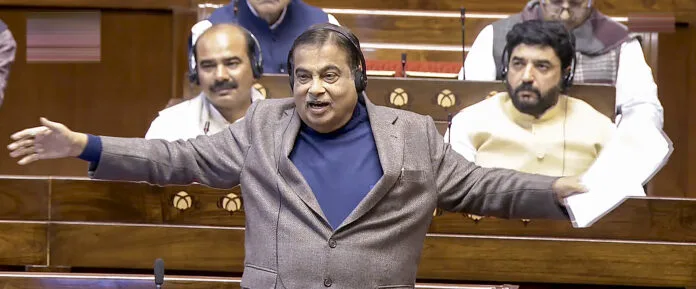
Union Minister for Road Transport and Highways Nitin Gadkari announced plans to implement the Multi-Lane Free Flow (MLFF) toll system and AI-driven highway management technology across India by the end of 2026. This innovative system aims to eliminate waiting time at toll plazas, enhancing the travel experience for millions.
During a session in Rajya Sabha, Gadkari detailed how the new tolling mechanism will leverage artificial intelligence, satellite technology, and number plate recognition. This initiative promises seamless movement for vehicles without the need to halt at toll booths. “With MLFF, commuters will not have to stop at toll plazas, allowing vehicles to pass toll points at speeds of up to 80 km per hour,” he said.
The MLFF system will replace the current FASTag mechanism. The Minister highlighted that previous toll payments could take anywhere from three to ten minutes. Now, with the existing FASTag system, those times have significantly dropped to less than a minute. “The introduction of FASTag increased our revenue by at least ₹5,000 crore,” he stated.
Gadkari emphasized the potential benefits of the MLFF system, aiming to reduce toll wait times to zero minutes. He projected substantial savings of ₹1,500 crore in fuel and an additional ₹6,000 crore in government revenue, while also completely eradicating toll leakage and theft.
“By 2026, we aim for 100% completion of this project,” Gadkari stated confidently. He reassured members of Parliament that the new system would eliminate toll theft and enhance transparency, indicating that commuters would no longer experience any delays at toll plazas.
The Minister also addressed the importance of AI-enabled technology, explaining how it would streamline travel times and improve overall efficiency on national highways. He defined the scope of the initiative, noting that the central government is responsible specifically for national highways and does not oversee state highways or city roads. “Problems related to state and urban roads often circulate on social media, leading to misinformation about national highways,” he clarified.
“We are committed to establishing a transparent, efficient, and corruption-free system for our nation’s highways,” Gadkari concluded, reinforcing the government’s dedication to modernizing India’s highway infrastructure.
This announcement serves as a major step toward enhancing the travel experience for millions of road users across India, paving the way for a future where lengthy toll waits become a thing of the past.

