

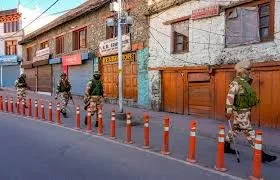
Curfew continues in Leh, Ladakh, for the third straight day as the region faces unrest following protests for statehood and constitutional protections. The Union Home Ministry held meetings to evaluate security on Friday.
No incidents of violence reported in the town, where the curfew was first imposed on Wednesday evening, after widespread protests resulted in four fatalities and over ninety injuries. The Leh Apex Body (LAB) initiated these protests demanding that Ladakh receives statehood and be included under the Sixth Schedule of the Constitution, which offers greater autonomy.
Despite the ongoing restrictions, authorities noted that the situation in Ladakh remains largely calm. They indicated plans to potentially relax curfew measures later in the day to facilitate essential activities. However, police and paramilitary forces maintain a strong presence to uphold law and order and prevent unrest.
Over fifty individuals are in detention due to their involvement in the protests, which have caused significant disruption in the region. District Magistrate Leh, Romil Singh, has ordered the closure of all government and private educational institutions for two days, underscoring the seriousness of the situation.
A high-level contingent from the Ministry of Home Affairs arrived in Leh on Thursday to assess the developments. Local authorities and officials aim to ensure peace and stability continue as the community seeks resolution.
Lieutenant Governor of Ladakh, Kavinder Gupta, emphasized the need for peace, stating, “The videos being circulated are deliberate attempts to disturb peace in Ladakh. We cannot allow the future of our youth to be compromised. Any such incidents will be dealt with under a zero-tolerance policy.” This highlights the government’s commitment to maintaining order and addressing public grievances appropriately.
The unrest in Ladakh reflects long-standing demands from local groups regarding greater autonomy and recognition. As the situation evolves, authorities strive to balance security with the community’s aspirations for self-determination.

