

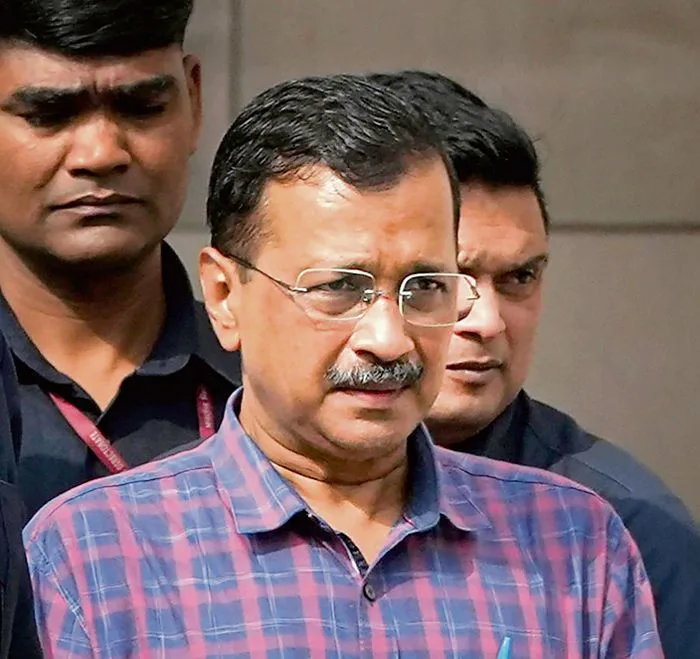
The Supreme Court, emphasizing the paramount importance of liberty, raised questions regarding the timing of Delhi Chief Minister Arvind Kejriwal’s arrest just before the general election. The court directed the Directorate of Enforcement (ED) to respond to this query among others during its submissions scheduled for May 3, 2024.
The bench, comprising Justices Sanjiv Khanna and Dipankar Datta, framed five questions for the ED to address after a two-hour hearing, during which senior advocate Abhishek Manu Singhvi presented arguments on behalf of Kejriwal. Singhvi highlighted flaws in the ED’s actions, citing statements from accused-turned-approver Sarath Chandra Reddy and provisions of relevant laws.
The court also asked the ED to address whether criminal proceedings can be initiated without adjudicatory proceedings, referring to precedents and legal procedures. Singhvi referenced statements by various accused individuals, including those not naming Kejriwal, and emphasized their relevance.
Singhvi’s arguments will continue on May 3, followed by the ED presenting its case opposing Kejriwal’s plea against his arrest and subsequent remand.
Kejriwal has challenged the Delhi High Court’s April 9, 2024, order rejecting his plea against his arrest by the ED and subsequent remand. He contends that his arrest, amidst the general election cycle, is motivated by extraneous considerations and constitutes an assault on democratic principles.
The petition by Kejriwal asserts that the statements relied upon by the ED were in its possession for nine months, questioning the timing of his arrest during the ongoing election. It describes the arrest as illegal and detrimental to democracy and federalism, integral to the Constitution’s basic structure.

