

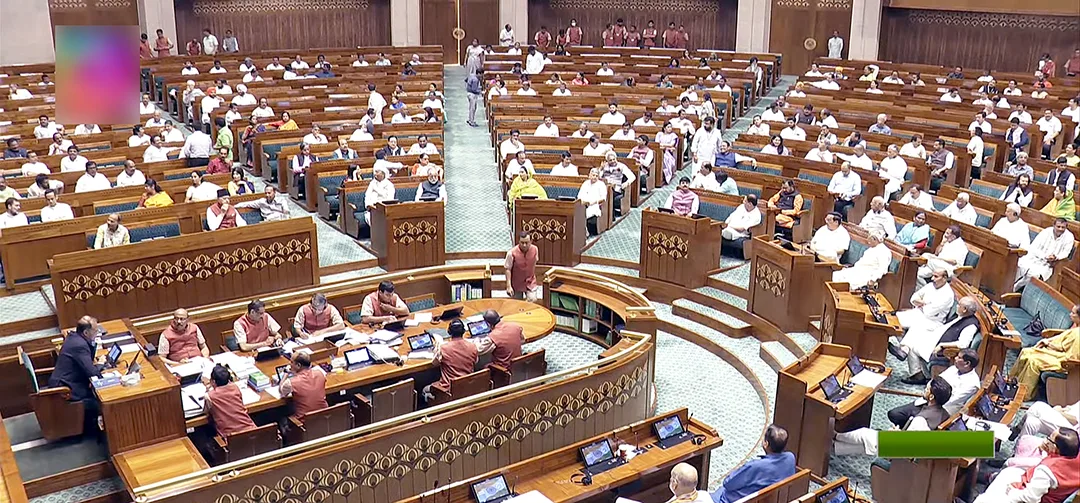
New Delhi, December 5: Union Home Minister Amit Shah is expected to present a bill amending the Jammu and Kashmir Reservation Act 2004 and the Jammu and Kashmir Reorganisation Act 2019 in the Lok Sabha on Tuesday.
The Jammu and Kashmir Reservation Act outlines provisions for reservation in state government appointments and admission to professional institutions for specific reserved categories. The proposed bill extends reservation in professional institutions to economically weaker sections. Meanwhile, the Jammu and Kashmir Reorganisation Act, 2019, facilitates the transformation of the state into the union territories of Jammu and Kashmir and Ladakh. It also raises the total seats in the Jammu and Kashmir Legislative Assembly from 83 to 90, with seven reserved for Scheduled Castes and nine for Scheduled Tribes.
Furthermore, Tuesday’s parliamentary agenda includes papers to be laid on the table by various ministers, such as Krishan Pal for the Ministry of Heavy Industries, Sanjeev Kumar Balyan for the Ministry of Fisheries, Animal Husbandry, and Dairying, and Nityananad Rai for the Ministry of Home Affairs, among others.
Nisith Pramanik is set to make a statement correcting a reply given on August 8 to an Unstarred question posed by MP Sushil Kumar Singh regarding the Vibrant Village Programme, along with providing reasons for the delay in correcting the response.
In Monday’s proceedings during the Winter Session of Parliament, two bills were passed, and standing committee reports were tabled. Notably, the Rajya Sabha approved a bill repealing the Indian Post Office Act, 1898, addressing concerns raised by opposition members about potential government surveillance. The Lok Sabha passed the Advocates (Amendment) Bill, 2023, aligning with the government’s strategy of repealing obsolete laws and amending Acts like the Legal Practitioners Act, 1879.
The government’s legislative agenda for the session includes 21 bills, featuring proposals to replace key legal frameworks such as the IPC, the Indian Evidence Act, and the CrPC.

