

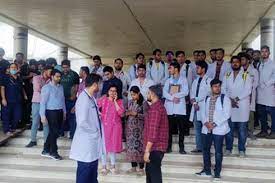
In Madhya Pradesh, a significant disruption hit state government-run hospitals’ emergency and OPD services as junior doctors, along with members of the medical teachers association, went on strike on Saturday. The protest, carried out under the banner of Junior Doctors Association (JUDA), has affected medical services in major cities like Gwalior, Indore, Jabalpur, Sagar, Rewa, and others.
The strike comes in the wake of the tragic death of Dr. Bala Saraswati, a resident of Hyderabad and a post-graduate (PG) student pursuing gynecology at Bhopal’s Gandhi Medical College (GMC). On July 31, Dr. Bala allegedly took her own life, leaving behind a suicide note that pointed to toxic work culture and harassment as the reasons for her extreme step. She was 14 weeks pregnant when she injected an overdose of anesthesia in her room in Koh-e-Fiza area, Bhopal.
The incident has raised serious concerns about the working conditions and the mental well-being of junior doctors associated with medical colleges in the state. Adequate infrastructure, a grievance redressal system, a healthy working environment, and the resolution of seat-leave bonding are among the constant demands of the protesting junior doctors.
Sadly, this is not the first time such an incident has occurred at Bhopal’s GMC. In January earlier this year, a 27-year-old junior doctor named Akanksha Maheswari, a resident of Gwalior, also died by suicide, and she, too, blamed the toxic work culture prevailing at the institution.
Dr. Nishit Vadaviya, president of JUDA at Sagar Medical College, spoke about the prevalent situation, stating, “The situation in almost all medical colleges is the same in Madhya Pradesh. We can’t even complain about harassment. The government does nothing except pressuring us to work in any condition. And if we raise our voices, they threaten to ruin our future. This is how medical colleges and government-run hospitals in Madhya Pradesh are operating.”
Dr. Ashay Dwivedi, head of junior doctors in Sanjay Gandhi Medical College (SGMC) – Rewa, highlighted the work environment’s pressures and challenges. “Situation in Rewa is worse as we have to work under acute pressure. SGMC caters to patients from five to six adjoining districts. Besides departmental pressure, we also have to handle political pressure here. Every local politician would come and harass the doctors. This toxic culture needs to be stopped now,” Dr. Dwivedi added.
The tragic incidents and the ongoing strike have shed light on the urgent need for addressing the concerns and improving the working conditions and support systems for the medical fraternity in Madhya Pradesh.

