

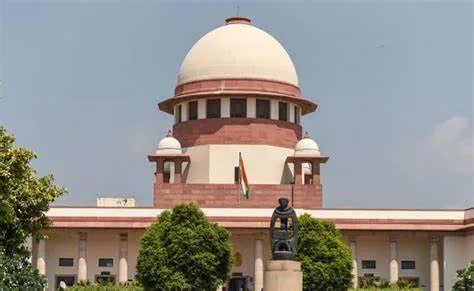
New Delhi, July 11: The Supreme Court announced on Tuesday that it will begin day-to-day hearings from August 2 on a batch of petitions challenging the abrogation of Article 370 of the Constitution, which granted special status to the former state of Jammu and Kashmir. A five-judge Constitution bench led by Chief Justice DY Chandrachud set July 27 as the deadline for the submission of written arguments and convenience compilations by the involved parties.
The bench, which includes Justices Sanjay Kishan Kaul, Sanjiv Khanna, BR Gavai, and Surya Kant, stated that hearings for the petitions will take place on a daily basis, except on Mondays and Fridays, which are designated for miscellaneous matters. The court appointed two lawyers, one representing the petitioners and the other representing the government, to prepare the convenience compilation and submit it by July 27, emphasizing that no documents will be accepted after this date.
The five-judge bench clarified that the affidavit filed by the central government on Monday regarding the post-August 5, 2019, conditions in the former state of Jammu and Kashmir does not impact the constitutional issue that will be deliberated by the Constitution bench. Senior advocate Raju Ramachandran, leading the petitioners challenging the constitutional validity of the Article 370 abrogation, informed the court that two petitioners, IAS officer Shah Faesal and activist Shehla Rashid Shora, have applied to withdraw their names from the list of petitioners.
Solicitor General Tushar Mehta, representing the government, expressed no objection to the withdrawal of their names from the petitioner’s list. The bench granted permission for Shah and Shora to have their names removed from the list.
On August 5, 2019, the central government revoked the special status of Jammu and Kashmir and bifurcated it into two union territories. Several petitions challenging the government’s decision to abrogate Article 370 and enact the Jammu and Kashmir Reorganisation Act, 2019, were referred to a Constitution bench in 2019.
The abrogation of Article 370 effectively ended the special status of Jammu and Kashmir.

