

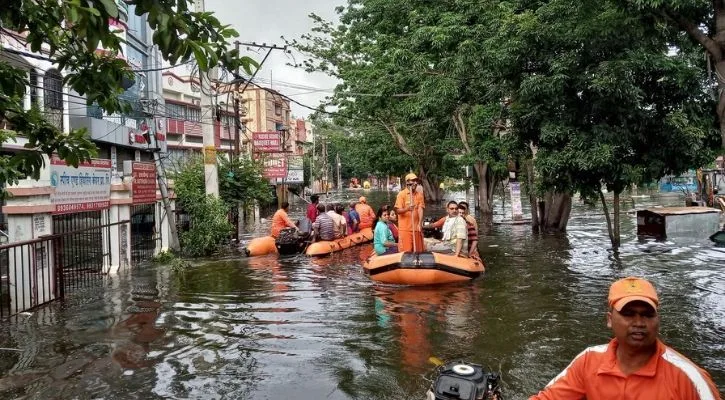
Disaster Management in India: Strengthening Resilience and Response to Emergencies
Background:
India is a country prone to a wide range of natural and man-made disasters, including floods, earthquakes, cyclones, droughts, industrial accidents, and terrorist incidents. Recognizing the need for a comprehensive approach to disaster management, India has developed a robust framework comprising legal provisions, policies, and plans to address the challenges posed by such events.
National Disaster Management Act, 2005:
The National Disaster Management Act of 2005 provides the legal foundation for disaster management in India. It establishes the institutional framework for disaster management at the national, state, and district levels. This Act empowers authorities to undertake measures for prevention, mitigation, preparedness, response, and recovery. It also emphasizes the importance of coordination and collaboration among different stakeholders involved in disaster management.
National Policy on Disaster Management, 2009:
The National Policy on Disaster Management, formulated in 2009, provides a comprehensive framework for disaster management in India. It outlines the guiding principles, objectives, and strategies for disaster risk reduction, capacity building, preparedness, response, and recovery. The policy emphasizes the integration of disaster management into development planning and highlights the importance of community participation, research, and technology in reducing vulnerability and enhancing resilience.
The National Disaster Management Plan, 2016:
The National Disaster Management Plan (NDMP), formulated in 2016, is a crucial component of India’s disaster management framework. It serves as a comprehensive reference document for all stakeholders involved in disaster management. The NDMP provides a systematic approach to disaster management, encompassing various phases of the disaster management cycle, including mitigation, preparedness, response, and recovery. It also outlines the roles, responsibilities, and coordination mechanisms among different agencies and sectors.
Disaster Management Cycle in India:
The disaster management cycle in India follows a systematic and integrated approach to address the impacts of disasters. It consists of four key phases:
- Mitigation: This phase focuses on reducing the risks and vulnerabilities associated with disasters. It includes activities such as land-use planning, construction of resilient infrastructure, early warning systems, public awareness campaigns, and capacity building. The aim is to minimize the impact of disasters on lives, property, and the environment.
- Preparedness: The preparedness phase involves strengthening the response capabilities and readiness of all stakeholders. It includes developing emergency response plans, conducting drills and exercises, establishing communication networks, stockpiling essential supplies, training emergency responders, and enhancing community resilience. The goal is to ensure a prompt and coordinated response during emergencies.
- Response: During the response phase, immediate actions are taken to save lives, provide emergency assistance, and restore essential services. This includes search and rescue operations, medical aid, evacuation, emergency relief distribution, and coordination among various agencies. The focus is on ensuring the safety and well-being of affected individuals and communities.
- Recovery: The recovery phase involves restoring normalcy, rebuilding infrastructure, and facilitating the rehabilitation of affected communities. It includes activities such as rebuilding homes, restoring livelihoods, providing psychosocial support, addressing healthcare needs, and promoting long-term resilience. The aim is to assist affected communities in their journey towards recovery and sustainable development.
Read Also: Disaster Management : Fundamentals
Conclusion: India has made significant strides in strengthening its disaster management capabilities through legal frameworks, policies, and plans. By adopting a comprehensive approach that encompasses mitigation, preparedness, response, and recovery, India aims to reduce the impacts of disasters, protect lives and livelihoods, and build a more resilient nation. Continued efforts in capacity building, research, technology adoption, and community participation are essential to further enhance India’s disaster management preparedness and response.
You can Visit NDMA site : https://ndma.gov.in/

