Category: NEW DELHI

  • New Delhi Prepares for Prime Minister Modi’s Swearing-In Ceremony

    New Delhi Prepares for Prime Minister Modi’s Swearing-In Ceremony

    The anticipation for Prime Minister Narendra Modi’s third consecutive term swearing-in ceremony has begun with the arrival of distinguished guests. Bangladesh Prime Minister Sheikh Hasina landed in the national capital on Saturday and was warmly received by Secretary (CPV & OIA), Muktesh Pardeshi.

    PM Modi’s swearing-in ceremony is scheduled for June 9, with members of his council of ministers also taking their oath on the same day. Prime Minister Hasina’s visit is a testament to the close and deep-rooted bonds of friendship between India and Bangladesh.

    Sheikh Hasina, in response to Prime Minister Modi’s invitation, left Dhaka earlier on Saturday to attend the ceremony on Sunday. Other notable leaders from neighboring and Indian Ocean region countries, including Sri Lanka, Maldives, Seychelles, Mauritius, Nepal, and Bhutan, have also accepted invitations to attend.

    The Ministry of External Affairs highlighted the significance of the event, emphasizing India’s ‘Neighbourhood First’ policy and ‘SAGAR’ vision. In addition to the swearing-in ceremony, the leaders will also participate in a banquet hosted by President Droupadi Murmu at Rashtrapati Bhavan.

    PM Modi’s outreach to neighboring leaders underscores India’s commitment to regional engagement. This gathering echoes similar initiatives in the past, such as convening SAARC leaders in 2014 and inviting BIMSTEC countries in 2019.

  • “PM Modi Slams Opposition’s EVM Allegations, Asserts NDA’s Strength in Parliamentary Address”

    “PM Modi Slams Opposition’s EVM Allegations, Asserts NDA’s Strength in Parliamentary Address”

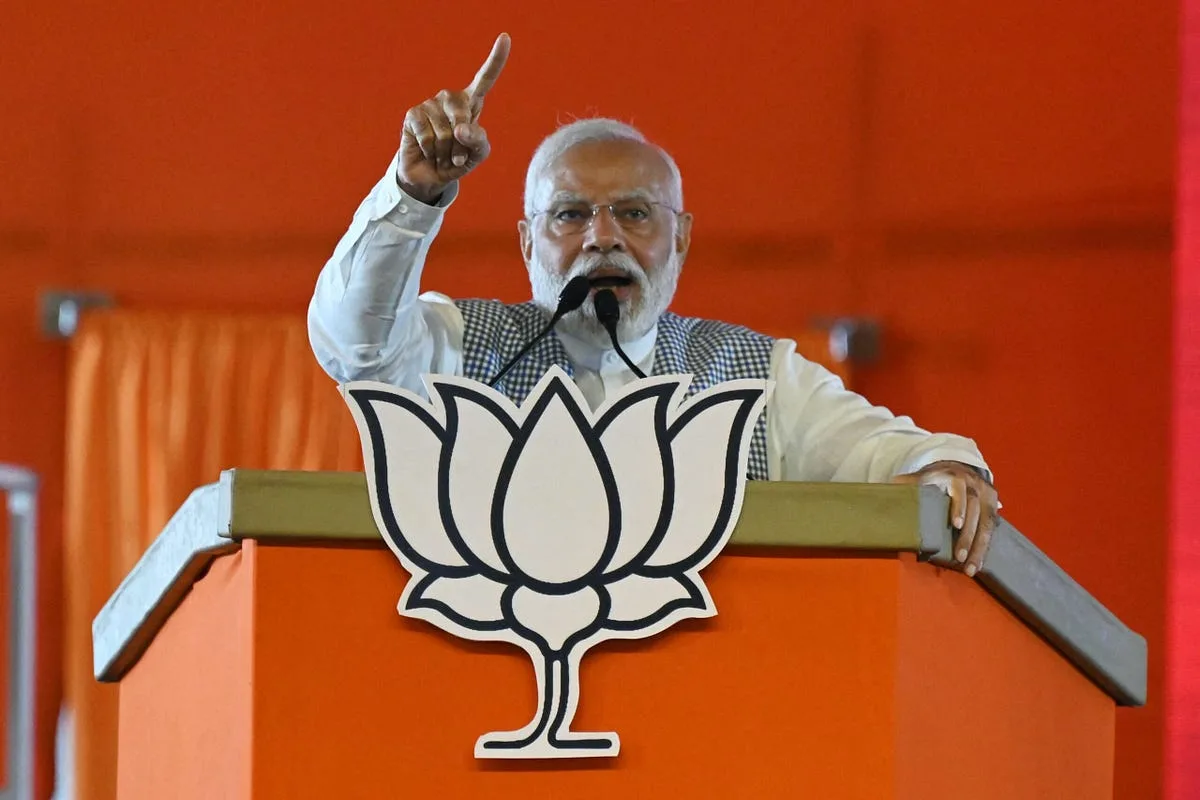
    **New Delhi, June 7:** Prime Minister Narendra Modi took a swipe at the opposition INDIA bloc on Friday, suggesting that their allegations of Electronic Voting Machine (EVM) tampering were baseless. Addressing a meeting of newly elected MPs, Modi asserted that the opposition’s attempts to cast doubt on the integrity of India’s democratic process by blaming EVMs had failed.

    “When results were coming out on June 4, I was busy with work. Phone calls started coming in later. I asked someone, numbers are fine, tell me EVM zinda hai ki mar gaya (Is the EVM dead or alive). Before 4 June, these people (opposition) were constantly blaming EVMs and they were determined to make people lose faith in the democratic process of India. I thought they would take out the funeral procession of the EVM,” PM Modi said.

    He further emphasized the strength of India’s democracy, stating, “But by the evening of June 4, unko taale lag gaye. EVM ne unko chup kar diya (EVM silenced them). This is the strength of India’s democracy, its fairness. I hope I won’t get to hear about EVM for 5 years. But when we go into 2029, perhaps they will again harp about EVM. The country will never forgive them.”

    Modi also took aim at the Congress party, highlighting their inability to secure significant seats in recent elections. He underlined the enduring trust in the NDA, expressing confidence in meeting the nation’s expectations in the coming years.

    Additionally, Modi was formally elected as the leader of the BJP, leader of NDA Parliamentary Party, and leader of the Lok Sabha. He emphasized the inclusive nature of the NDA alliance and its commitment to the nation’s welfare.

    “For me, all the leaders of all the parties are equal in the Parliament. When we talk about Sabka Prayaas, for us everyone becomes equal whether they are from our party or not. This is the reason the NDA alliance has been strong and moved ahead in the last 30 years,” he said.

    Modi also vowed to continue striving towards consensus within the NDA, asserting its status as the most successful alliance in Indian politics. He concluded by affirming the NDA’s dedication to good governance and thanked alliance leaders for their support.

    Earlier this week, leaders of parties in the NDA passed a resolution to elect Narendra Modi as their leader, paving the way for his third consecutive term as Prime Minister. According to sources, Modi is expected to take oath on June 9.

  • Modi Pledges Unanimity in NDA Decisions, Affirms ‘Nation First’ Principle

    Modi Pledges Unanimity in NDA Decisions, Affirms ‘Nation First’ Principle

    **NEW DELHI, June 7:** Modi Vows Unanimity in NDA Decisions, Emphasizes ‘Nation First’ Principle

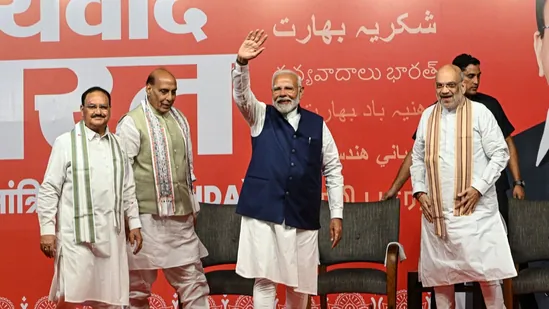
    Prime Minister Narendra Modi, chosen by the BJP-led National Democratic Alliance (NDA) as their leader for a third consecutive term, pledged to prioritize unanimity in all government decisions. He underscored the NDA’s commitment to the principle of ‘nation first’, portraying the alliance as an organic coalition.

    Modi articulated his vision for the next decade, focusing on good governance, development, enhancing quality of life, and minimizing interference in the lives of ordinary citizens. He emphasized mutual trust as the cornerstone of the alliance, highlighting their dedication to the principle of ‘sarv pantha sambhava’ (equality of all sects).

    Congratulating the victorious NDA leaders in the Lok Sabha elections, Modi expressed gratitude to the countless ground-level workers whose efforts contributed to the alliance’s success.

    He lauded the NDA as the most successful alliance in the nation’s history, having completed three terms and now embarking on its fourth. Modi emphasized that the NDA is not merely a coalition formed to attain power but is deeply committed to the principle of prioritizing the nation’s interests above all else.

  • NDA MPs Gather to Elect Narendra Modi as Leader for Third Term

    NDA MPs Gather to Elect Narendra Modi as Leader for Third Term

    **NEW DELHI, June 7:** NDA MPs Gather to Elect Narendra Modi as Leader for Third Term

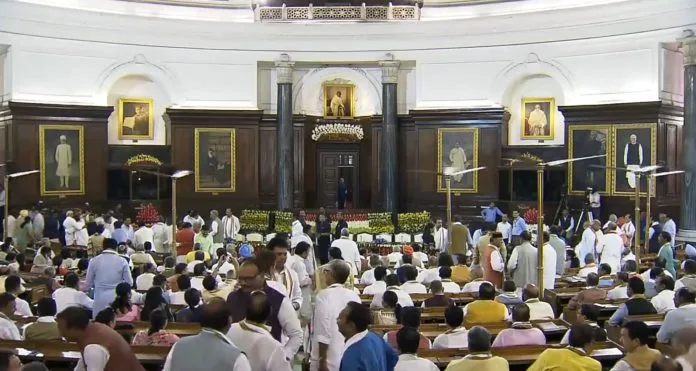
    Newly elected MPs of the BJP-led National Democratic Alliance convened at the Parliament complex on Friday to endorse Narendra Modi as their leader, paving the way for his oath-taking ceremony for a third consecutive term as Prime Minister.

    In addition to NDA MPs, senior leaders from the alliance, including chief ministers, participated in the meeting where BJP president J P Nadda proposed a resolution affirming support for Modi’s leadership, which is expected to be endorsed by allies and MPs.

    Following Modi’s election as the leader of NDA MPs, prominent members of the alliance, such as TDP’s N Chandrababu Naidu, JD(U)’s Nitish Kumar, and Shiv Sena’s Eknath Shinde, are scheduled to accompany the Prime Minister in a meeting with President Droupadi Murmu to present the list of parliamentarians supporting him, according to sources within the alliance.

  • PM Modi Praises India’s Education Sector Amid QS World University Ranking Success

    PM Modi Praises India’s Education Sector Amid QS World University Ranking Success

    NEW DELHI, June 7: Prime Minister Narendra Modi Highlights India’s Rise in QS World University Rankings

    Prime Minister Narendra Modi expressed pride in India’s education sector as reflected in the latest QS World University Rankings. Modi vowed to further enhance research and innovation in his government’s third term.

    “Over the last decade, we have focused on qualitative changes in the education sector. This is reflected in the QS World University Rankings. Compliments to the students, faculty, and institutions for their hard work and dedication. In this term, we want to do even more to boost research and innovation,” the PM stated.

    India’s prestigious institutions, including the Indian Institutes of Technology (IITs) Bombay and Delhi, have made significant strides in global rankings. IIT Bombay climbed 31 ranks to secure the 118th position, while IIT Delhi improved by 47 points to claim the 150th position globally. Meanwhile, the University of Delhi stood out for the employability of its graduates, ranking 44th globally in “employment outcomes.”

    With 46 universities represented in the QS rankings, India’s higher education system ranks seventh globally and third in Asia, following Japan and China (Mainland). Over the last decade, India has witnessed a remarkable 318% increase in its representation, registering the highest growth among G20 nations, according to QS officials

  • Supreme Court: Payment of Compensation Shouldn’t Reduce Sentence in Criminal Cases

    Supreme Court: Payment of Compensation Shouldn’t Reduce Sentence in Criminal Cases

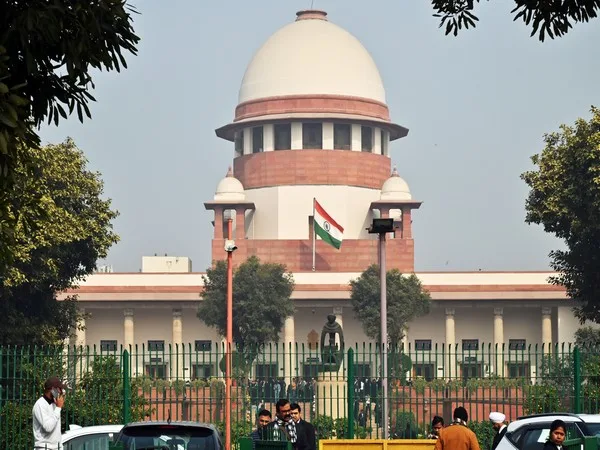
    New Delhi, June 6: The Supreme Court has issued a stern warning against the consideration of compensation payments as a means to reduce sentences in criminal cases, stating that such a practice would have a “catastrophic” impact on the criminal justice system.

    According to the apex court, the purpose of compensating victims in criminal cases is to aid in their rehabilitation, not to serve as a means for offenders to buy their way out of justice. Section 357 of the Code of Criminal Procedure (CrPC) allows courts to award compensation to victims during the conviction process.

    A bench comprising Justices J B Pardiwala and Manoj Misra emphasized that compensation should not influence the imposition of a punitive sentence on the accused. They stressed that victim compensation is restitutory and unrelated to the punitive nature of sentencing.

    The court underscored the significance of Section 357, highlighting its role in ensuring that victims are not neglected in the criminal justice system. It emphasized that while punishment of offenders is necessary, it may not provide adequate solace to victims or their families.

    In a specific case where the Gujarat High Court reduced a five-year sentence to four years and offered the option of avoiding jail time with a compensation payment of Rs 2.50 lakh, the Supreme Court intervened. Acknowledging that the convicts had already deposited Rs 5 lakh, the court declined to impose further jail time but directed each respondent to deposit an additional Rs 5 lakh, totaling Rs 10 lakh.

  • Political Landscape Transformed: 2024 Lok Sabha Elections Witness Surge in Party Participation

    Political Landscape Transformed: 2024 Lok Sabha Elections Witness Surge in Party Participation

    New Delhi, June 6, 2024

    In a significant shift in India’s political landscape, the 2024 Lok Sabha elections saw a remarkable increase in the number of participating political parties, marking a vibrant democratic exercise. According to data compiled by the prominent think-tank PRS, candidates from 41 different parties secured seats in the parliament, showcasing a notable rise from the 36 parties represented in the 2019 general election.

    National parties asserted their dominance, clinching 346 seats, comprising 64 per cent of the total tally. Meanwhile, state-recognized parties secured 179 seats, constituting 33 per cent of the parliamentary representation. Additionally, unrecognised parties secured 11 seats, while independents emerged victorious in seven constituencies.

    An analysis conducted by the poll rights body Association for Democratic Reforms (ADR) revealed a staggering 104 per cent surge in the number of political parties participating in the electoral process from 2009 to 2024. In the latest election cycle, a total of 751 parties contested, compared to 677 in 2019, 464 in 2014, and 368 in 2009, reflecting a growing pluralism in India’s political arena.

    The ADR, in collaboration with the National Election Watch, meticulously reviewed the self-sworn affidavits of 8,337 candidates vying for parliamentary seats. The candidate pool included 1,333 nominees from national parties, 532 from state parties, 2,580 from registered unrecognised parties, and 3,915 independent candidates, illustrating the diversity and complexity of India’s electoral landscape.

    The Bharatiya Janata Party (BJP) emerged as the largest party in the 18th Lok Sabha, securing an impressive 240 seats. Trailing behind is the Indian National Congress, which garnered 99 seats, followed by the Samajwadi Party with 37 seats.

    The unprecedented surge in political party participation signifies a dynamic shift in India’s democratic fabric, underscoring the evolving aspirations and pluralistic ethos of the electorate.

  • **Supreme Court Denies Urgent Listing of Kejriwal’s Interim Bail Extension Plea**

    **Supreme Court Denies Urgent Listing of Kejriwal’s Interim Bail Extension Plea**

    NEW DELHI, May 29: Supreme Court Refuses Urgent Listing of Arvind Kejriwal’s Plea for Interim Bail Extension

    The Supreme Court registry declined urgent listing of Delhi Chief Minister Arvind Kejriwal’s plea seeking a seven-day extension of his interim bail for medical tests.

    The apex court registry rejected the application, citing Kejriwal’s liberty to approach the trial court for regular bail, deeming the plea not maintainable.

    On Tuesday, a vacation bench, comprising Justices JK Maheshwari and KV Viswanathan, acknowledged senior advocate Abhishek Singhvi’s submissions for the chief minister. They suggested that the decision on listing the interim plea could be taken by the Chief Justice of India, as the judgment in the main matter had been reserved.

    Kejriwal has requested a seven-day extension of his interim bail to undergo various medical tests, including a PET-CT scan, due to sudden and unexplained weight loss coupled with high ketone levels, which could indicate serious health conditions such as kidney ailments, cardiac issues, or cancer.

    In his fresh plea filed on May 26, the chief minister expressed his intention to surrender before jail authorities on June 9 instead of the initially scheduled date of June 2.

    The top court had granted Kejriwal a 21-day interim bail on May 10, allowing him to campaign for the Lok Sabha polls. He was arrested in a money laundering case linked to the Delhi government’s excise policy ‘scam’ for 2021-22.

    Kejriwal was directed to surrender on June 2, a day after the last phase of the seven-phase poll concluded.

    The case pertains to alleged corruption and money laundering in the formulation and execution of the Delhi government’s now-scrapped excise policy for 2021-22

  • **Controversy Erupts as Congress Leader Apologizes for Remark on 1962 India-China War**

    **Controversy Erupts as Congress Leader Apologizes for Remark on 1962 India-China War**

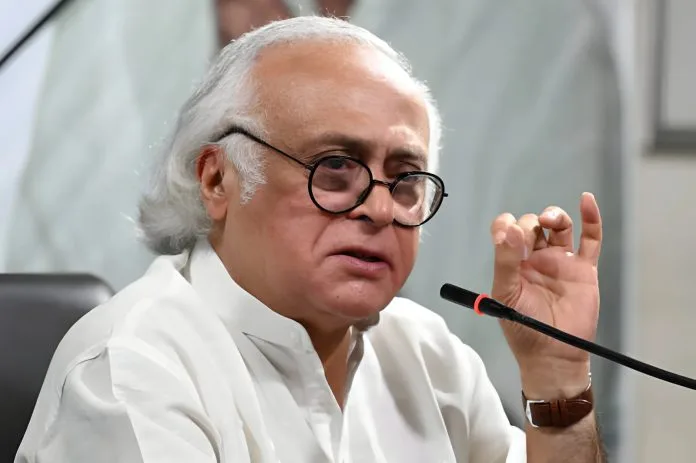
    Following Congress leader Mani Shankar Aiyar’s controversial remark referring to the 1962 India-China war as an “alleged invasion,” Jairam Ramesh clarified on Wednesday that Aiyar has apologized for his statement, and the party distances itself from his original phraseology.

    Jairam Ramesh also criticized Prime Minister Modi for his handling of the 2020 India-China face-off in Ladakh’s Galwan Valley, accusing him of giving a “clean chit” to the Chinese, which weakened India’s negotiation position.

    In a post on X, Jairam stated, “Mr. Mani Shankar Aiyar has subsequently apologized unreservedly for using the term ‘alleged invasion’ mistakenly. Allowances must be made for his age. The INC distances itself from his original phraseology. The Chinese invasion of India that began on October 20, 1962, was for REAL. So too were the Chinese incursions in Ladakh in early May 2020 in which 20 of our soldiers were martyred and the status quo disturbed.”

    “The outgoing PM, however, gave a clean chit publicly to the Chinese on June 19th, 2020, seriously weakening our negotiating position. 2000 sq km of territory including Depsang and Demchok remain out of bounds for Indian troops,” Jairam Ramesh added.

    The 1962 Indo-China War took place between October and November of 1962, during which Chinese troops attacked across the ‘MacMohan line’ and captured the Aksai Chin region, which belongs to India.

    Addressing the press conference on Tuesday, Mani Shankar Aiyar said, “In October 1962, the Chinese allegedly invaded India.”

    Earlier this month, Aiyar stirred controversy after an interview clip of his went viral, wherein he referred to Pakistan as a “respected nation” that possesses an atom bomb, suggesting the need for dialogue with them. He also criticized India for not making efforts to reach out to Pakistan in the last ten years.

  • Congress Criticizes Agnipath Military Recruitment Scheme as National Security Threat

    Congress Criticizes Agnipath Military Recruitment Scheme as National Security Threat

    The Congress party has launched a scathing attack on the Modi government, branding the Agnipath military recruitment scheme as a “national security threat.” Congress general secretary Jairam Ramesh asserted that the scheme, if continued, could compromise the country’s security for the next decade.

    Ramesh’s criticism stemmed from a media report suggesting that the Department of Military Affairs is actively assessing feedback on Agniveers’ performance in the armed services to analyze the scheme’s impact and make necessary adjustments for the Army, Air Force, and Navy.

    In a statement posted on social media platform X, Ramesh highlighted concerns about the scheme’s reduction in recruitment numbers from 75,000 to 46,000 per year. He warned that this shortfall in personnel, combined with the limited six-month training period for Agniveers, poses significant security risks, particularly along the Eastern Ladakh border with China.

    Ramesh attributed the current situation to a policy decision made by the Modi government without adequate foresight or consultation, despite opposition from the three Army chiefs. He criticized the government’s prioritization of personal agendas over national security interests.

    The Congress party, led by Rahul Gandhi, has vehemently opposed the Agnipath scheme, labeling it as disrespectful to the patriotism of the armed forces and the nation’s youth. They have pledged to scrap the scheme if the INDIA bloc forms the government at the Centre.

    In defense of the scheme, Union Home Minister Amit Shah emphasized its benefits, stating that it offers attractive opportunities for youth by guaranteeing full-term jobs for Agniveers who serve a four-year tenure in the armed forces.

    The Agnipath recruitment scheme, rolled out by the government in June 2022, aims to lower the age profile of the armed services by recruiting individuals aged between 17-and-a-half and 21 for a four-year term, with an option to retain 25 percent of them for an additional 15 years.

    As political tensions escalate over the Agnipath scheme, concerns persist regarding its potential impact on national security and the future of India’s armed forces. The debate underscores the critical importance of policy decisions in safeguarding the country’s defense interests while balancing the aspirations of its youth.