Category: Education
-

NEET-UG 2026 Cancelled; Govt Orders CBI Inquiry Into Paper Leak Allegations
The National Testing Agency on Tuesday cancelled the NEET (UG) 2026 exam conducted on May 3 amid allegations of paper leak, with the government asking the CBI to carry out a comprehensive inquiry into the “irregularities”.The examination will now be re-conducted on dates to be notified separately.In a statement on X, the National Testing Agency (NTA) said the decision was taken in the interest of maintaining transparency and preserving trust in the national examination system.“On the basis of inputs subsequently examined by NTA in coordination with central agencies, and the investigative findings shared by the law enforcement agencies, the National Testing Agency, with the approval of the Government of India, has decided to cancel the NEET (UG) 2026 examination conducted on 3 May 2026, and to re-conduct the examination on dates that will be notified separately,” the agency said.The agency said the inputs received, taken together with findings shared by law enforcement agencies, established that the “present examination process could not be allowed to stand.” “The re-conducted examination dates, along with the re-issued admit-card schedule, will be communicated through the official channels of the Agency in the coming days,” it added.The NTA further said the government has decided to refer the matter to the Central Bureau of Investigation (CBI) for a comprehensive inquiry into the allegations linked to the examination.“NTA will extend full cooperation to the Bureau and will provide all materials, records, and assistance the inquiry requires,” it added.“This decision has been taken in the interest of students and in recognition of the trust on which the national examination system rests,” NTA said.The agency acknowledged that the re-conduct of the examination would cause “real and significant inconvenience” to candidates and their families, but said the decision was necessary to prevent “greater and more lasting damage” to trust in the examination system.According to the NTA, the registration data, candidature and examination centres opted for in the May 2026 cycle will be carried forward for the reconducted examination.“No fresh registration will be required, and no additional examination fee will be levied,” the statement said, adding that fees already paid by students will be refunded and the examination will be re-conducted using NTA’s internal resources.The agency said fresh examination dates and the revised admit-card schedule will be communicated through official channels in the coming days and advised candidates and parents to rely only on verified information released by the agency.The National Eligibility cum Entrance Test (NEET) was conducted by the NTA on May 3 for students seeking admission to medical education courses at the undergraduate level.In a post on X on Sunday, the NTA had said question papers were transported in GPS-tracked vehicles carrying unique, traceable watermark identifiers, while examination centres were monitored through AI-assisted CCTV surveillance from a central control room.“The National Testing Agency is aware of reports concerning the action initiated by the Rajasthan Special Operations Group in connection with alleged irregularities around NEET (UG) 2026. The examination on May 3, 2026 was conducted as scheduled and under a full security protocol,” the NTA had said.According to the agency, inputs regarding alleged malpractice activity were received on the evening of May 7, four days after the examination, and were escalated to central agencies on the morning of May 8 for “independent verification and necessary action”. (Agencies) -
JKBOSE Declares Class 12 Results; Overall Pass Percentage at 84.02
The Jammu and Kashmir Board of School Education (JKBOSE) on Tuesday announced the results of the Class 12 annual examinations, recording an overall pass percentage of 84.02, officials said.
A total of 70,735 students from the Kashmir division and the winter zones of the Jammu division appeared in the examinations, of whom 59,435 candidates qualified successfully.
Girls once again outperformed boys in the results. While the pass percentage of boys stood at 82 per cent, girls recorded a higher success rate of 86 per cent, continuing the trend of girls outperforming boys in board examinations.
JKBOSE officials described the overall performance as satisfactory and congratulated the successful candidates on their achievement.
-

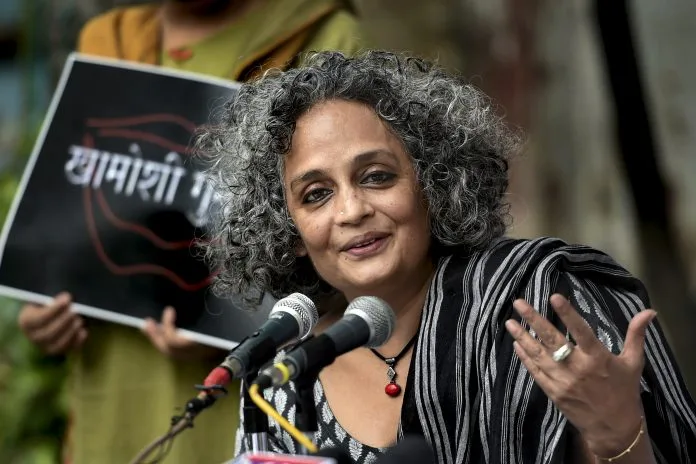
Supreme Court Dismisses Plea Seeking Ban on Arundhati Roy’s Book Over Cover Depiction
The Supreme Court on Friday dismissed a petition seeking a ban on the sale, circulation, and display of celebrated author Arundhati Roy’s book “Mother Mary Comes to Me” on the grounds that its cover portrays her smoking a bidi or cigarette, allegedly violating tobacco control laws.
A bench of Chief Justice Surya Kant and Justice Joymalya Bagchi rejected the appeal filed by one Rajasimhan challenging the Kerala High Court’s order, which had already dismissed the PIL on similar grounds.
“She is a renowned author. She has not promoted such a thing. There is a warning in the book, and she is a prominent person as well. Why do such a thing for publicity? There is no hoarding in the city with the picture of the book. It is only for someone who purchases and reads the book. Her picture does not portray any promotion,” the CJI observed.
‘No Violation of Tobacco Act’
The bench held that neither the author nor the publisher, Penguin Hamish Hamilton, had violated Section 5 of the Cigarettes and Other Tobacco Products Act (COTPA) 2003.
Section 5 explicitly prohibits:
- advertisement,
- promotion,
- sponsorship of cigarettes and tobacco products,
- direct or surrogate advertising,
- promotional displays in media or public spaces.
However, it allows health warnings on packages and limited displays at retail points.
“We see no reason to interfere with the High Court’s order,” the bench ruled.
Petitioner’s Argument Rejected
The petitioner’s counsel argued that Roy is shown smoking what could be a “ganja bidi” or a normal bidi, and that the book carries only a small disclaimer instead of a prominent health warning.
Rejecting the contention, the CJI said:
“The book, publisher or author has nothing to do with advertising cigarettes. This is not an advertisement. You may disagree with the views of the author, but that does not mean such a case can lie.”
The book is a memoir authored by Arundhati Roy
-

https://my-wpautoposter.pages.dev/
Nisa Unnirajan – The 40-Year-Old Mother Who Beat Odds and Hearing Loss to Crack UPSC
In a world where most give up after one or two failures, 40-year-old Nisa Unnirajan from Thiruvananthapuram, Kerala, turned her seventh attempt into a triumph — clearing one of India’s toughest exams, the UPSC Civil Services Examination 2024, with an All India Rank of 1000.
A mother of two young daughters and a hearing-impaired candidate, Nisa’s story stands as a resounding testament to the power of perseverance, purpose, and self-belief.
Seven Attempts, One Dream
For Nisa, the UPSC journey wasn’t a straight road. It began when she was already well into her 30s, juggling her duties as an Assistant Audit Officer in the Accountant General’s office and managing her home and children.
“Every attempt taught me something new — about the exam and about myself,” she said in an interview after her results. “It wasn’t about competing with others anymore; it was about not giving up on myself.”
Her seventh attempt in 2024 finally brought the breakthrough she had waited nearly a decade for.
Turning Disability Into Strength
Nisa’s hearing impairment — nearly 40% hearing loss — made conventional preparation methods especially challenging. Online lectures, discussions, and mock interviews were not easy to follow.
Instead, she crafted her own strategy: reading intensively, summarizing newspaper editorials, and revising notes during every free moment — from office breaks to late nights after putting her children to sleep.
“I had to find my rhythm. I couldn’t hear everything, but I could understand and retain what I read deeply,” she shared.
Her discipline and quiet determination soon turned her limitation into a form of strength — sharpening her concentration and focus.
Balancing Roles: Officer, Mother, and Dreamer
Between office deadlines and parenting duties, Nisa’s study schedule often began after midnight. Her husband and parents played a crucial role in supporting her dream — managing household responsibilities and encouraging her to keep trying.
Her daughters, Nandana and Thanvi, often studied beside her, unaware that their mother was chasing one of India’s most competitive dreams. “I wanted them to see that persistence matters — that even failure can be part of success,” she said.
Inspiration and Impact
Her achievement has inspired thousands across India, especially women who believe that age, family responsibilities, or physical challenges limit their aspirations.
Even Shashi Tharoor, MP from Thiruvananthapuram, took to social media to celebrate her journey, writing:
“It’s never too late — an inspiring story! A 40-year-old disabled mother from Thiruvananthapuram cracked the IAS while raising two kids.”
Her success has become a beacon for differently-abled aspirants and late starters who dream of a place in the country’s top civil services.
A New Chapter Begins
With her selection, Nisa Unnirajan is set to enter the Indian Administrative Service under the hearing-impaired quota. But beyond the rank and the title, her story speaks to something larger — the victory of resilience over circumstance.
In her own words:
“There were days I doubted everything. But every time I thought of giving up, I remembered why I started.”
For thousands of UPSC aspirants across the nation, that reminder might be all they need to keep going.
-

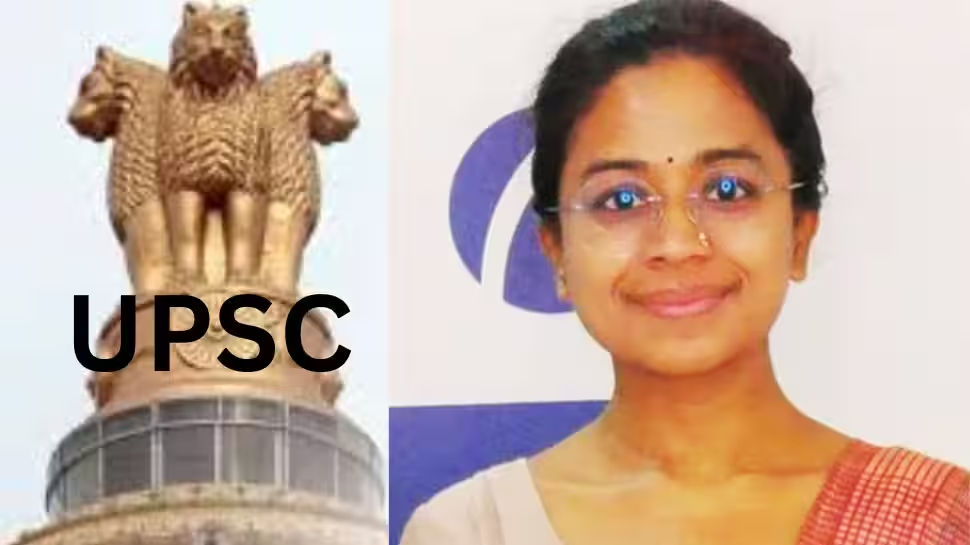
S. Aswathy Techie to IAS: The Inspiring Journey
When most young professionals chase promotions and pay hikes in the corporate world, S. Aswathy dared to take a different route. Once a software engineer with Tata Consultancy Services (TCS), she left behind the comfort of a stable IT job to prepare for India’s toughest exam—the UPSC. Today, she proudly serves as an IAS officer, proving that courage and persistence can turn even the boldest dreams into reality.
From Coding to Public Service
S. Aswathy decision to switch careers was more than just a professional move—it was about finding purpose. “Corporate life gave me stability, but my heart was never there. I wanted to work with people and make a difference in their lives,” she says.
Balancing a demanding IT schedule with late-night study sessions soon became overwhelming. She eventually took the tough call to resign and dedicate herself fully to UPSC preparation.https://himalayanexpress.in/
The Road Wasn’t Easy
Her journey wasn’t smooth. She faced failures, doubts, and the pressure that every aspirant knows too well. But instead of giving up, she treated each setback as a lesson. “Every attempt taught me something new—about the exam, about resilience, and about myself,” Aswathy reflects.
With a focused strategy—fixed study hours, disciplined revision, and rigorous mock tests—she slowly built her confidence. The support of her family and peers played a vital role in keeping her motivated.
A Story of Grit and Determination
Today, S. Aswathy stands as a shining example for UPSC aspirants across the country. Her journey from writing code to serving the Constitution is a reminder that passion, patience, and perseverance can overcome the toughest challenges.https://himalayanexpress.in/ -

UGC Declares 54 State Private Universities Defaulters
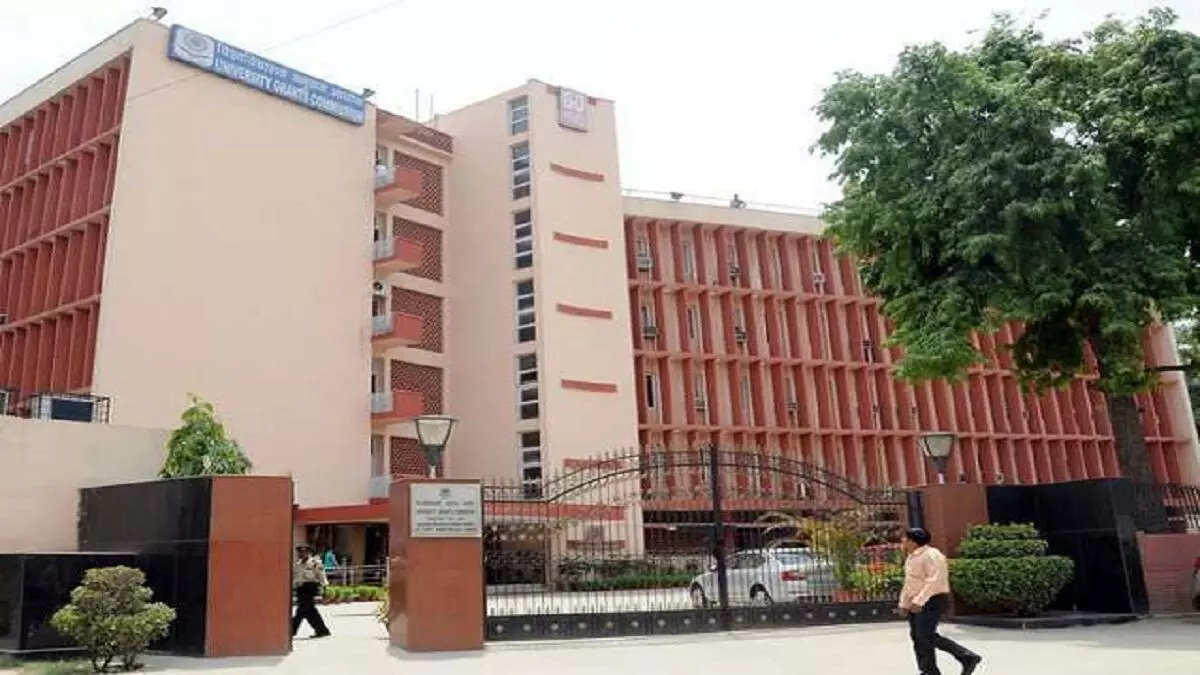
At least 54 state private universities have been declared defaulters by the University Grants Commission (UGC) for not submitting mandatory information under section 13 of the UGC Act, 1956, and making public disclosures on their website, according to officials.
Citing several reminders through e-mails and online meetings, the UGC said the universities had been directed to submit detailed information for inspection purposes, along with supporting documents duly attested by the registrar.
“They were also directed to upload the filled-in format and appendices on their website by giving a link on the home page so that the information is accessible to the students and the general public. The above was followed by several reminders through e-mails and online meetings,” UGC Secretary Manish Joshi said.
According to the guidelines on public self-disclosure, the higher education institutions must maintain a functional website for imparting information to stakeholders. “The information disclosed on the website should be easily accessible to everyone, on the home page, without any need for registration or login.
Additionally, there should be a ‘search’ facility available for easy navigation,” the guideline stated. Madhya Pradesh at 10 had the maximum number of defaulter universities, followed by Gujarat, Sikkim and Uttarakhand at eight, five, and four such institutions.
The UGC circulated the list of defaulting universities and warned them to take corrective steps immediately. According to UGC officials, further action could follow if the institutions continue to ignore the instructions.
The higher education regulator has tightened its monitoring of private universities in recent months. In July, it had warned 23 institutions for not appointing ombudspersons. (Agencies)