Author: Himalayan Express

  • Congress Stands Firm Against Widening Post-Facto Environmental Clearances

    Congress Stands Firm Against Widening Post-Facto Environmental Clearances

    The Congress Party on Thursday publicly committed to resisting all attempts to widen the scope of post-facto environmental clearances, reinforcing its dedication to the fundamental principles of environmental law. This resolution follows a significant ruling from the Supreme Court regarding such clearances.

    On Wednesday, the Supreme Court quashed a controversial 2021 office memorandum that allowed the government and various authorities to grant retrospective clearances for projects that commenced without prior environmental approval. The court stated that the integrity of protective environmental checks cannot be altered through administrative orders.

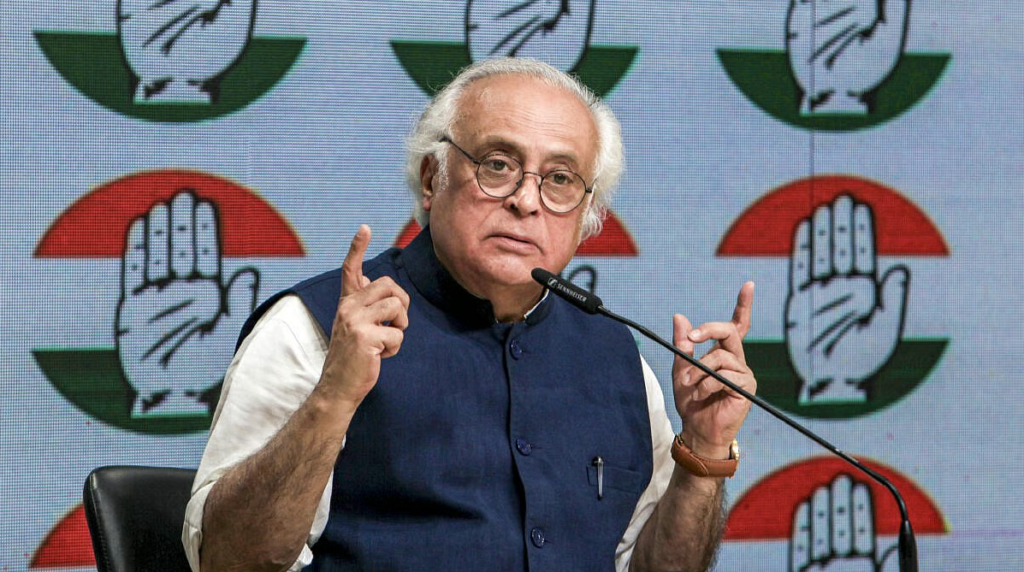
    Jairam Ramesh, Congress leader and former environment minister, highlighted that a two-judge bench of the Supreme Court had established important precedents for environmental law in May 2025. This judgment mandated that prior environmental clearance is essential and condemned the post-facto approval mechanisms introduced by the 2017 Notification and the 2021 Memorandum.

    In a detailed statement, Ramesh emphasized that these mechanisms encouraged illegal activities, undermined the statutory Environmental Impact Assessment (EIA) process, and violated the principles of sustainable development along with the right to a clean environment.

    The Union Government, attempting to challenge the judgment, argued it would disrupt numerous projects that began without the necessary environmental clearances. Ramesh expressed concern over a three-judge bench’s consideration of the review without clarifying the reasoning behind deviating from customary procedure.

    Justice Ujjal Bhuyan voiced dissent against this review, asserting that the concept of ex-post facto environmental clearance does not exist in environmental law and is incompatible with established jurisprudence.

    Ramesh celebrated the Supreme Court’s recent decision, stating that it rightfully declared that executive instructions cannot surpass statutory requirements set out in the EIA Notification. However, he cautioned that the ruling still allows the government to devise a statutory framework for post-facto environmental clearances under ‘exceptional circumstances’ — a term left for government definition.

    Highlighting a troubling trend, Ramesh pointed out various instances where local communities resisted the government’s approach to environmental law. He mentioned cases from the Great Nicobar to the Ken-Betwa project, and extractive initiatives in Chhattisgarh and Odisha, emphasizing that environmental protection is often treated as an inconvenience.“Over the last 17 years, I have supported various public campaigns against the weakening of India’s stringent environmental safeguards,” Ramesh stated.

    In its unanimous verdict, the bench comprising Chief Justice Surya Kant and Justices Joymalya Bagchi and Vipul M Pancholi agreed that the ruling would apply prospectively, thus shielding existing projects authorized under retrospective clearances from demolition or punitive actions.

    The court reaffirmed the government’s authority under Section 3 of the Environment (Protection) Act, 1986 to devise appropriate notifications concerning various non-compliant projects — a move necessary to uphold the larger public interest.

    Projects at risk include critical infrastructure like the AIIMS Medical College and Hospital in Odisha, a Centre of Excellence for Cancer Diseases in Tamil Nadu, and various slum rehabilitation efforts. These initiatives serve to tackle impending socio-economic challenges while maintaining a commitment to environmental sustainability.

    By invoking Article 142, the Supreme Court nullified the office memorandum while acknowledging two key reasons. First, it determined that prevailing uncertainty existed concerning the validity of prior instruments governing the processing and granting of environmental clearances. Second, the court noted that significant public interest arises from projects already underway or substantially developed based on existing legal frameworks.

    The Supreme Court underscored its solemn responsibility to ensure a balance between humanity’s need for development and a pollution-free environment, asserting that both rights must coexist for future generations.

    In conclusion, the court advocated for eco-centric proportionality, resonating with Gandhi’s philosophy: “The world has enough for everyone’s need, but not enough for everyone’s greed.”
  • IAF Chief Advocates Fully Indian Drone Ecosystem for Defence

    IAF Chief Advocates Fully Indian Drone Ecosystem for Defence

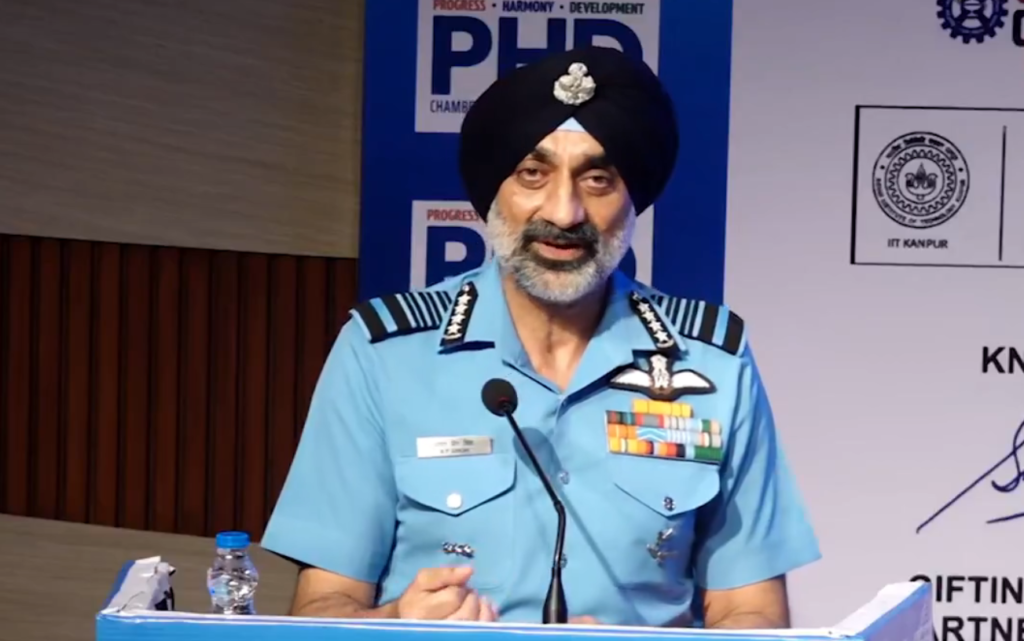
    The Indian Air Force (IAF) Chief, Air Chief Marshal Amar Preet Singh, recently urged the nation to cultivate a fully indigenous drone ecosystem to achieve true self-reliance in defence technologies. Speaking at the Bharat Drone & Robotics Manthan 3.0 conference, he outlined a roadmap for increased collaboration with domestic industries and innovators.

    Modern warfare increasingly relies on unmanned systems, requiring defense sectors to adapt quickly to emerging technologies. The Air Chief highlighted the necessity for India’s defence industry to keep pace in this competitive landscape, as indecision can lead to significant operational losses.

    Air Chief Marshal Singh pointed out that the onus of defining operational requirements rests with the users. He introduced the newly formed Directorate of Aerospace Design (DAD) as a key initiative to foster direct engagement with startups and innovators. “The problem statement has to originate from us. We have the Directorate of Aerospace Design… to interact with the industry, startups, and anyone who wants to understand our requirements,” he stated.

    To streamline evaluations, the IAF launched Dronathon 2026 scheduled for September. This initiative invites companies to showcase live product demonstrations, replacing traditional, often slower, paper presentations. This approach aims to expedite technology acquisition significantly.

    Addressing the risks of dependency on foreign supply chains, the Air Chief emphasized the critical need for local development: “Every brick should be developed in India. Then only can we claim we are fully Atmanirbhar,” he proclaimed.

    He cautioned that hurdles caused by bureaucratic delays hinder technological advancement. “Technology delayed is technology denied,” he said, pushing for a collaborative national effort that encompasses academia, regulators, investors, and manufacturers. Such coordination is essential to transition innovations from laboratories to active deployment in the field.

    Moreover, while recognizing the importance of drones, Air Chief Marshal Singh clarified that these technologies are designed to complement, not replace, manned platforms. His proactive approach opens avenues for India’s dynamic aerospace sector, transforming operational challenges into collaborative opportunities.

    “If we keep doing what we have been doing, we will get the same results. If we want different outcomes, let’s embark on a different course,” he urged, highlighting the importance of innovation and strategic adaptation in the face of evolving warfare landscapes.

  • ED conducts raids in ISIS-inspired 2022 Coimbatore car bomb blast case

    ED conducts raids in ISIS-inspired 2022 Coimbatore car bomb blast case

    The Enforcement Directorate on Thursday conducted searches at multiple locations in three states as part of a money-laundering investigation linked to alleged terror funding for the ISIS-inspired Coimbatore car explosion case of 2022, officials said.

    A total of 16 premises in Chennai and Coimbatore in Tamil Nadu, Hyderabad and Mumbai were raided since early morning, they said.

    The central agency has booked a case under the Prevention of Money Laundering Act (PMLA), taking cognisance of multiple FIRs registered by the National Investigation Agency (NIA) in connection with the suicide bomb explosion in 2022 near the Sangameshwarar temple in Coimbatore.

    The ED said the attack was carried out by Jamesha Mubeen (suicide bomber) and others as an ISIS-inspired terrorist attack using a modified car loaded with explosives.

    The accused, the ED said, funded their alleged terror activities via two methods –running a fake Covid-19 vaccine certificate programme during the pandemic, and from fraudulent investments (donations) in the Kovai Arabic College in Coimbatore, which was “deeply involved” in the radicalisation of youths.

    The Covid-19 funds were generated from people who wanted fake vaccine certificates without actual vaccination, according to the ED.

    The probe found that a dozen accused persons in the case, including Jamesha Mubeen, attended sessions of Kovai Arabic College through online or offline modes.

    They were mentored by a person named Jameel Basha, promoter of Kovai Arabic College, after which they got indoctrinated in Salafi-Jihadi ideology and conspired to commit the terror attack in support of the proscribed terror organisation ISIS, according to the agency.

    Mubeen was killed in the blast that occurred on October 23, 2022, near the Sangameswarar temple at Kottaimedu in Coimbatore.

  • Reasi Police Attach Properties of Five Pakistan-Based Terror Handlers

    Reasi Police Attach Properties of Five Pakistan-Based Terror Handlers

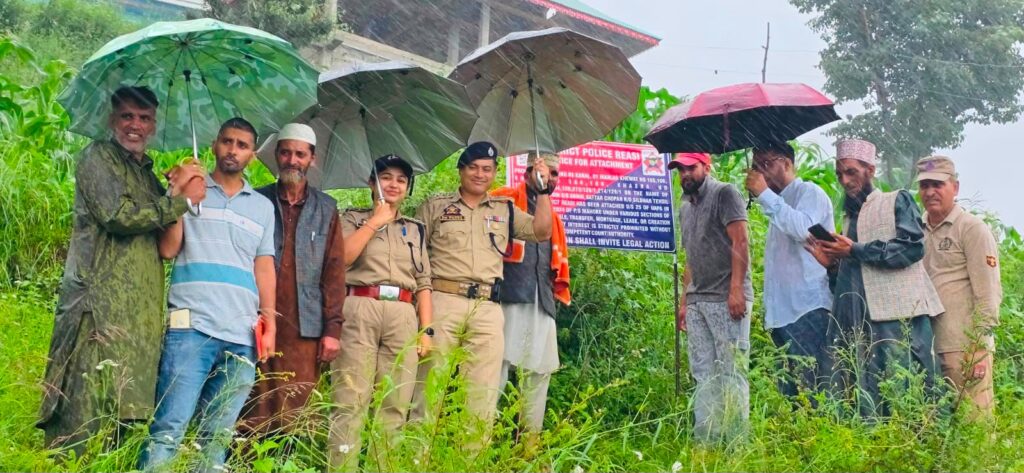
    In a major action against the terror ecosystem, Reasi Police on Thursday attached the immovable properties of five Pakistan-based terror handlers during the investigation of a terror-related case registered at Police Station Mahore.

    According to police, the action was taken in connection with FIR No. 70/2024 registered under relevant provisions of the Bharatiya Nyaya Sanhita (BNS), the Unlawful Activities (Prevention) Act (UAPA) and the Enemy Agents Ordinance/related applicable law.

    The attachment proceedings were carried out by a police team led by Sub-Divisional Police Officer (SDPO) Mahore Parul Bhardwaj, along with the Station House Officer (SHO) of Police Station Mahore, in the presence of the Executive Magistrate, Mahore, and local witnesses.

    Police attached immovable properties allegedly belonging to five accused who, according to the investigation, are currently operating from Pakistan as terror handlers. The attached properties include seven kanals of land belonging to Alaf Din of Shajroo, 10 kanals and 11 marlas belonging to Ghulam Mohammad alias Gamma of Shajroo, 17 marlas belonging to Mohammad Ashraf of Chakrass (Mulass), seven kanals and three marlas belonging to Shabir Ahmad of Chakrass (Jamsalan), and eight kanals and one marla belonging to Bihar Din of Sildhar.

    According to investigators, credible evidence established that the accused had exfiltrated to Pakistan for terrorist training and are presently operating from across the border, where they are allegedly promoting, facilitating and coordinating terrorist activities.

    The investigation further revealed that the attached properties were liable to be alienated and that the proceeds could have been used to finance and sustain terrorist operations, police said.

    Following approval from the Police Headquarters, Jammu and Kashmir, the properties were attached under the relevant provisions of the Unlawful Activities (Prevention) Act, 1967, to prevent their alleged misuse for terror financing.

    Police said the action reflects its continued efforts to dismantle the financial infrastructure supporting terrorism by targeting assets linked to terror operatives and preventing the flow of resources to anti-national elements.

    Reasi Police reaffirmed its commitment to combating terrorism through stringent legal measures and ensuring lasting peace, security and public safety in the region.

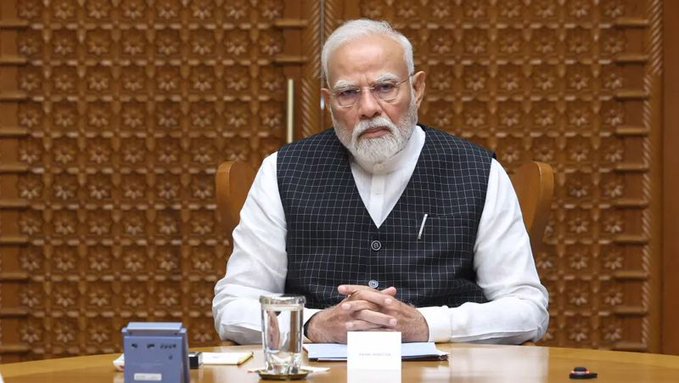
  • Prime Minister Narendra Modi chairs high-level meeting in Parliament as Rajya Sabha begins discussion on Public Examinations Amendment Bill

    Prime Minister Narendra Modi chairs high-level meeting in Parliament as Rajya Sabha begins discussion on Public Examinations Amendment Bill

    A high-level meeting chaired by Prime Minister Narendra Modi is underway in Parliament as the Rajya Sabha began discussion on the Public Examinations (Prevention of Unfair Means) Amendment Bill, 2026, amid a political confrontation between the government and the Opposition over the alleged police action against student protesters.

    Union Home Minister Amit Shah, Defence Minister Rajnath Singh, Finance Minister Nirmala Sitharaman, Leader of the House in Rajya Sabha JP Nadda, Commerce and Industry Minister Piyush Goyal, External Affairs Minister S Jaishankar, Petroleum Minister Hardeep Singh Puri, Ports, Shipping and Waterways Minister Sarbananda Sonowal, and National Security Advisor Ajit Doval are among those present in the meeting.

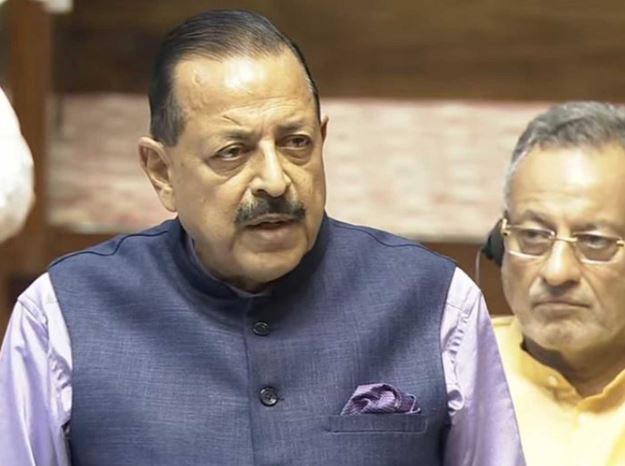
    In the Rajya Sabha, Union Minister of State Dr Jitendra Singh moved the Public Examinations (Prevention of Unfair Means) Amendment Bill, 2026 for consideration and passing.

    The Bill, which was passed by the Lok Sabha on Wednesday, seeks to strengthen the legal framework against examination-related malpractices by enhancing punishments for paper leaks, constituting a Special Task Force for investigations and providing for Special Fast Track Courts for time-bound trials.

    The Upper House is also scheduled to take up the Prevention of Insults to National Honour (Amendment) Bill, 2026, with Union Home Minister Amit Shah set to move that the Bill, as passed by the Rajya Sabha, be taken into consideration.

    The developments come amid continuing protests by Opposition parties over the alleged police action during the July 20 student protest at Delhi’s Jantar Mantar.

  • Public Examinations Amendment Bill taken up for consideration for passage in Rajya Sabha

    Public Examinations Amendment Bill taken up for consideration for passage in Rajya Sabha

    Union Minister Dr Jitendra Singh on Thursday moved the Public Examinations (Prevention of Unfair Means) Amendment Bill, 2026, in the Rajya Sabha after it was passed in the Lok Sabha by a voice vote following an extensive discussion yesterday. The Bill has been taken up for discussion in the Upper House.

    During his address, Singh said that the Bill is an extension of the earlier bill. He said that there is a deep sense of sensitivity and concern that Prime Minister Narendra Modi has time and again expressed for the youth of this country.

    The amendments in the bill reflect the government’s willingness to “learn from experience” after the implementation of the 2024 anti-paper leak law, Singh said.

    “In the wake of the recent sequence of events, PM Modi lost no time to declare that nobody will be allowed to jeopardise the students’ future. There is a zero tolerance policy. This legislation seeks to make the law more stringent. It is my humble request to all leaders in the house to help pass the bill. I know by now most of the content of the bill is known to you,” the minister said.

    Highlighting the key provisions of the Amendment Bill, Dr Jitendra Singh said the punishment for persons resorting to unfair means has been enhanced from imprisonment of three to five years to five to ten years, while the maximum fine has been increased from Rs 10 lakh to Rs 50 lakh. For service providers involved in such offences, the maximum fine has been enhanced from Rs 1 crore to Rs 5 crore and the period of debarment from conducting public examinations has been increased from four years to eight years.

    Punishment for directors and senior management of service providers has also been enhanced from three to ten years’ imprisonment to five to ten years, with the maximum fine increased from Rs 1 crore to Rs 5 crore. The Bill further enhances punishment for organised crime from five to ten years’ imprisonment to seven to ten years and increases the maximum fine from Rs 1 crore to Rs 10 crore.

    The Minister said the Amendment Bill provides for the establishment of Special Fast Track Courts for offences relating to public examinations and envisages completion of investigation within two months and completion of trial within three months from the date of filing of the charge sheet. The Bill also provides for appointment of Special Public Prosecutors and empowers the Government to constitute a Special Task Force for investigation of offences under the Act, thereby ensuring swift and effective action against organised examination-related crimes.

    He also referred to the Prime Minister’s announcement of a high-level task force comprising eminent experts to make the public examination system “leak-proof” and said substantial progress has been made in implementing the recommendations aimed at strengthening the examination ecosystem.

    So far, 52 FIRs had been registered since the original law came into force and suicides linked to paper leaks had declined, the Union Minister informed the Rajya Sabha.

  • 1,795 Amarnath Pilgrims Leave Jammu in 23rd Batch; Return Convoy Heads Back from Baltal

    1,795 Amarnath Pilgrims Leave Jammu in 23rd Batch; Return Convoy Heads Back from Baltal

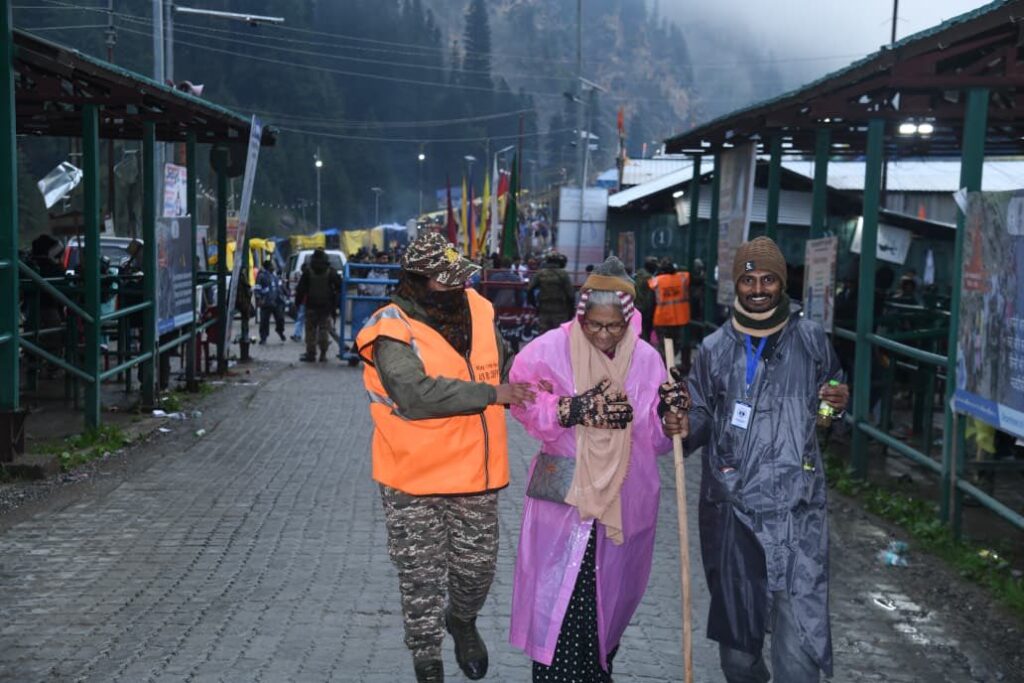
    A fresh batch of 1,795 pilgrims departed from the Bhagwati Nagar Yatri Niwas in Jammu early Thursday for the Baltal base camp to undertake the ongoing Shri Amarnath Yatra under multi-layer security arrangements, officials said.

    According to the Joint Police Control Room (JPCR), Jammu, the 23rd batch left at 2:44 a.m. in a convoy of 83 vehicles comprising 41 buses, 11 medium motor vehicles (MMVs), 30 light motor vehicles (LMVs) and one two-wheeler.

    The batch comprised 1,406 male pilgrims and 389 women pilgrims. Officials said no pilgrims were scheduled to travel via the traditional Pahalgam route on Thursday, with all devotees proceeding through the Baltal axis.

    The convoy is travelling under tight security with escort vehicles and an ambulance accompanying the pilgrims throughout the journey.

    With the departure of Thursday’s batch, the total number of pilgrims who have left the Bhagwati Nagar base camp in Jammu for this year’s annual pilgrimage has reached 1,34,201, according to JPCR officials.

    Meanwhile, the 22nd return convoy carrying 1,943 pilgrims departed from the Baltal base camp for Jammu on Thursday.

    According to the Joint Police Control Room, Baltal, the return convoy comprised 1,413 male pilgrims, 392 women, 12 children, 97 sadhus and 29 sadhvis. The pilgrims were travelling in 63 vehicles, including 40 heavy motor vehicles (HMVs), 11 medium motor vehicles (MMVs) and 12 light motor vehicles (LMVs), under adequate security arrangements.

  • Committee on Public Undertakings reviews CAG Audit Paras of JKPDC, JAKEDA

    Committee on Public Undertakings reviews CAG Audit Paras of JKPDC, JAKEDA

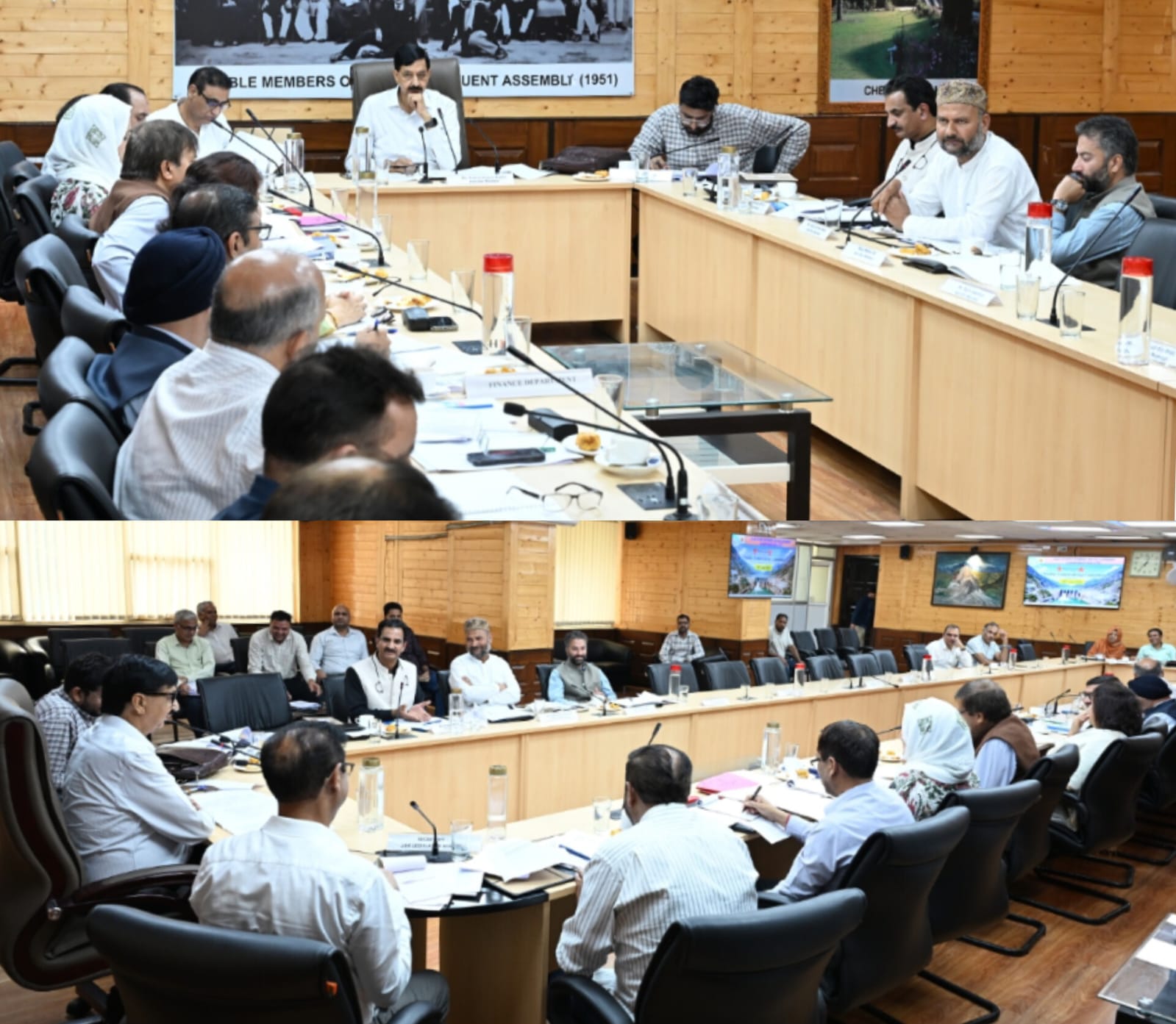
    SRINAGAR, JULY 29: The Committee on Public Undertakings (PUC) of the Jammu and Kashmir Legislative Assembly today held a meeting at the Legislative Assembly Complex here to examine the Audit Paras relating to the Jammu and Kashmir Power Development Corporation (JKPDC) and the Jammu and Kashmir Energy Development Agency (JAKEDA), as contained in the Comptroller and Auditor General (CAG) Audit Reports for the years 2018-19 and 2020-21.

    The meeting was chaired by Pawan Kumar Gupta and attended by Mian Mehar Ali, Reyaz Ahmad Khan and Rafiq Ahmad Naik, Members of the Committee.

    Additional Chief Secretary, Power Development Department; Managing Director, Jammu Power Distribution Corporation Limited (JPDCL); Managing Director, Jammu and Kashmir Power Development Corporation (JKPDC); Managing Director, Jammu and Kashmir Power Transmission Corporation Limited (JKPTCL); Managing Director, Kashmir Power Distribution Corporation Limited (KPDCL); senior officers of the Jammu and Kashmir Energy Development Agency (JAKEDA) and other concerned officers, besides Secretary JKLA, Manoj Kumar Pandit also attended the meeting.

    During the meeting, the Committee undertook a comprehensive review of the audit observations concerning the functioning of JKPDC and JAKEDA. Detailed deliberations were held on the issues highlighted in the Audit Reports, with emphasis on the status of compliance, corrective measures undertaken by the concerned agencies and the progress achieved in addressing the audit observations.

    The Committee impressed upon the officers to ensure timely and effective compliance with the recommendations of the CAG and stressed the need for strengthening internal financial controls, improving operational efficiency and institutional accountability. It also underscored the importance of adopting a proactive approach towards addressing audit observations to promote transparency, prudent financial management and effective utilisation of public resources.

    The Committee reiterated that regular monitoring and prompt implementation of corrective measures are essential for enhancing the performance of public sector undertakings and ensuring greater accountability in governance.

  • MLA Devsar, DC Kulgam visits flash flood affected areas of Dardgund, Bangdar

    MLA Devsar, DC Kulgam visits flash flood affected areas of Dardgund, Bangdar

    Assess damages, provide immediate relief and financial assistance to affected families

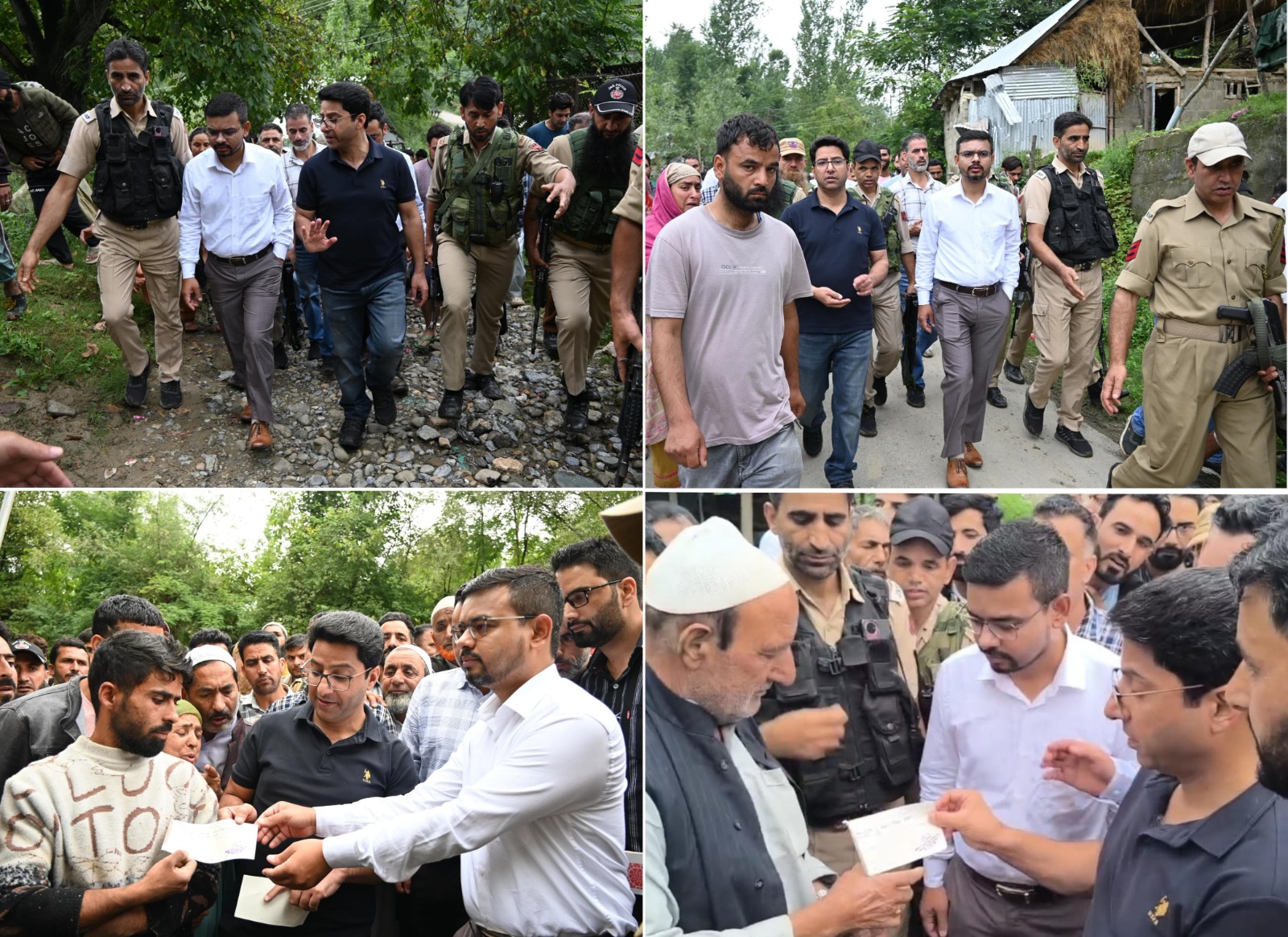
    KULGAM, JULY 29: Member of Legislative Assembly (MLA) Devsar, Peerzada Feroze Ahamad and Deputy Commissioner (DC) Kulgam, Shahzad Alam today visited the flash flood-affected areas of Dardgund, Bangdaar and adjoining localities of Tehsil Devsar to take stock of the situation arising out of the sudden cloudburst that hit the area yesterday.

    During the visit, the duo interacted with the affected families and undertook an on-the-spot assessment of the damage caused to residential structures, agricultural land, orchards and public infrastructure due to the flash floods triggered by the cloudburst.

    They were accompanied by Tehsildar Devsar, Block Development Officer (BDO) and officers of various line departments, who briefed them on the extent of damage and the immediate relief and restoration measures being undertaken in the affected areas.

    As part of immediate relief measures, cash compensation and food kits were distributed among the affected families on the spot.The DC also directed the concerned line departments to carry out immediate restoration of damaged infrastructure, including roads, water and power supply, and to remain on alert in view of the prevailing weather conditions.

    The MLA assured the affected people of all possible support from the administration and appealed to the residents of vulnerable areas to remain cautious.

  • Sakeena Itoo reviews progress of SASCI, CAPEX, other flagship schemes across Health, Social Welfare, Education departments

    Sakeena Itoo reviews progress of SASCI, CAPEX, other flagship schemes across Health, Social Welfare, Education departments

    Emphasizes strict financial discipline, avoiding cost, time overruns

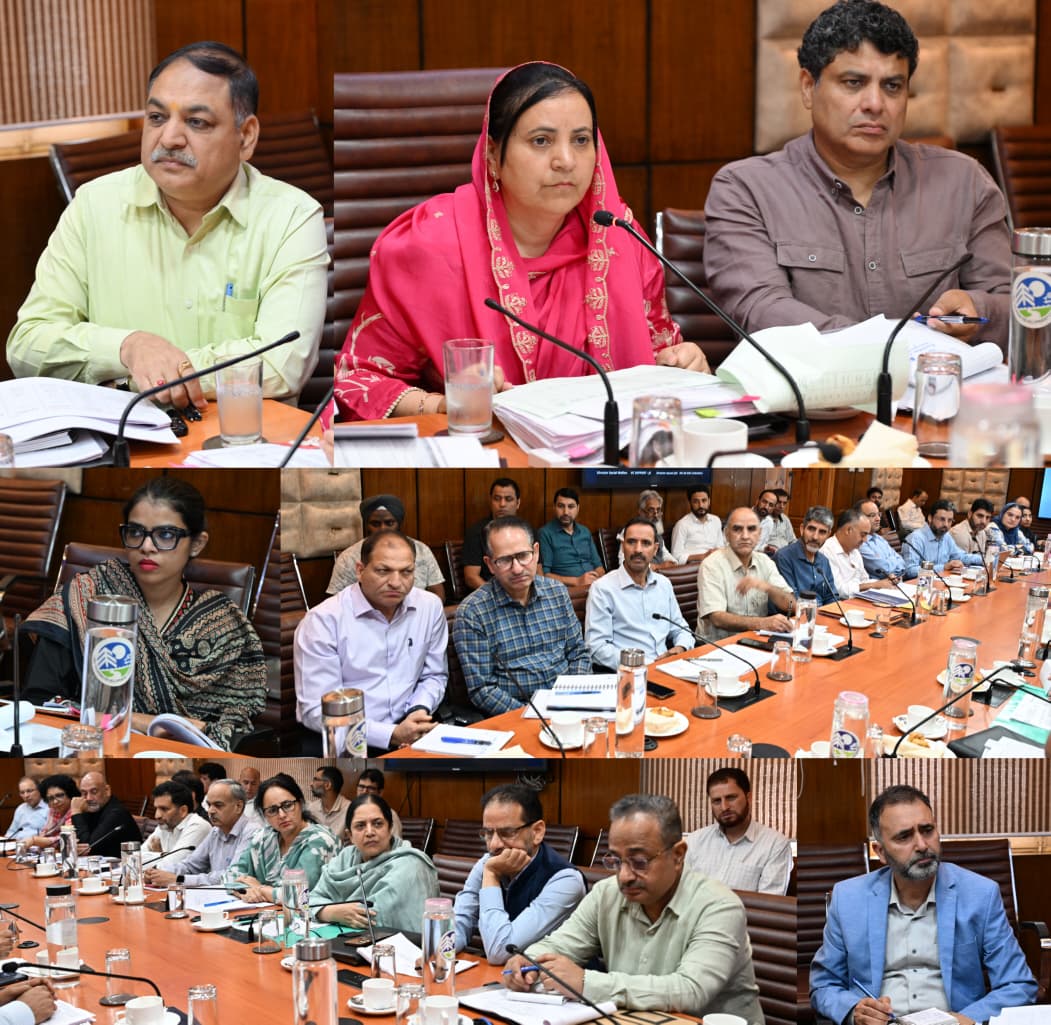
    SRINAGAR, JULY 29: Minister for Health and Medical Education, Social Welfare and Education, Sakeena Itoo, today chaired a comprehensive review meeting at Civil Secretariat here to assess the physical and financial progress achieved under the Strengthening and Augmentation of State Capabilities for Citizen-Centric Infrastructure (SASCI), CAPEX Budget and other flagship developmental schemes being implemented by the Health and Medical Education, Social Welfare and Education departments besides implementation of key budget announcements in these departments.

    The meeting was attended by Commissioner Secretary Social Welfare, Sarmad Hafeez; Commissioner Secretary Education, Ram Niwas Sharma; Mission Director ICDS, Mission Director RUSA, Mission Director Samagra Shiksha, Director School Education Jammu/Kashmir, Director Health Jammu/Kashmir, Special Secretaries of concerned departments, Director Planning/Finance of concerned departments, and other senior officers.

    The Minister conducted a detailed department-wise review of the status of ongoing infrastructure projects, expenditure under CAPEX allocations, implementation of SASCI initiatives and other flagship programmes aimed at strengthening the public service delivery across Jammu and Kashmir.

    Sakeena Itoo directed the officers to ensure timely completion of all sanctioned projects without compromising on quality standards. She stressed that every developmental initiative must translate into tangible benefits for the people and contribute towards strengthening essential public infrastructure here.

    The Minister underscored the importance of effective planning, inter-departmental coordination and regular monitoring to achieve the desired outcomes. She instructed the officers to remove bottlenecks delaying execution of projects and adopt a result-oriented approach for ensuring optimal utilisation of funds.

    Sakeena Itoo reiterated the government’s commitment towards transparent, accountable and people-centric governance, asserting that development projects must be executed efficiently to maximise public benefit.

    “Maintain strict financial discipline, adhere to prescribed timelines and ensure regular monitoring of the progress of all projects to avoid cost and time overruns”, she said.

    The Minister directed the departments to strengthen the field-level supervision, improve coordination among executing agencies and ensure periodic reviews so that all flagship schemes are implemented effectively and their intended objectives are achieved within the prescribed timeframe.

    Taking stock of the School and Higher Education Departments, the Minister highlighted the importance of upgrading educational infrastructure and creating a conducive learning environment for students. She directed the officers to expedite construction and upgradation works, ensuring that educational institutions are equipped with the necessary facilities to support quality education.

    Regarding the education department, the Minister was informed that 24228 schools, both public and private are operational in Jammu and Kashmir, including 37 KVs, 20 JNVs and six schools of Tribal affairs department, with total enrolment of about 2657883 students. It was also given out that among 1421 works proposed under UT CAPEX 2026-27, 786 works are targeted for completion with 90 works already stand completed.

    It was also informed that under SASCI, a total outlay of Rs 2648.89 lakh has been proposed for various kinds of works across UT. Under Samagra Shiksha, it was revealed that 3019 Civil works have been completed in last one and half years. It was also informed that skill education has been introduced in 1350 high and higher secondary schools, besides 3008 digital Labs have been established while as 2388 ICT Labs and 4597 smart classrooms are in the process of establishment. The meeting was also informed that 396 schools have been approved for upgradation under PM-SHRI scheme while 45 Atal Tinkering Labs and 159 STEM Labs have already been established in approved schools under this scheme.

    Regarding higher education department, the Minister was informed that for the year 2026-27, Rs. 468 crore have been approved for allocation, with Rs. 227.71 crore available for spending. It was given out that under PM-USHA RUSA for the year 2026-27, Rs. 75.35 crores have been outlayed for various works. The meeting was also informed that some major projects have been targeted for completion during 2026-27 under Capex like Construction of five College Buildings, 14 New Additional Blocks/Administrative Blocka, 4 Science Blocks, 12 Additional Classroom Blocks, 11 Automation of libraries, 8 Multipurpose Halls, two Library Blocks, three Girls/Boys Hostels and 12 Smart Class rooms. Under SASCI, it was informed that 21 works with an outlay of Rs. 71.77 crores will be carried out during 2026-27.

    Reviewing the Health and Medical Education Department, Sakeena Itoo emphasized the need to accelerate the pace of infrastructure development in hospitals and health institutions besides ensuring availability of quality healthcare services. She directed the concerned officers to closely monitor all ongoing works under SASCI and CAPEX and complete them within the stipulated timelines.

    The Minister was informed that 64 Dialysis centers, with 2 each in 32 SDHs/CHCs of various districts have been established. It was also informed that Cath Labs for GMC Doda and GMC Baramulla will be established during the current fiscal besides PET scan at an estimated cost of Rs. 35 crore will also be established in GMC Srinagar and GMC Kathua. The meeting was also informed that 51 AI X-ray machines at a cost of Rs. 2.50 crore have been proposed for the current fiscal as well as lift and oxygen plant maintenance for Rs. 9.50 crore.

    While reviewing the Social Welfare Department, the Minister called for effective implementation of welfare schemes and directed officials to ensure that benefits reach all eligible beneficiaries in a transparent and time-bound manner. She also stressed the need to strengthen the institutional infrastructure for improved delivery of social welfare services.

    The Minister emphasized that sustained monitoring, accountability and efficient execution remain key to achieve the developmental goals envisioned by the Government, while reiterating her commitment to improve healthcare, education and social welfare infrastructure across Jammu and Kashmir

    During the meeting, senior officers briefed the Minister about the current status of ongoing projects, financial expenditure, achievements made so far and challenges being faced during implementation. They assured the Minister that all necessary efforts are being made to expedite execution of developmental works and ensure timely completion of projects in accordance with the Government’s priorities.