The Congress Party on Thursday publicly committed to resisting all attempts to widen the scope of post-facto environmental clearances, reinforcing its dedication to the fundamental principles of environmental law. This resolution follows a significant ruling from the Supreme Court regarding such clearances.
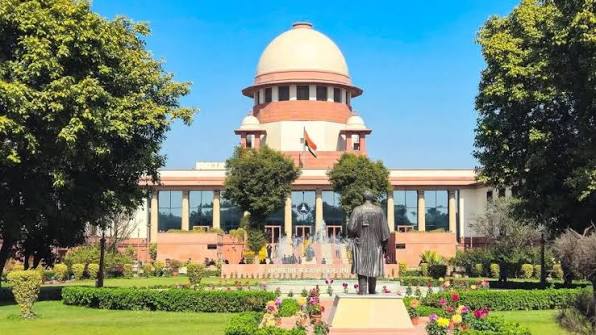
On Wednesday, the Supreme Court quashed a controversial 2021 office memorandum that allowed the government and various authorities to grant retrospective clearances for projects that commenced without prior environmental approval. The court stated that the integrity of protective environmental checks cannot be altered through administrative orders.
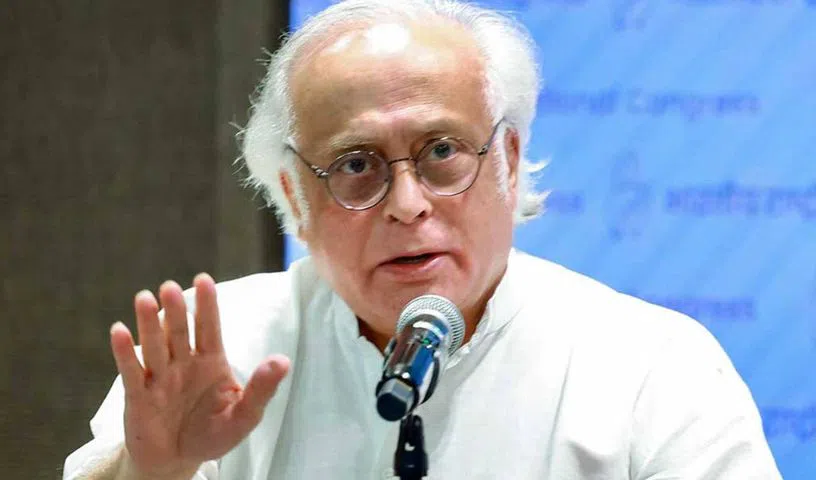
Jairam Ramesh, Congress leader and former environment minister, highlighted that a two-judge bench of the Supreme Court had established important precedents for environmental law in May 2025. This judgment mandated that prior environmental clearance is essential and condemned the post-facto approval mechanisms introduced by the 2017 Notification and the 2021 Memorandum.
In a detailed statement, Ramesh emphasized that these mechanisms encouraged illegal activities, undermined the statutory Environmental Impact Assessment (EIA) process, and violated the principles of sustainable development along with the right to a clean environment.
The Union Government, attempting to challenge the judgment, argued it would disrupt numerous projects that began without the necessary environmental clearances. Ramesh expressed concern over a three-judge bench’s consideration of the review without clarifying the reasoning behind deviating from customary procedure.
Justice Ujjal Bhuyan voiced dissent against this review, asserting that the concept of ex-post facto environmental clearance does not exist in environmental law and is incompatible with established jurisprudence.
Ramesh celebrated the Supreme Court’s recent decision, stating that it rightfully declared that executive instructions cannot surpass statutory requirements set out in the EIA Notification. However, he cautioned that the ruling still allows the government to devise a statutory framework for post-facto environmental clearances under ‘exceptional circumstances’ — a term left for government definition.
Highlighting a troubling trend, Ramesh pointed out various instances where local communities resisted the government’s approach to environmental law. He mentioned cases from the Great Nicobar to the Ken-Betwa project, and extractive initiatives in Chhattisgarh and Odisha, emphasizing that environmental protection is often treated as an inconvenience.“Over the last 17 years, I have supported various public campaigns against the weakening of India’s stringent environmental safeguards,” Ramesh stated.
In its unanimous verdict, the bench comprising Chief Justice Surya Kant and Justices Joymalya Bagchi and Vipul M Pancholi agreed that the ruling would apply prospectively, thus shielding existing projects authorized under retrospective clearances from demolition or punitive actions.
The court reaffirmed the government’s authority under Section 3 of the Environment (Protection) Act, 1986 to devise appropriate notifications concerning various non-compliant projects — a move necessary to uphold the larger public interest.
Projects at risk include critical infrastructure like the AIIMS Medical College and Hospital in Odisha, a Centre of Excellence for Cancer Diseases in Tamil Nadu, and various slum rehabilitation efforts. These initiatives serve to tackle impending socio-economic challenges while maintaining a commitment to environmental sustainability.
By invoking Article 142, the Supreme Court nullified the office memorandum while acknowledging two key reasons. First, it determined that prevailing uncertainty existed concerning the validity of prior instruments governing the processing and granting of environmental clearances. Second, the court noted that significant public interest arises from projects already underway or substantially developed based on existing legal frameworks.
The Supreme Court underscored its solemn responsibility to ensure a balance between humanity’s need for development and a pollution-free environment, asserting that both rights must coexist for future generations.
In conclusion, the court advocated for eco-centric proportionality, resonating with Gandhi’s philosophy: “The world has enough for everyone’s need, but not enough for everyone’s greed.”